
11/03/26 Fredo writes –
Evening All – The Supporters’ Evening at the Donmar for Evening All Afternoon
The best thing about seeing a play a second time is this: if it’s a good play, you notice more in it, and you can see how cleverly the playwright has constructed it. That wonderful line that you wanted to remember in order to drop into conversation but now you can’t quite remember it? Well.there it is, and you can try once more to commit it to memory.
And sometimes in fact you enjoy the play more the second time around. That’s how Mike and I felt about Evening All Afternoon at the Donmar. We were delighted with our group’s response to this delicate one-act play, ostensibly about a step-mother and step-daughter working through a tense period in their relationship, but which actually explores issues of parenthood, bereavement, grief and reconciliation. It punches above its weight, and is unexpectedly powerful.

We attended the Supporters” Evening performance, which was followed by a Q&A with the actors, led by Silvia Malchior, the Director of Development. Silvia asked Anastasia Hille how she reacted when she first read Anna Ziegler’s play. Anastasia had read it in bed, and had found the quality of the writing impressive, and thought how funny it was, and then how moving it became.
Erin Kellyman had similar feelings. She is making her assured stage debut but has done a considerable amount of screen work. She was hooked on the writing, and on the truth in the depiction of the complex relationship between the two characters. However, she admitted that the concentration required left her knackered. And the experience of walking on to the Donmar stage for the first time and seeing everyone in the front row had been terrifying.

Anastasia had appeared at the Donmar twice before, but the play still presented challenges. She has long monologues addressed to the audience – which she times to perfection, with shrewdly placed humorous inflections – and though she has played Shakespeare in the past, she found there was a lot to learn in these speeches. As well as that, about a third of the play was rewritten in rehearsal. The two actors retained the work they had done on their characterisations, but sometimes the lines were changed. Anastasia claimed that this was easier for Erin as her brain was younger, and Erin agreed, but said that sadly the only things that she does remember are her lines. She added that she was lucky that Anastasia had been so supportive to her.
I asked Anastasia how she managed to portray such a diffident character and yet reach to every member of the audience. She thought carefully about this (she is a very softly spoken person) and then described how she was helped by the actual words of the script and adjusted her portrayal to how different audiences responded to the play. And they are different each time. A special Schools Performance reacted wildly to the two characters on stage and both actors needed to adjust the level of their performances so the teenagers would understand the two very different people they were seeing on stage.
While we waited for our friends in the foyer afterwards, we had a chat with Erin as she was leaving. She is a charming person, and was grateful for the response from the audience, and delighted when we told her how much the Group had enjoyed the play. She wants to do more stage work, but only at the Donmar!
2/03/26 Fredo writes –
The Donmar again – A presentation of the next play in the 2026 Season
“Do you want me to tell you with spoilers, or without? “ responded director Carrie Cracknell to Craig Gilbert’s request to talk to us about Mass, the next play in the Donmar’s 2026 season.
Craig is the Literary Manager at the Donmar, and he had just introduced Carrie, and the actors Monica Dolan, Susie Trayling, Rochelle Rose and Amari Bacchus to discuss Fran Kranz’s play. Rather unfairly, he challenged them to omit any spoilers. Nevertheless, I think we can guess what the play is about.
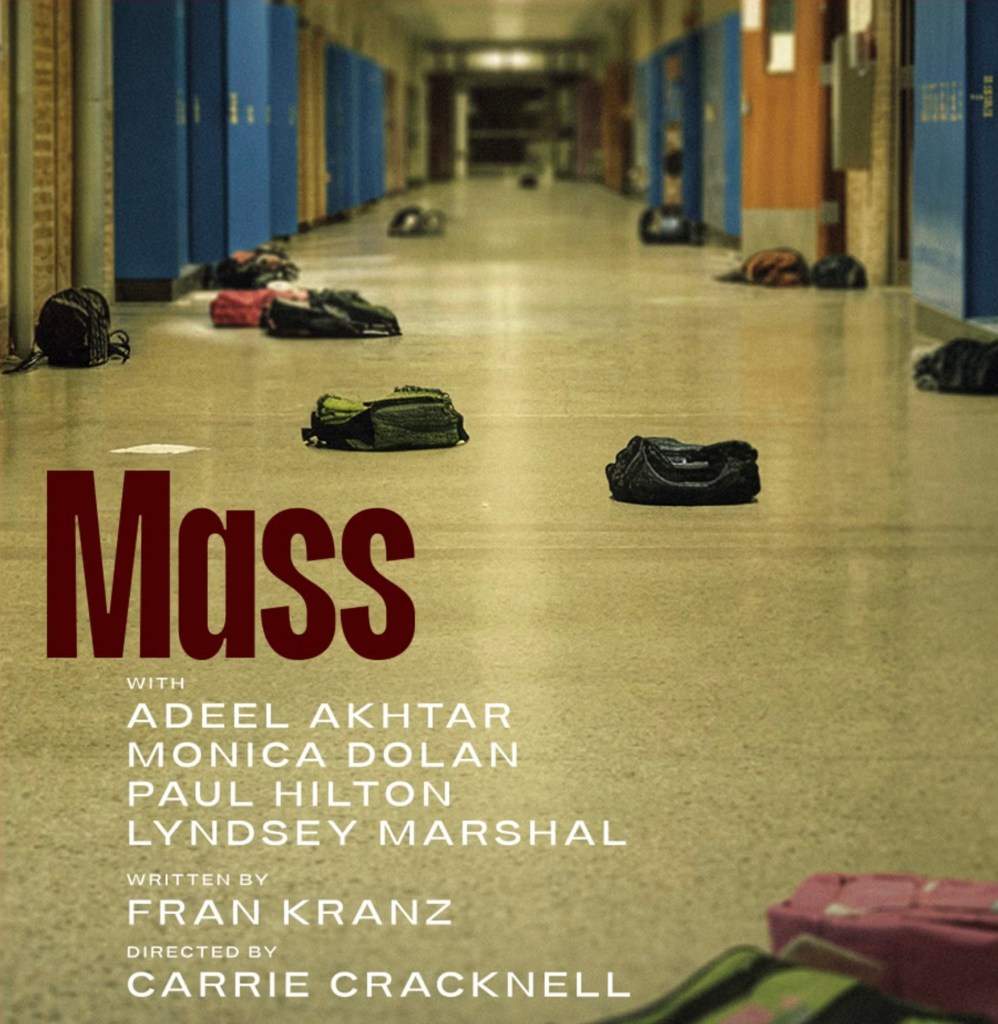
It takes place in a church hall in mid-America, where two couples meet in the aftermath of a traumatic incident to try and find some understanding and reconciliation. I may be wrong, but I’m willing to take a bet that it’s the sort of incident that happily hasn’t happened in this country for 30 years, but which seems to be an all-too-frequent occurrence in the USA.
Carrie’s history with the play was unusual. Fran Kranz has based it on his own screenplay for the film which he directed. During lockdown, Carrie had watched it, to see a particular performance on screen, but with no idea that she would direct it on stage. When she was offered the play, she took it to the Donmar, as she felt that it would work uniquely well in this intimate space. The Donmar’s Artistic Director Tim Sheader read it and immediately said,”We have to do this.” and Craig admitted that he embarrassed himself by crying over the script on the tube.
Now, hot from her success with Tom Stoppard’s Arcadia at the Old Vic – enthusiastically enjoyed by our group – Carrie is looking forward to doing deep work with the actors on this study of humanity in extreme circumstances.
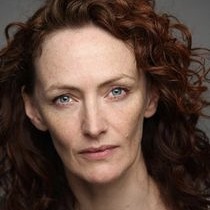


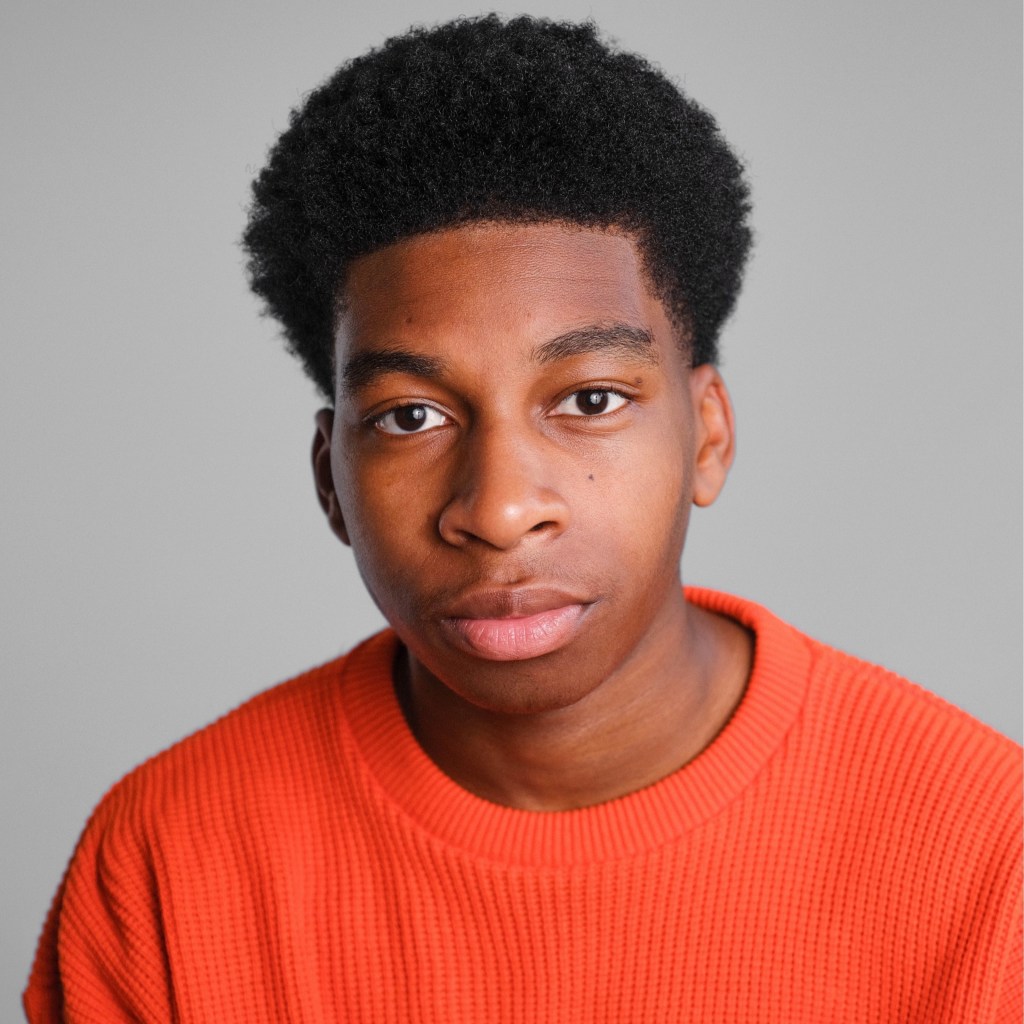
Susie Trayling / Monica Dolan / Rochelle Rose / Amari Bacchus
(The cast also includes Adeel Akhtar, Paul Hilton and Lyndsey Marshall)
The actors agreed. Susie Trayling pointed out that in the theatre, we can listen to the whole argument of a conversation without interruption, and the subject of this work is compelling. Monica Dolan had done a workshop of the play, and then went on to do another job where she felt left out (no, I can’t imagine it either). Now she was eager work on a text with actors working together. Rochelle Rose was excited by the way the story unfolds, and the youngest member of the cast Amari Bacchus (making his stage debut) was startled to realise that, as a young person, you don’t know how events affect us in the future.
Although the play is set in middle America, Carrie was clear that its themes will resonate. It’s about forgiveness, and how this is not organic, but a choice. It’s about restorative justice.
It sounds like a play tailor-made for the Donmar, but would it work in a bigger theatre? Carrie said she believes that it would. However, think of The Power of 13, think of Punch, think of KENREX – all great plays. But think of the sensation we had of being part of them in a small auditorium, of the tension we shared, of the blistering heat from the actors. Don’t you want to experience that again? Come and celebrate Mass with us.
5/02/26 Fredo writes –
MASS APPEAL – The Donmar’s new season
It’s always exciting when the Donmar makes its announcement of its new season. The programme was announced last week, and on Monday evening we were invited to the Mayfair Hotel to hear more details. And it sounds like one of the best seasons ever. There’s a tense drama, a thriller, a classic play and a family comedy – something for everyone, and perhaps each one for some of you!
There was a lot to take in, and I’ll give a little information about each play now, but I’ll give more news when we advertise them individually.
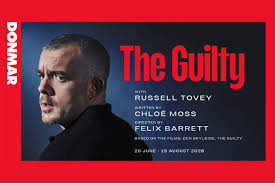
Let’s start with the second play n the season, The Guilty by Chloe Moss. Artistic Director Timothy Sheader has engaged Russell Tovey for the demanding central role in this thriller (Tim admitted that he has always wanted to present a thriller in the intimate setting of the Donmar). Russell will play a responder on a night-shift who takes a desperate 999 call from a distraught woman. Tim promises us an edge-of-the-seat evening, and there will be a special sound system (but not like Macbeth a few years ago) and (spoiler alert) an unexpected twist
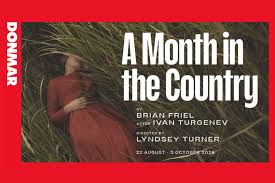
The third pay will be a revival of Brian Friel’s adaptation of A Month in the Country by Ivan Turgenev. Director Lyndsey Turner has a great track-record with Friel’s plays, When Josie Rourke, the former Artistic Director, asked her to direct Friel’s play Philadelphia, Here I Come!, it was the start of a long friendship with the playwright. Lyndsey went on to direct his plays Aristocrats, Fathers and Sons (another adaptation from Turgenev) and the stunning Faith Healer. She told us that the late writer had loved his plays at the Donmar, and how they were received and understood by the Donmar audience. No news yet who will play the great central female role of Natalya but Lyndsey confided that she decides early on whom she wants, and writes love letters to them.
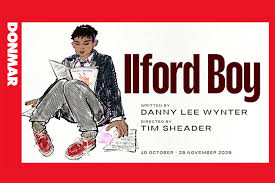
The final play will be Ilford Boy by actor/writer Danny Lee Wynter. This autobiographical play is a warm-hearted family drama about a mixed race teenage boy growing up in east London. It has great roles for family members, including a flamboyant uncle – this role has been cast, but Tim wouldn’t say who.
This brings us to the first play in the season, Mass by Fran Kranz. Tim advised us that this will be in complete contrast to the recent When We Are Married. It’s an intense confrontation between two sets of parents trying to reach an understanding following an unforgivable act affecting their children. This story is based on a film, but Tim thinks it will work better as a play: it will take the audience into the setting and minds of the characters as they strive to obtain restorative justice. Tim told us that they had a read-through of the play and determined to stage it right away.
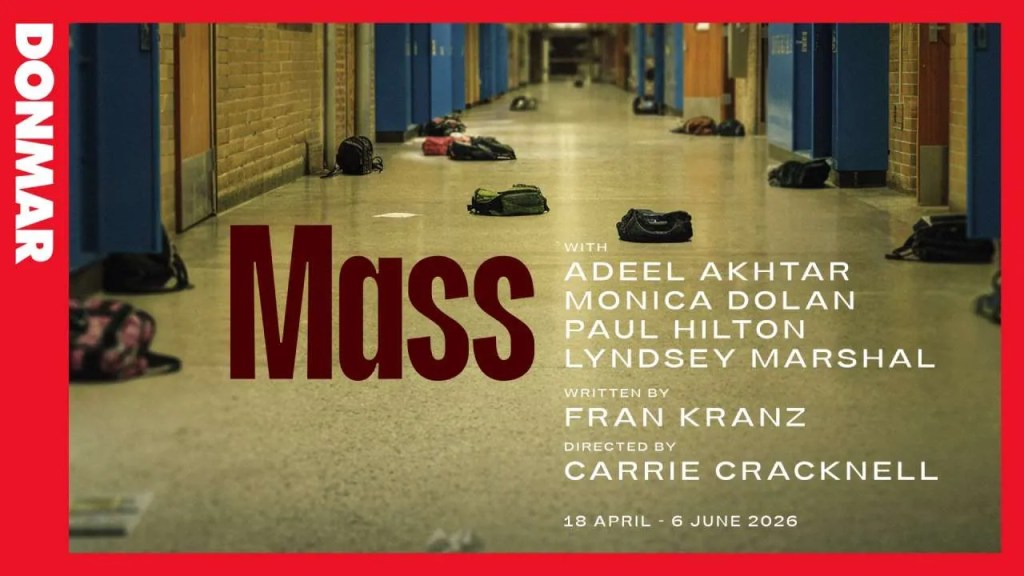
The cast is great: BAFTA winner Adeel Akhtar appeared at the Donmar in The Cherry Orchard, and on television in The Night Manager, Sherwood and Black Doves. He’s joined by the versatile Monica Dolan, an actress who has the knack of disappearing into her performances, but you know her from Mr Bates vs the Post Office and Appropriate Adult. Paul Hilton has just completed his season as Scrooge in A Christmas Carol at the Old Vic, and Lyndsey Marshall, last seen at the Donmar in Force Majeure. It’s described as “cathartic and profoundly moving” and in the Donmar, it should be very powerful.



Donmar Friends can book all these shows with us NOW, and we will advertise them individually for general booking later. Do make a note of the performance dates:
MONDAY 27 APRIL Adeel Akhtar Monica Dolan in Mass by Fran Kranz
MONDAY 29 JUNE: Russell Tovey in The Guilty by Chloe Moss
MONDAY 7 SEPTEMBER: A Month in the Country by Ivan Turgenev, adapted by Brian Friel
THURSDAY 22 OCTOBER: Ilford Boy by Danny Lee Wynter
Tickets for all are £70, except The Guilty which is £72.
27/01/26 Mike writes –
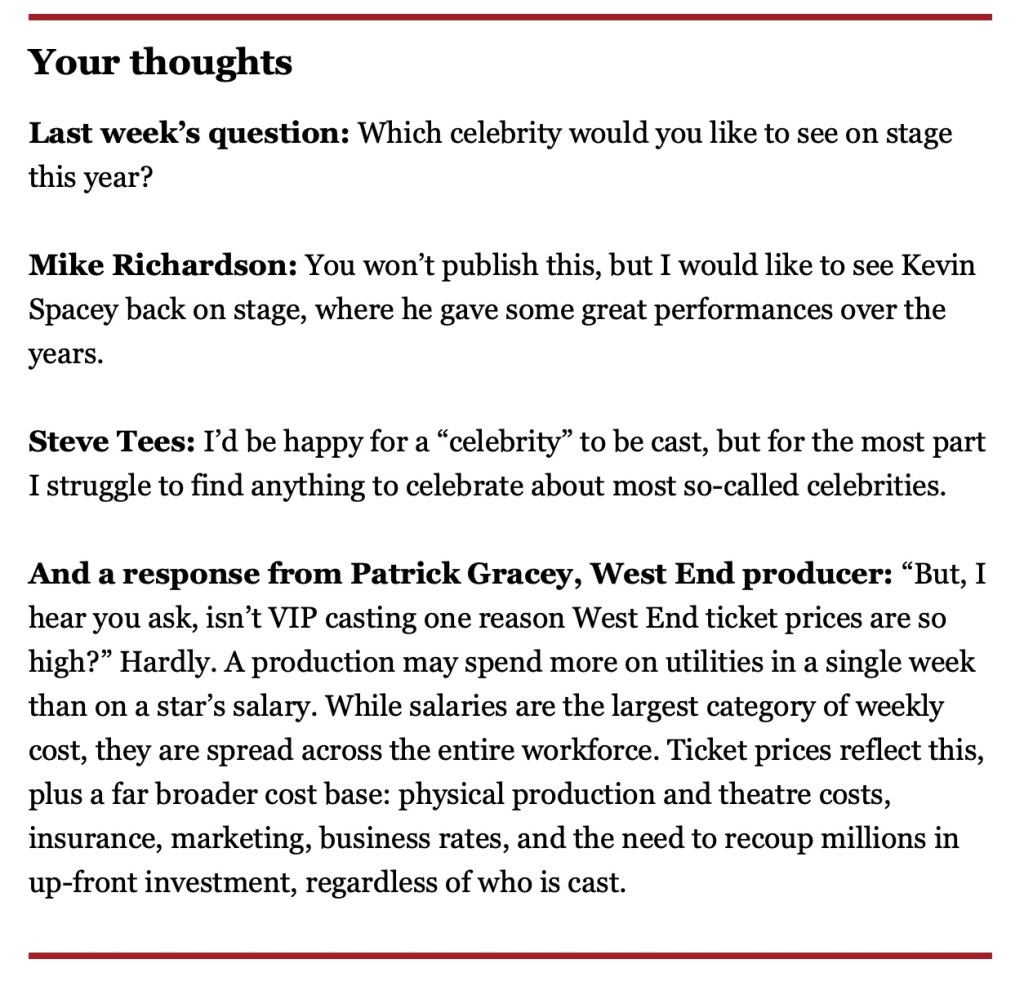
Just Saying.…Each week Clive Davis (of the Times) asks his readers for their thoughts on a topical subject. With theatre prices rising with each new celebrity casting, below was the chosen responses to the previous week’s question. The West End producer’s response is particularly interesting, something we sometimes forget –
04/01/2026 Fredo writes –
The Show Must Go On – A review of our Group’s 2025 theatregoing
When Mike and I discussed winding up theatreguys activities in 2025, we expected that the announcement would cause some dismay. To tell the truth, I’d have been disappointed if it hadn’t.
We always intended to carry on booking tickets at a group reduction, though we realised that our withdrawal from organising coaches would have an impact. What we didn’t expect was that Mr Cook would step in and take over the transport arrangements. This system has been operating since the end of September, and seems to be settling in quite nicely.
The other thing we hadn’t expected was the outpouring of appreciative comments, and the generous gifts and donations. We were so humbled and grateful that it was tempting to revise our plans – but no, the time felt right.
However, I was surprised at the end of the year that we had organised more theatre visits in 2025 than we had in the previous two years! We offered you 49 theatre visits to 45 shows, and we managed to keep the average ticket price at a modest £51.51! I had to remind myself that it had taken time to build up the numbers again after Covid (how quickly we forget!) but then again, this was a year that had a number of outstanding highlights.
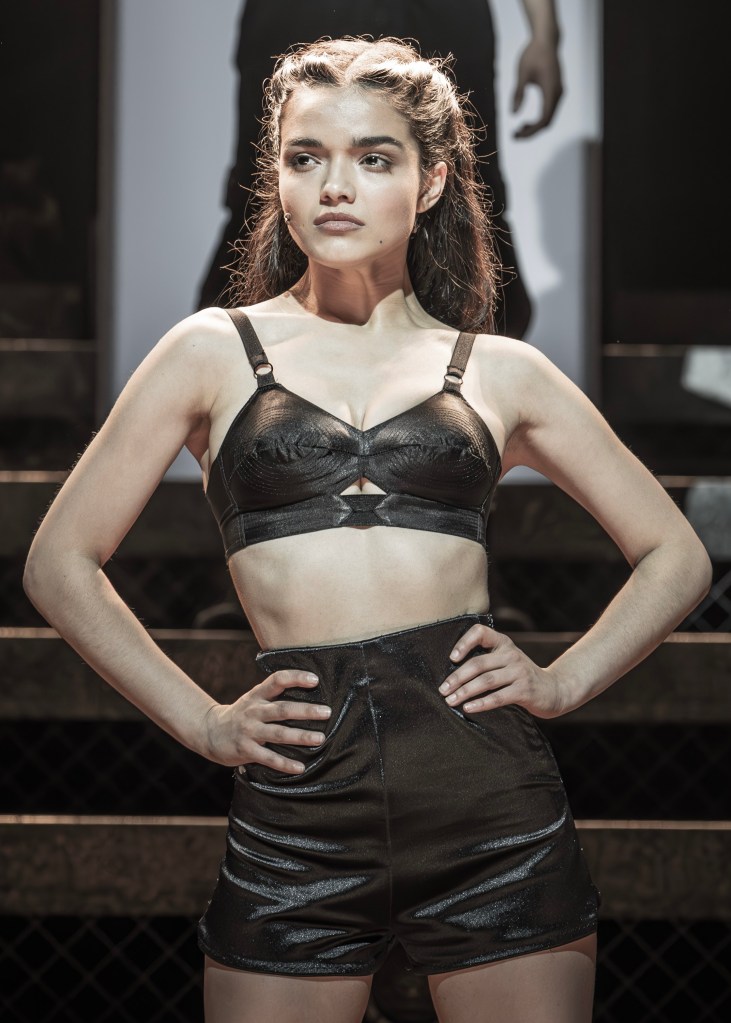
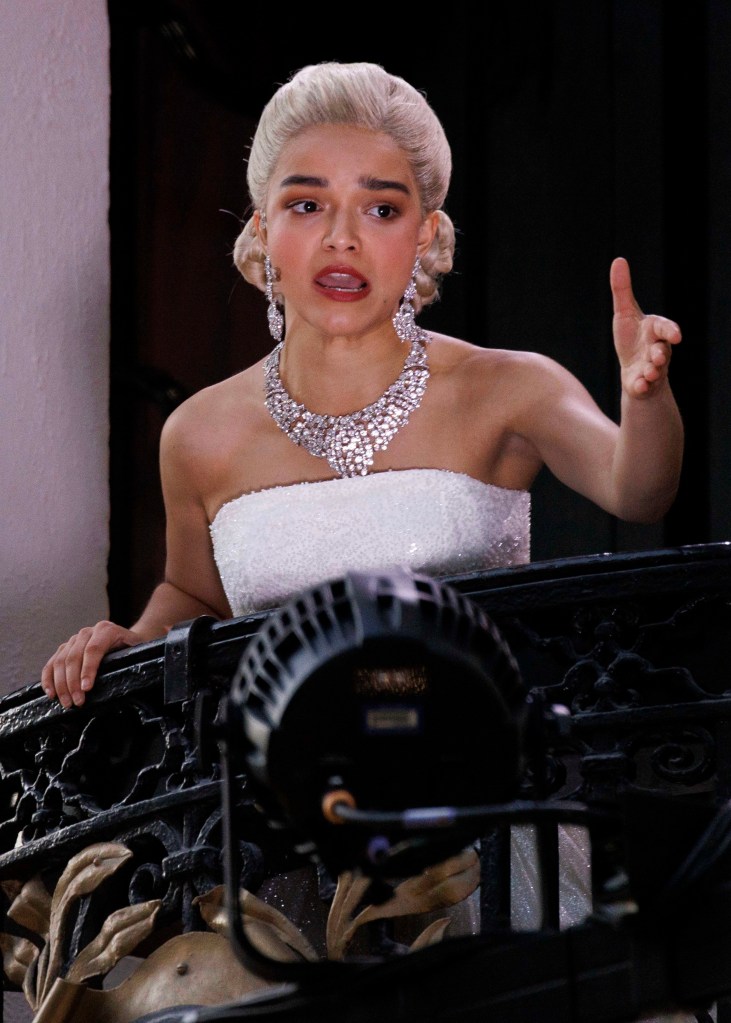
Leading the field must be the breath-taking EVITA at the London Palladium. We took 3 groups to experience this phenomenon, and on our own stood with the masses in Argyll St to see and hear Rachel Zegler sing Don’t Cry for Me, Argentina from the Palladium balcony. Like it or not, it was a show with relentless energy and imagination.
Two other shows were so popular we had to organise 2 group visits. In Oliver!, Simon Lipkin as Fagin shamelessly played to the audience, and we lapped it up. And who could resist the showmanship of Andy Nyman and Marc Antolin in The Producers?
The other musical of note was Natasha, Pierre and the Great Comet of 1812, at the Donmar. With stunning performances from Chumisa Dornford-May (currently playing Cinderella in Into the Woods), Declan Bennett and Cat Simmons; many of the ladies on the coach came away with the memory that – as the song said – Anatole (Jamie Muscato) was hot.
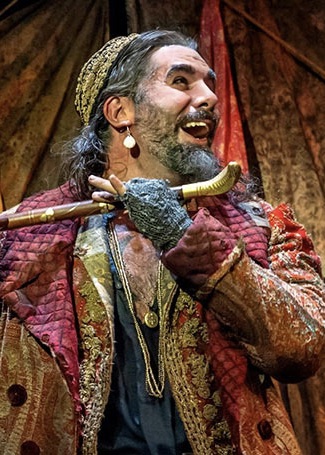
(Oliver!)
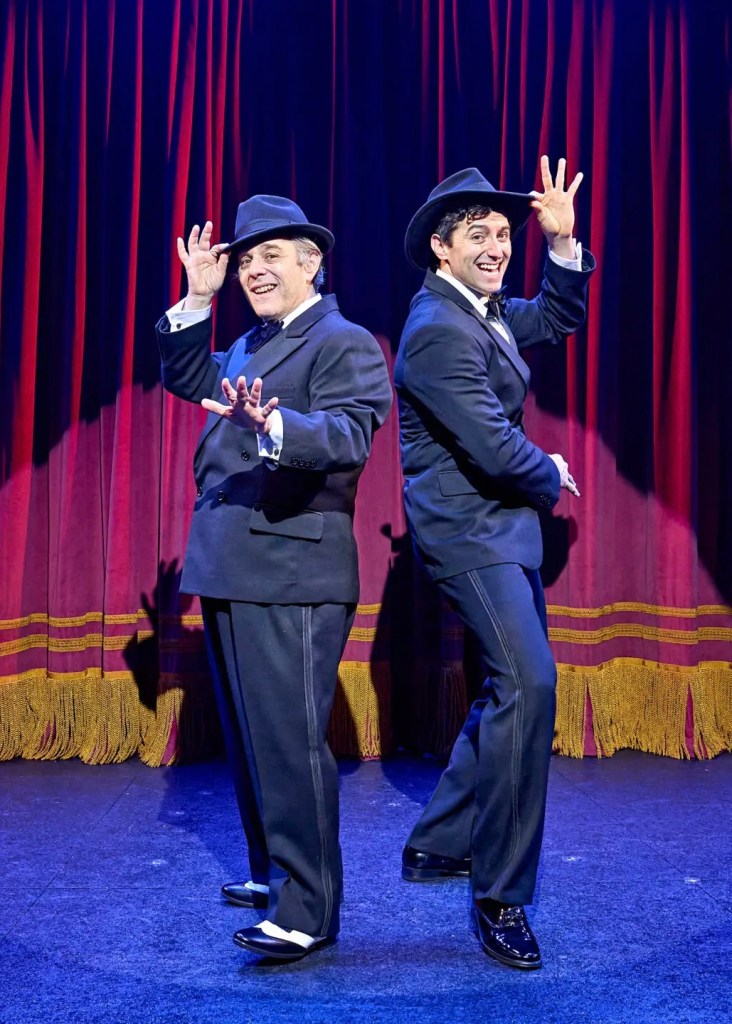
& Marc Antolin
(The Producers)
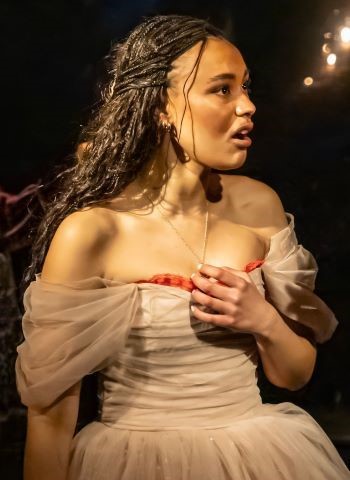
(Natasha, Pierre and the Great Comet of 1812
+ The Great Gatsby)
Although not all their productions rang the bell, the Donmar had a good year with Natasha, Dealer’s Choice, Juniper Blood, When We Are Married and Intimate Apparel. The latter play presented American actress Samira Wiley in a heart-stopping performance, and was one of those productions that I felt could not have been better.
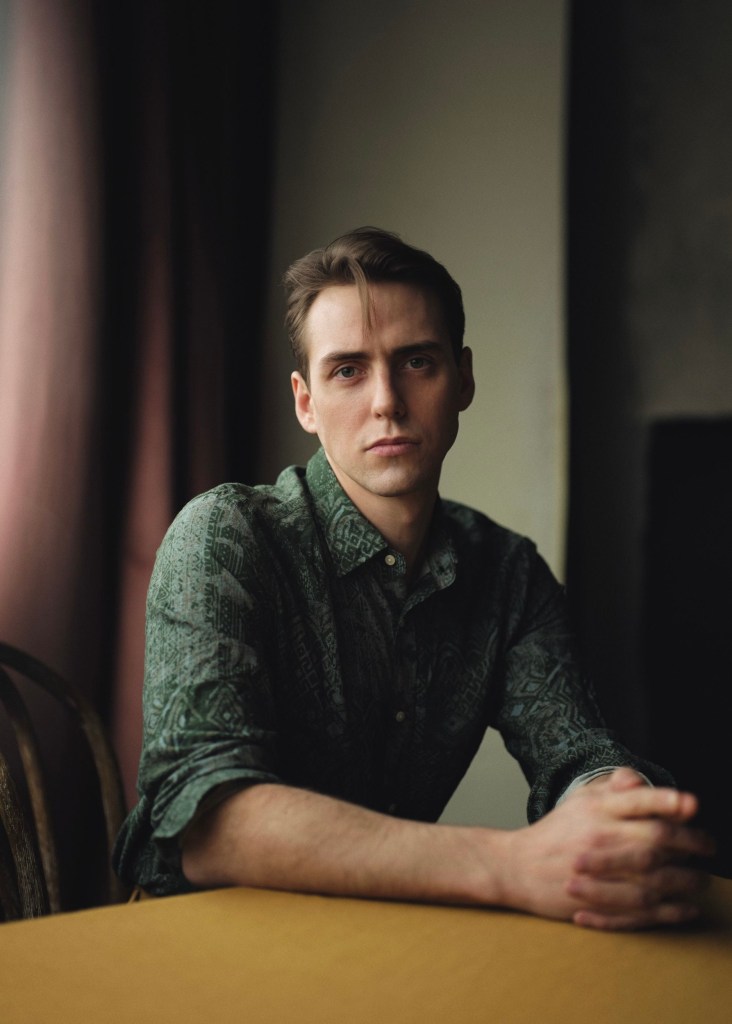
Shakespeare had a good year as well. At the Bridge Theatre, Jonathan Bailey became the petulant, spoilt King who nevertheless reached tragic depths. This theatre was transformed for A Midsummer Night’s Dream, which combined Shakespeare with Cirque du Soleil. The spectacle and exuberance took everyone by surprise. Later, at Hampstead Theatre, John Hodgkinson stood in for an ailing Simon Russell Beale in the rarely-seen Titus Andronicus. And one that got away: could we have persuaded you to come to Hamlet at the Lyttelton Theatre, with the little-known Hiram Abeysekera? It was a terrific production, and one that I regret not organising for you. Catch it in cinemas from 22 January.
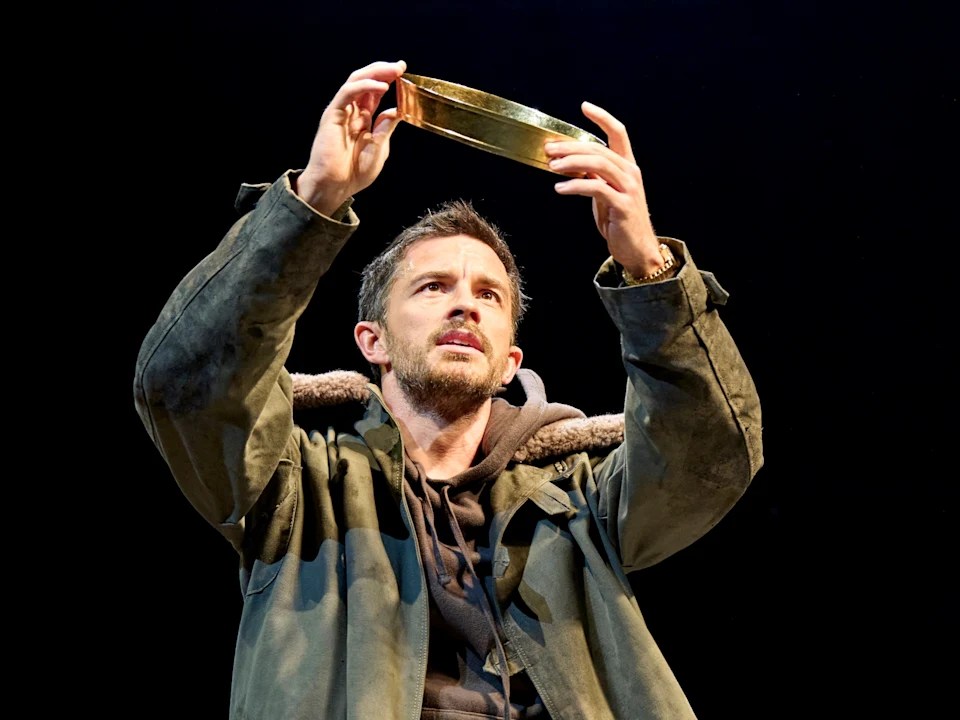
(Edward II)
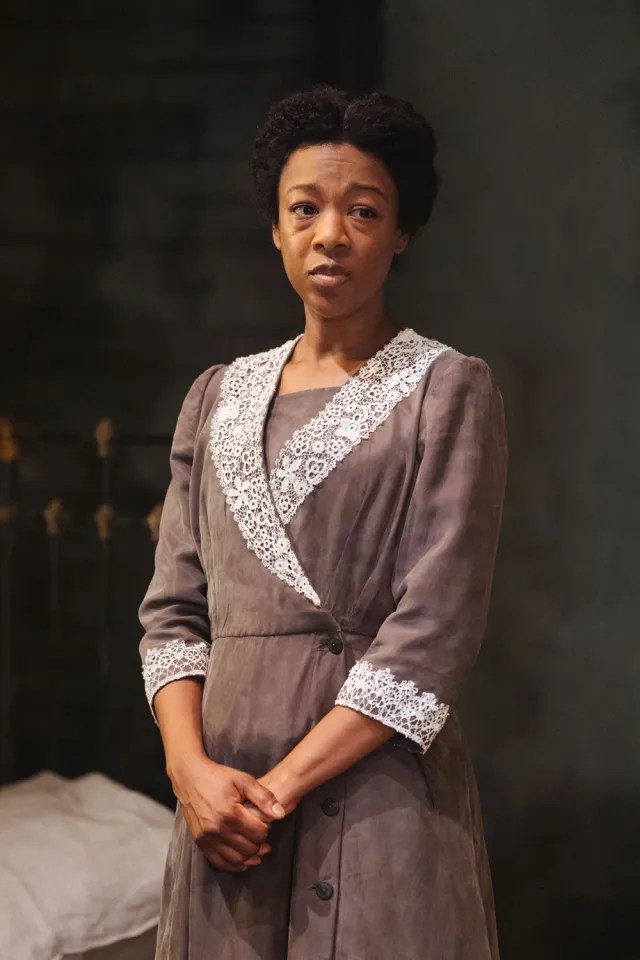
(Intimate Apparel)
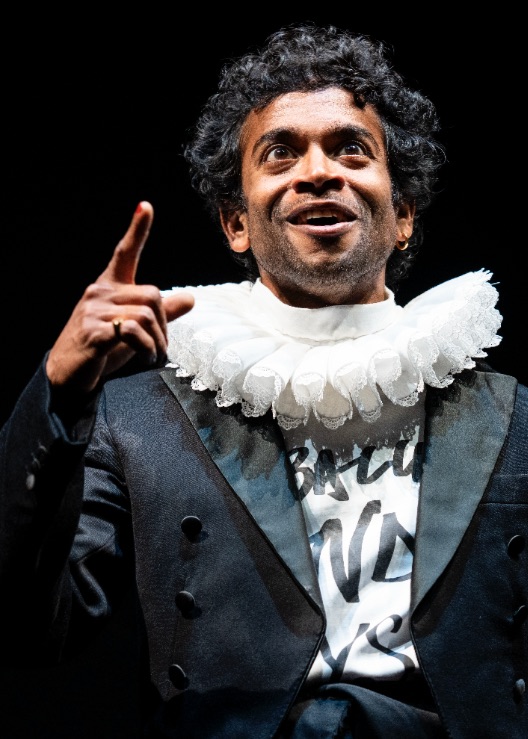
(Hamlet)
In a different guise, Shakespeare cropped up again as a leading character played by Edward Bluemel in the underrated Born with Teeth. Ncuti Gatwa was Marlowe. This witty and undeniably sexy play was one of the matinees we organised this year, but sadly failed to attract a crowd. As an aside, I’ve noticed that the people who expressed a hope that we would offer matinees haven’t supported them when we do.
I recorded in my record-book that I was disappointed in the small number that booked to see Punch. I worked hard to promote this play by James Graham, and it was worth the effort. As hard-hitting as the title suggests it was powerful, moving and unforgettable – what a shame for those of you who didn’t take a chance.
Equally hard-hitting was Manhunt, and this was also appreciated by the small group that attended.
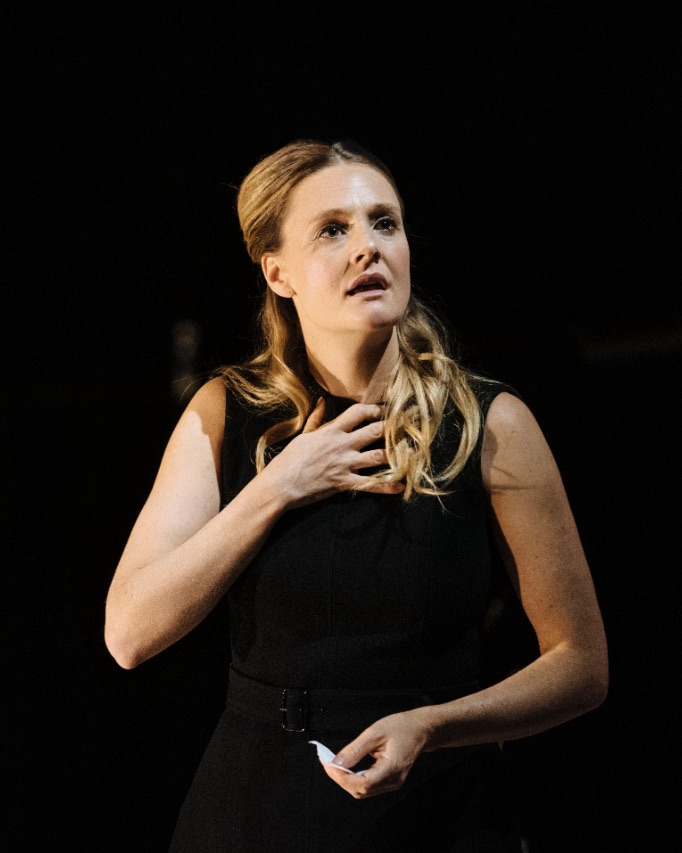
(The Years)
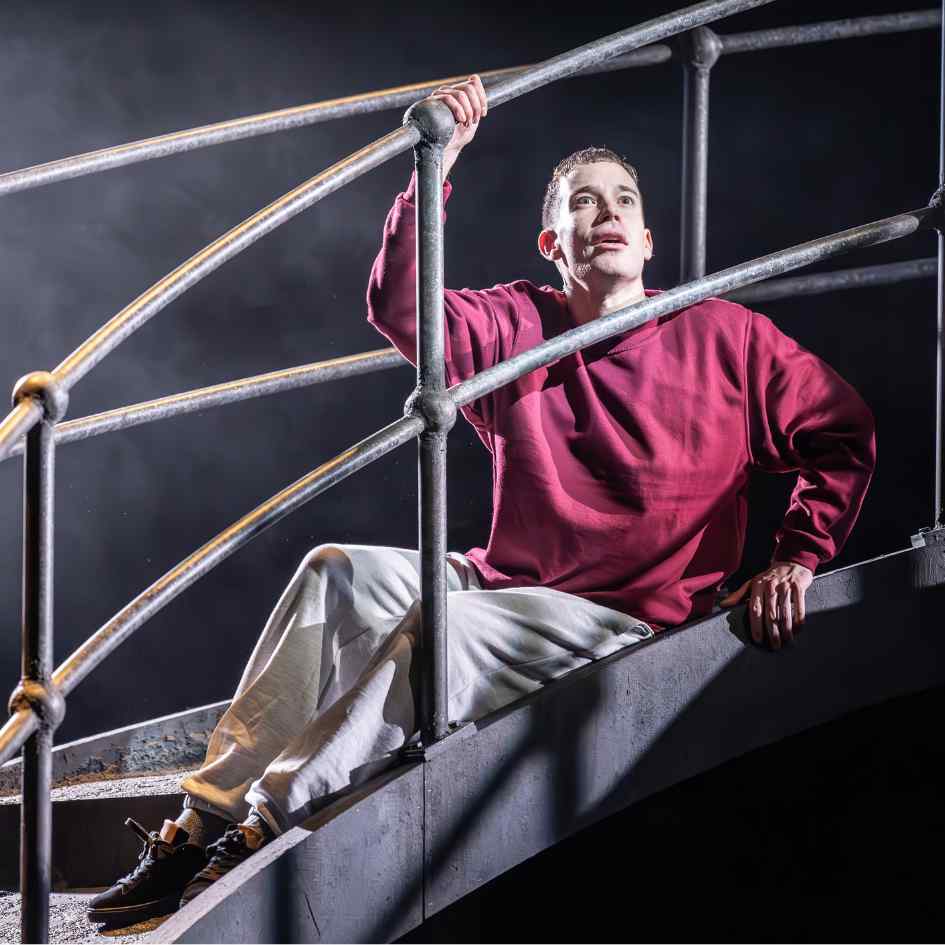
(Punch)
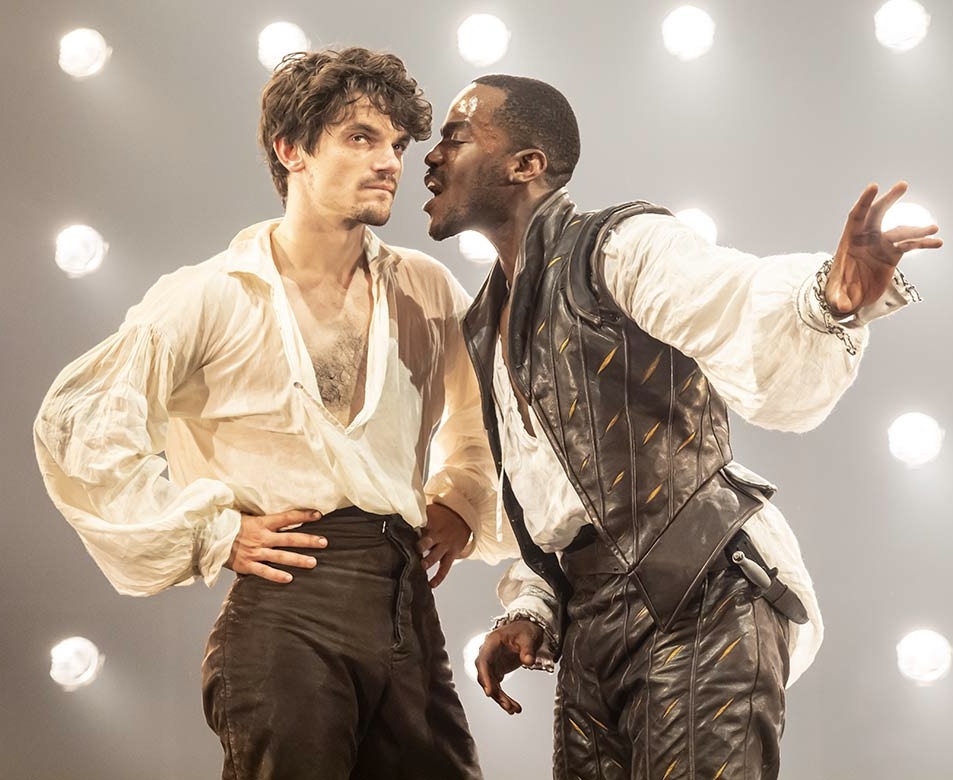
& Ncuti Gatwa
(Born with Teeth)
Our performance of The Years was interrupted by a member of the audience passing out during the gruelling abortion scene. A member of the theatre staff told me that there were only two performances in the entire run when the play wasn’t drawn to a halt in this scene. Romola Garai had already impressed, and her ability to carry on with the play confirmed her individual talent.
Our visits to Wake at the Peacock Theatre, and to Carlos Acosta’s Diaghelev evening at Sadler’s Wells East were unique for different reasons.
I don’t like to linger on the less successful shows, as there’s always someone who had a great evening at them, and I wouldn’t want to detract from that. But I wonder did anyone watching Strictly this year remember that they had seen Amber Davies in The Great Gatsby?
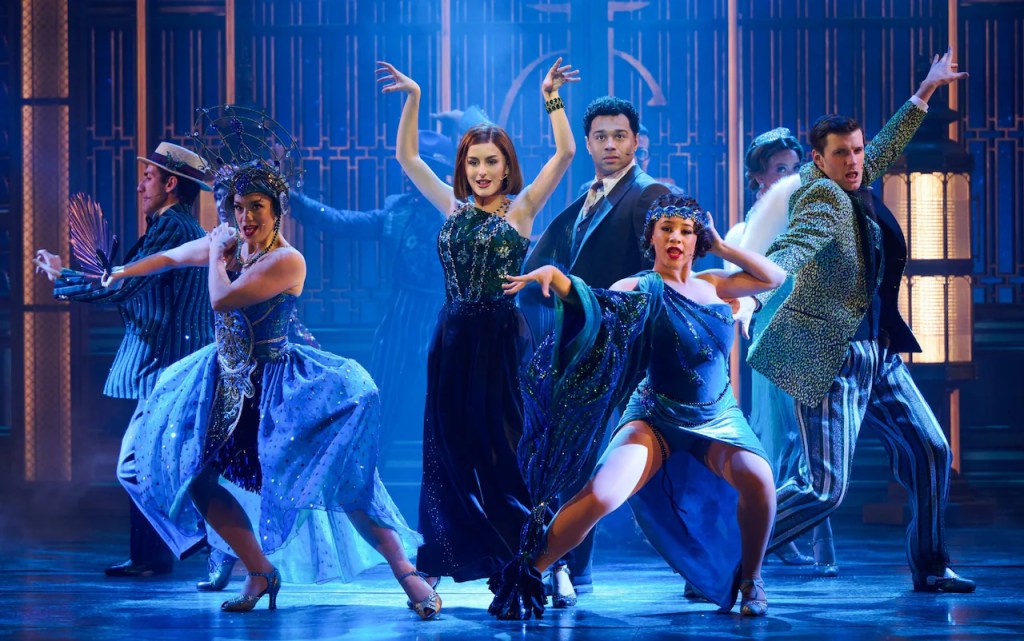
For me, there were many unforgettable performances to match Rachel Zegler, Romola Garai, Samira Wiley and Jonathan Bailey. I’ve mentioned some of them above, and yet good as they are, they aren’t household names. Others who caught my eye include David Shields in Punch, Royce Pierreson in Richard ll, Samuel Edward-Cook in Manhunt, David Moorst in A Midsummer Night’s Dream, Edward Bluemel in Born with Teeth and Sarah Twomey in Fallen Angels.
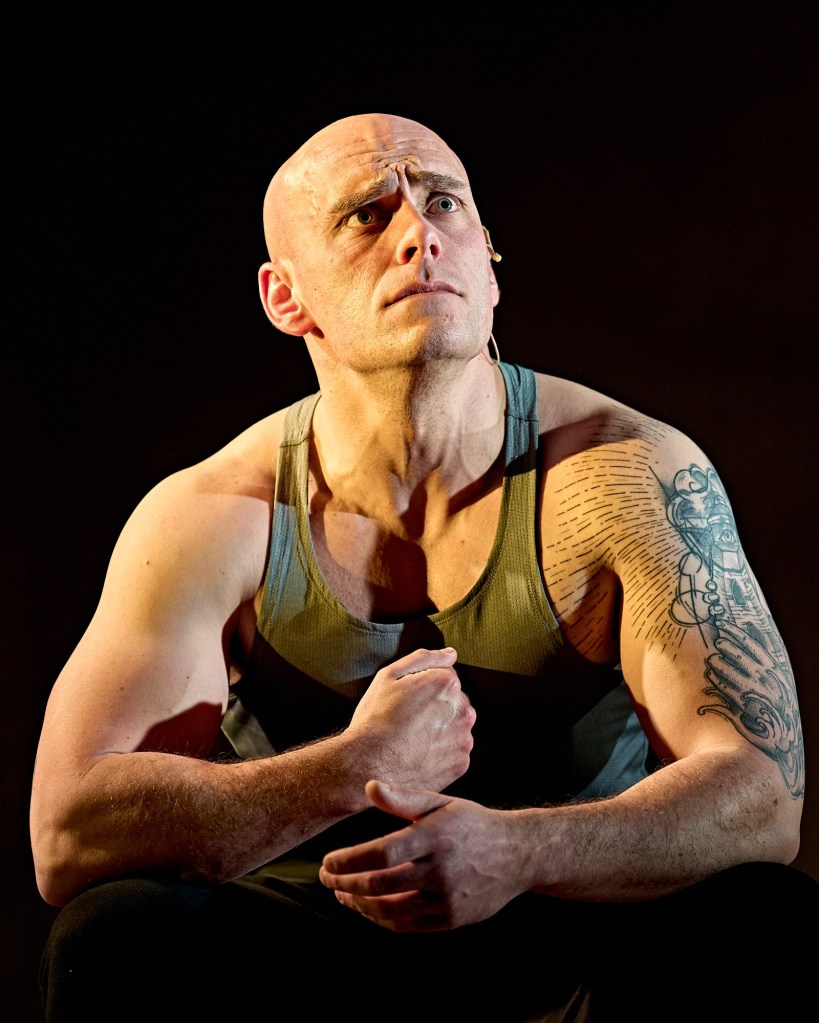
(Richard II)

(Fallen Angels)
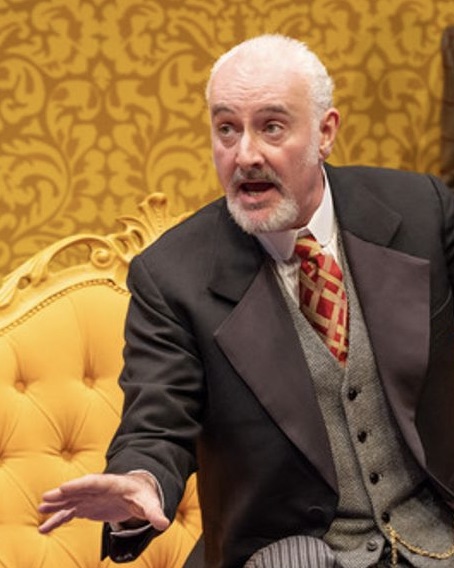
(Titus Andronicus +
When We Are Married)
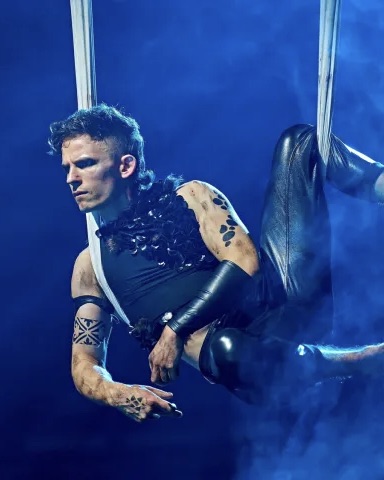
(A Midsummer Night’s Dream)
We were pleased to end the year with two comedies I wish we’d persuaded more of our friends to join us for Fallen Angels with Janie Dee and Alexandra Gilbreath at the Menier. This early play by Noel Coward was a delight, and provoked a lot of conversation even though it’s 100 years old!
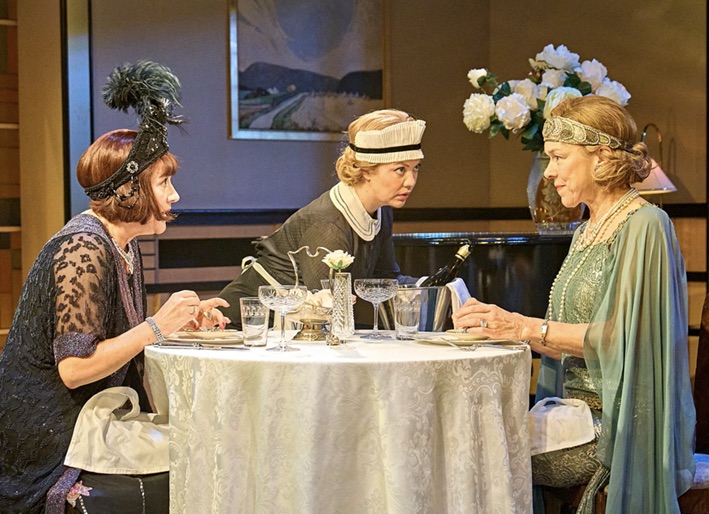
Sarah Twomey and
Janie Dee (Fallen Angels)
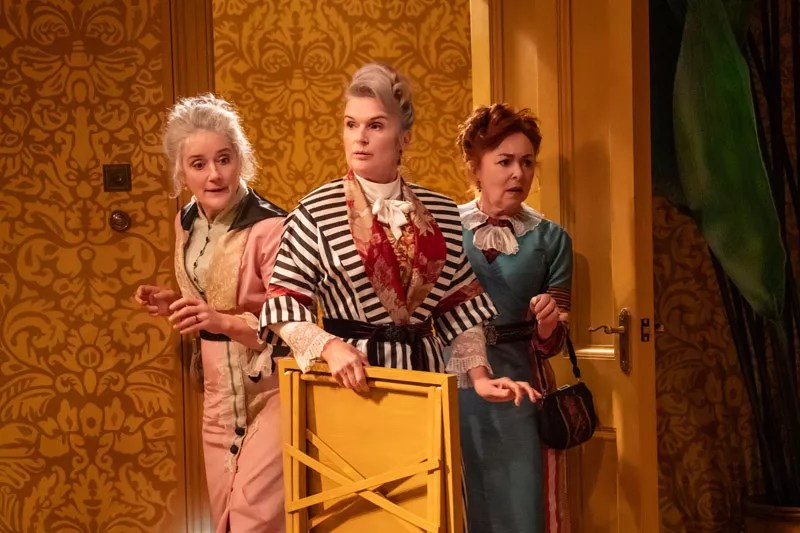
At the Donmar, When We Are Married was another winner. Timothy Sheader had an iron-clad cast in this perfect comedy by J B Priestley, and from the outset, it was clear that they weren’t going to put a foot wrong. We’ve watched the promising young actresses Siobhan Finneran, Samantha Spiro and Sophie Thompson mature into the confident players who led this hilarious revival. They’re part of a great tradition, which is too often taken for granted. In days when government funding for the arts and training opportunities for aspiring performers are regrettably becoming more limited, our support is more important than ever.
We’re ever grateful to you all for your participation, attendance, and enthusiasm, all of which have enhanced our own enjoyment.
See you at the theatre!
And now…a QUIZ
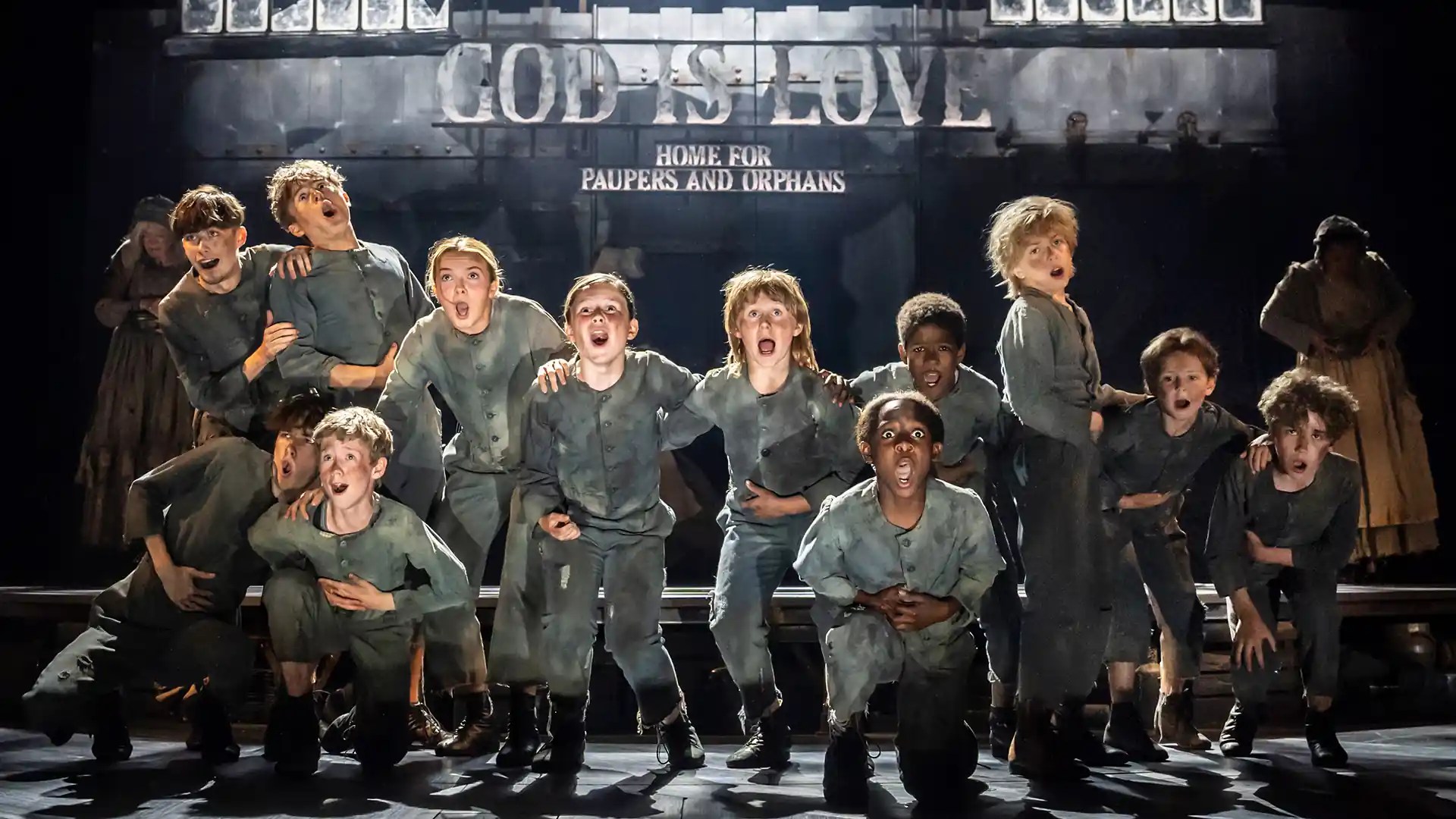
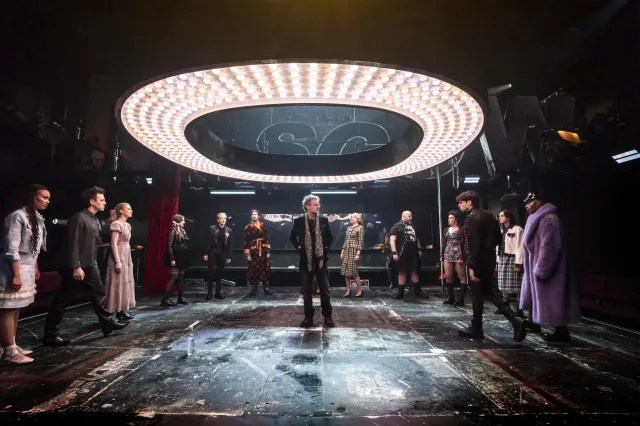
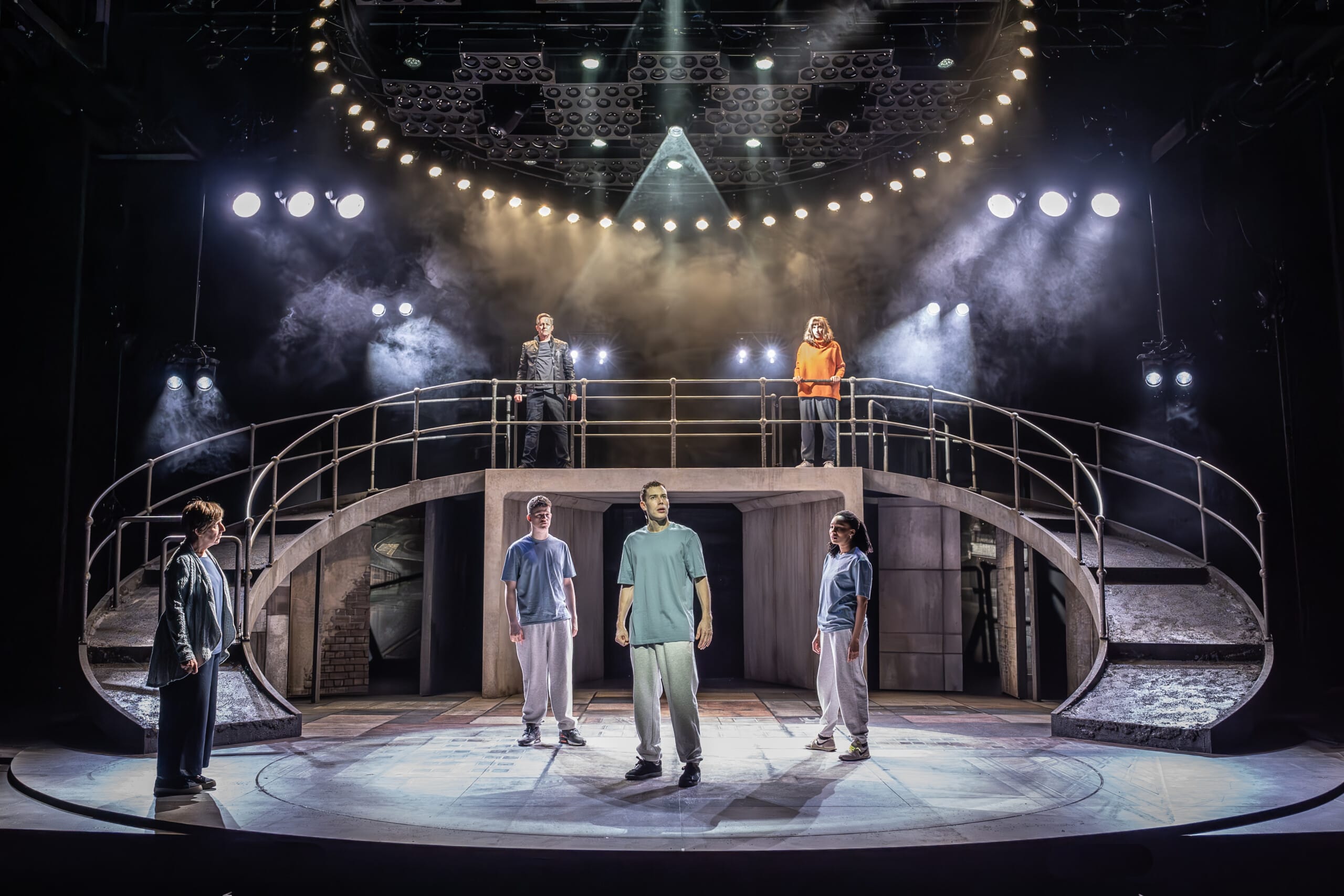
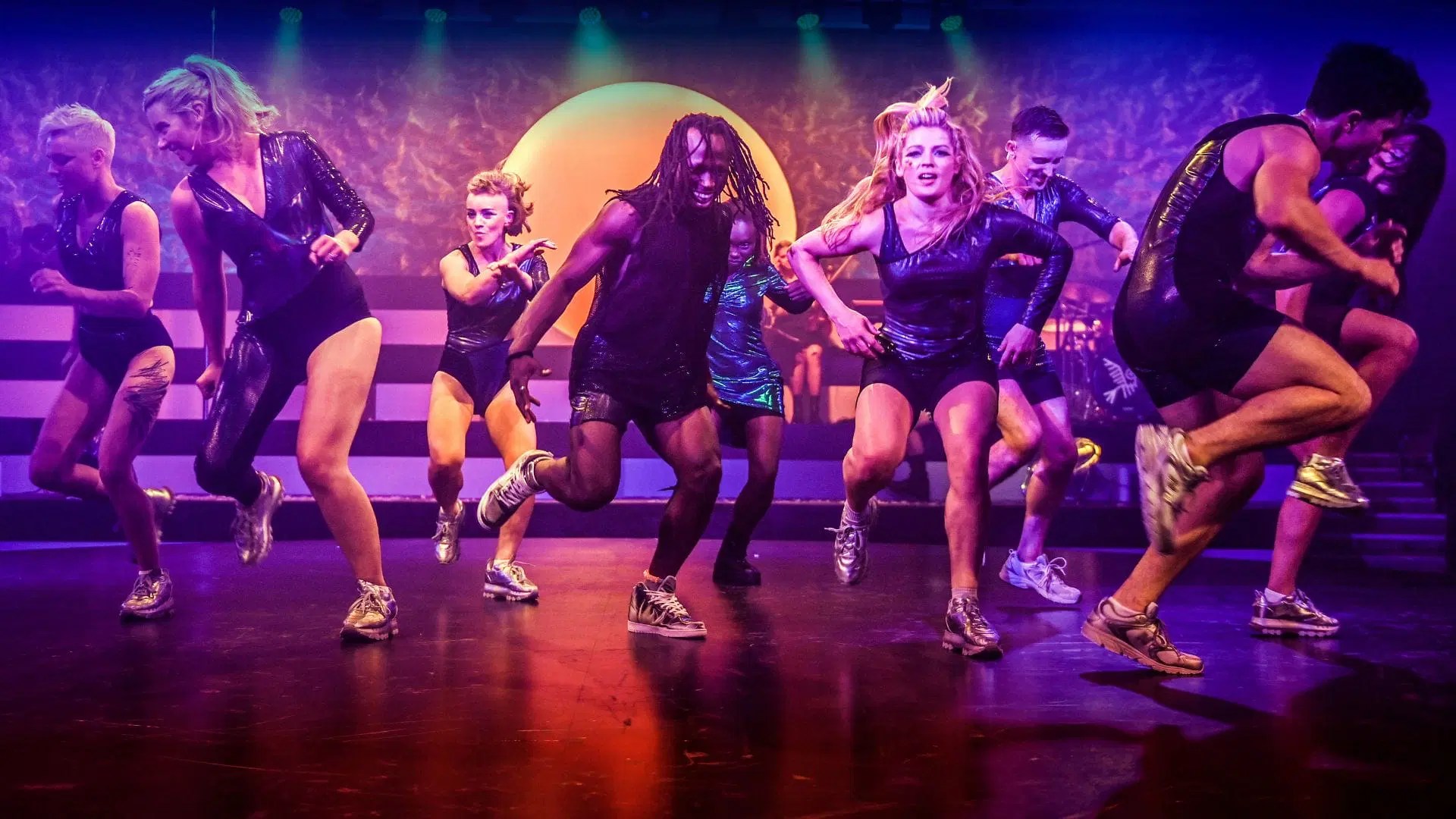
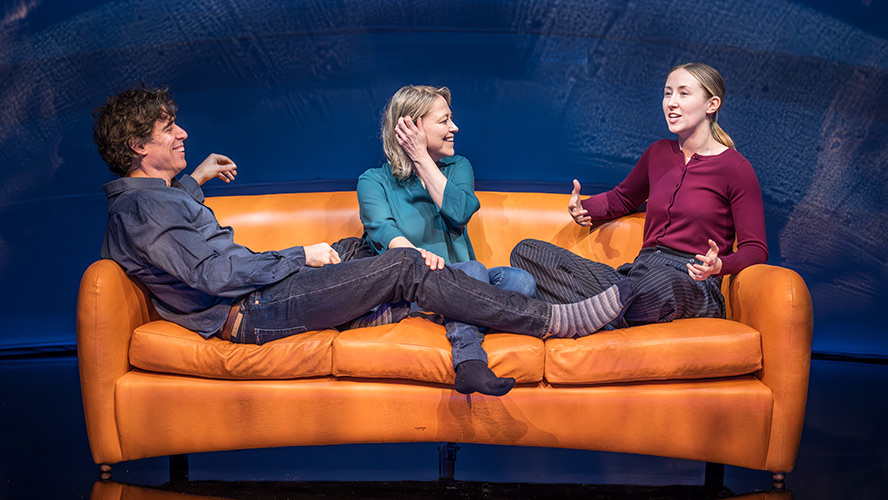
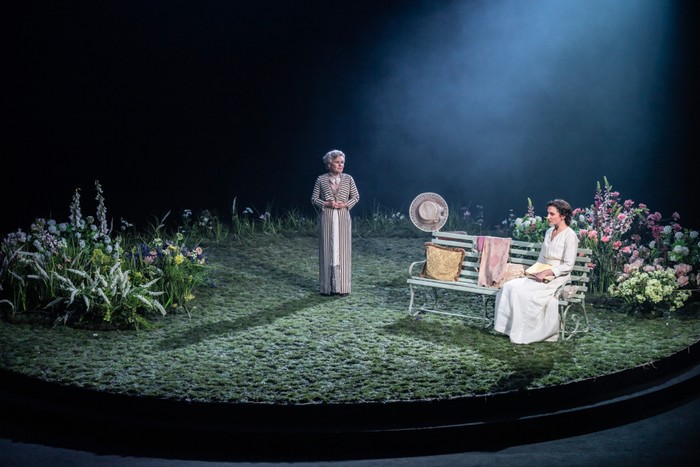
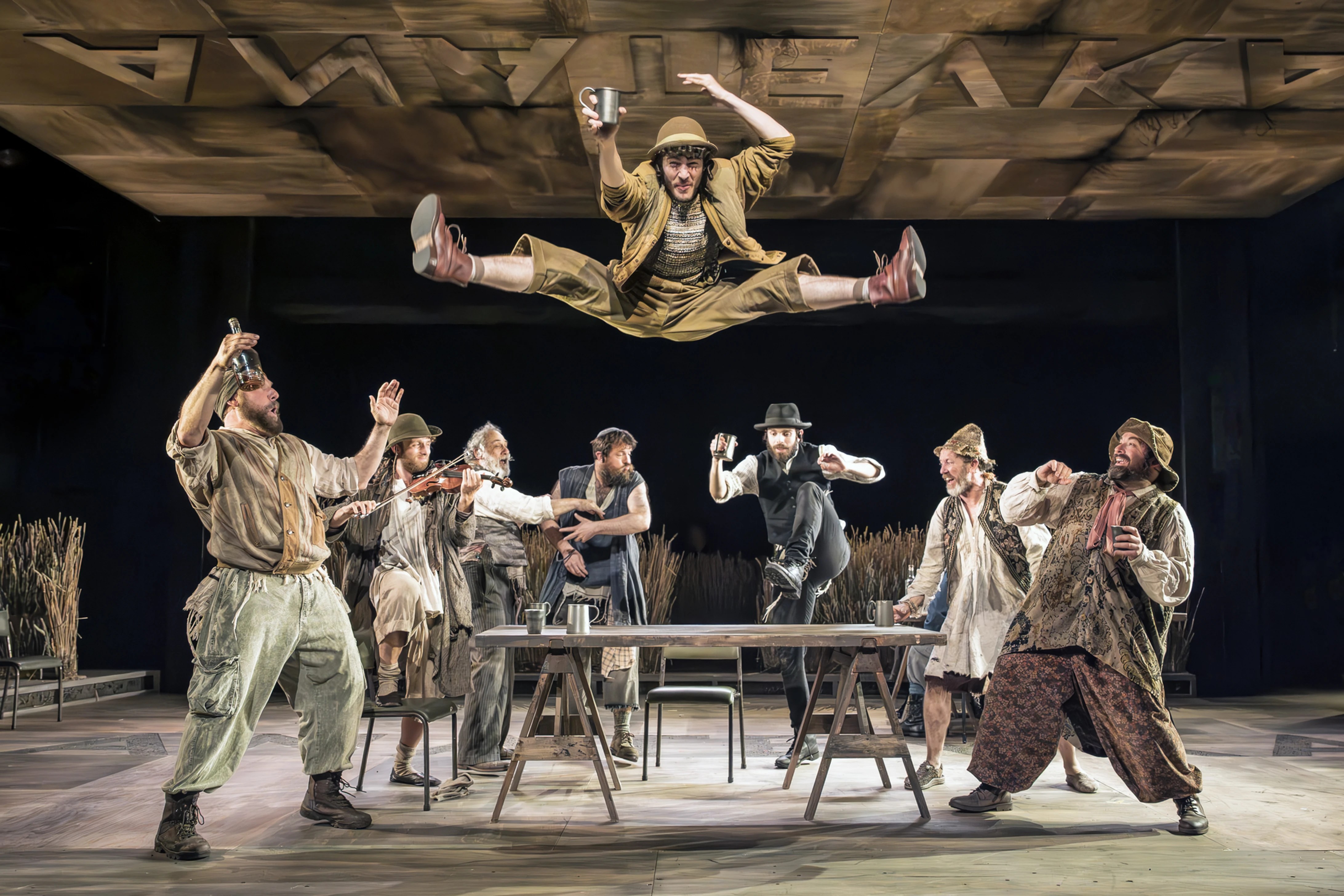
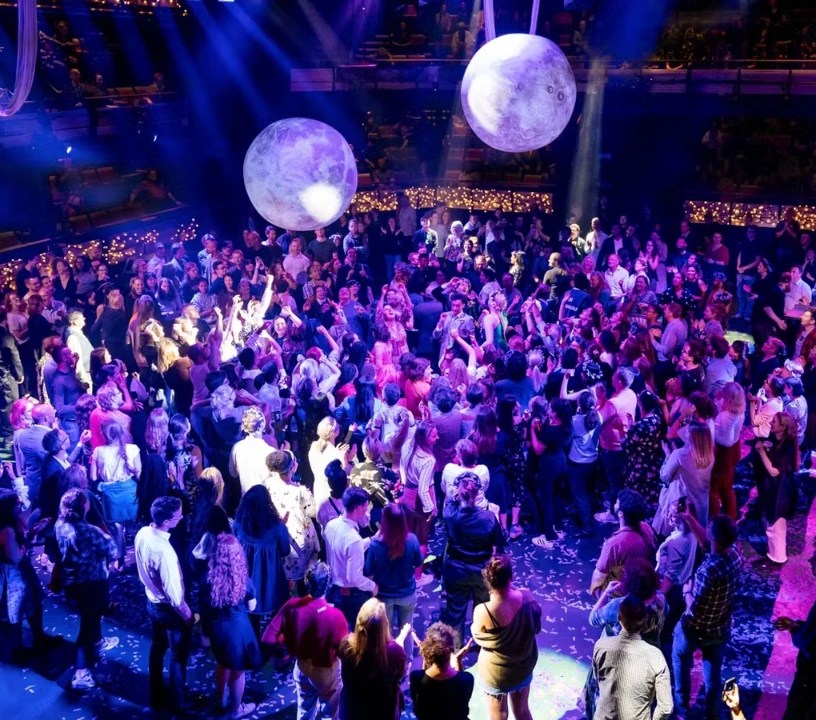
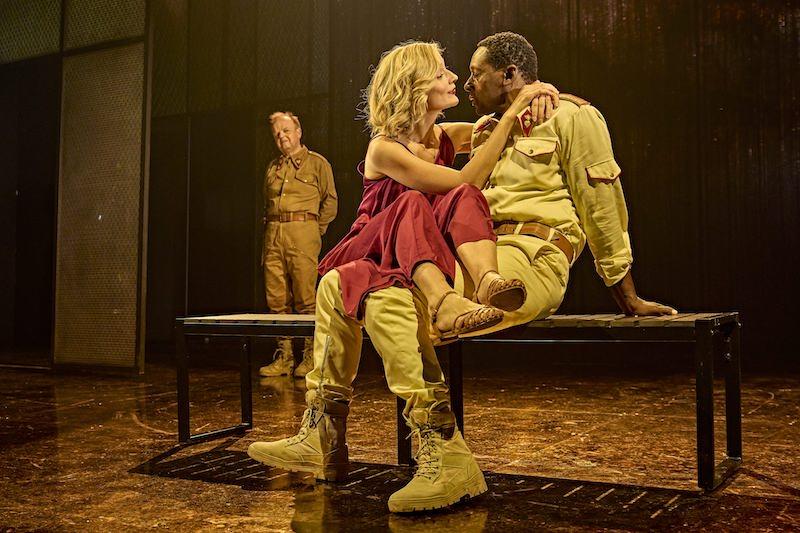
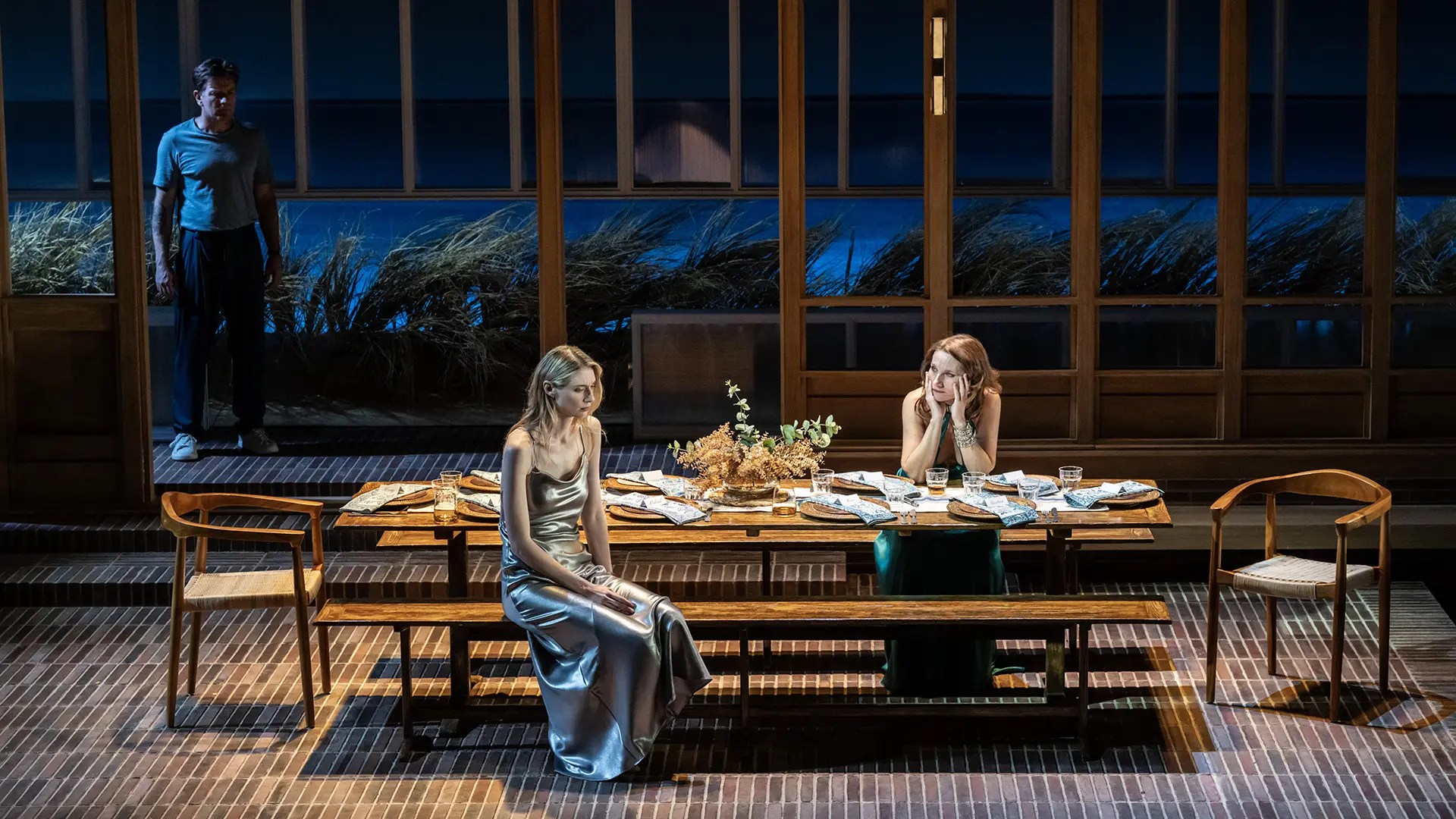
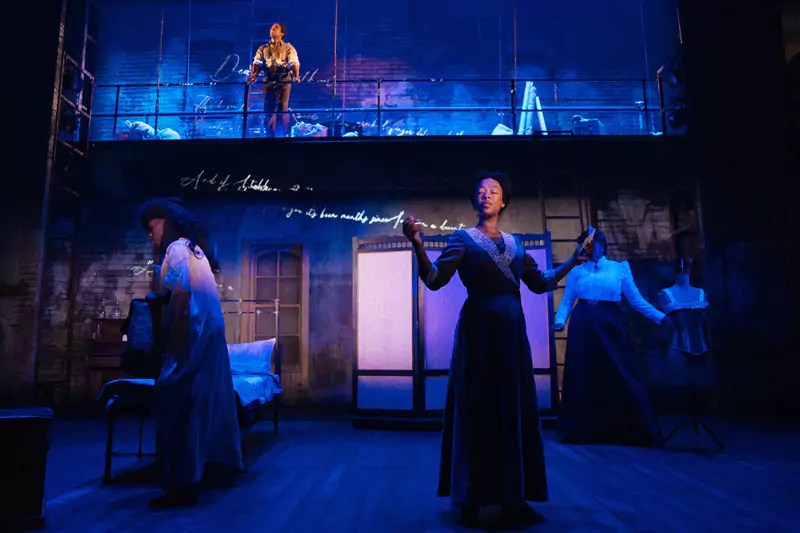
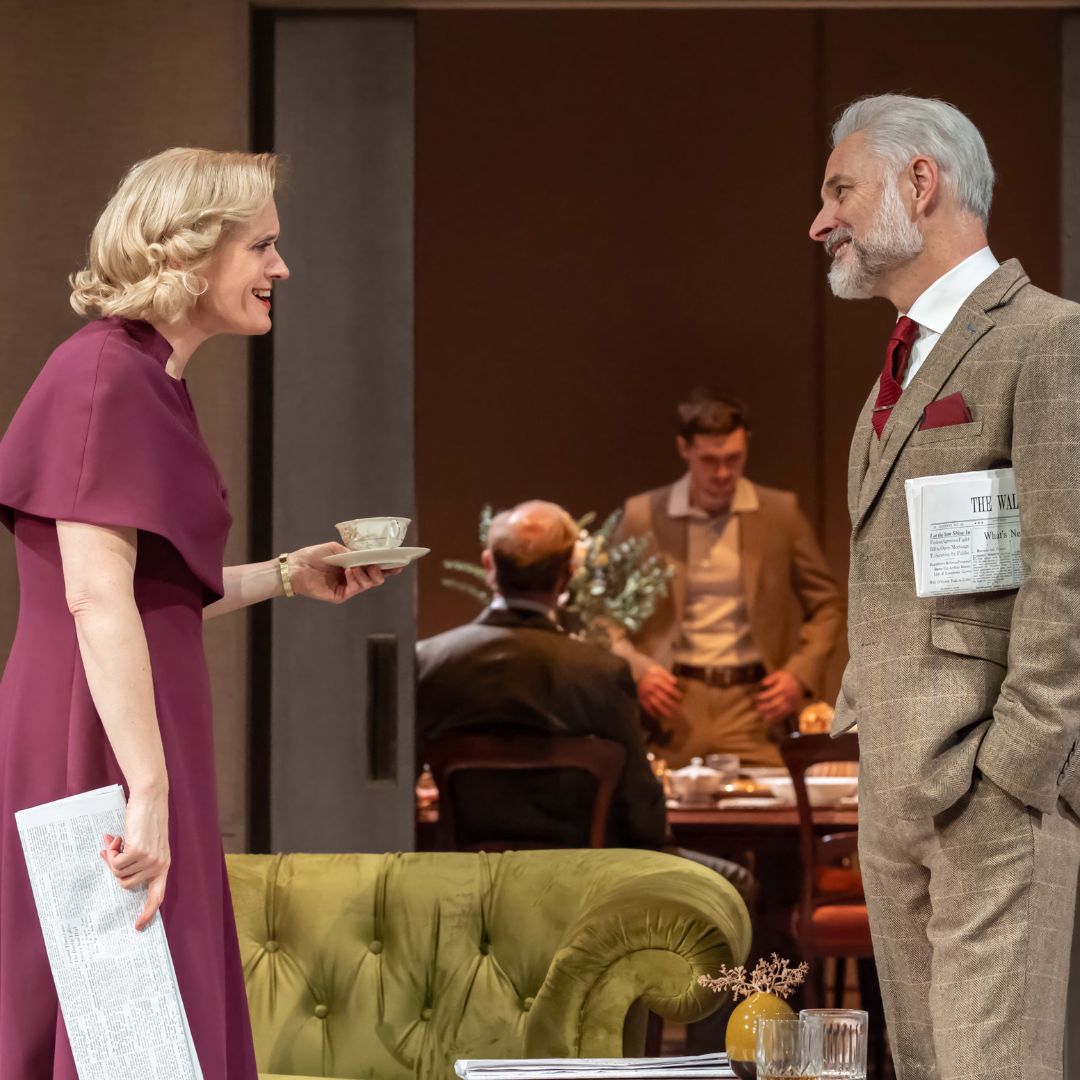
Can you name the 20 shows illustrated below? They are all shows we have taken you to see in 2025 but not all are mentioned above. Have a go! The first person to send us a list of the 20 correct answers (or the most correct answers by the 17th January) will receive a £10 discount off their next booking. (Click on the pictures to enlarge.)


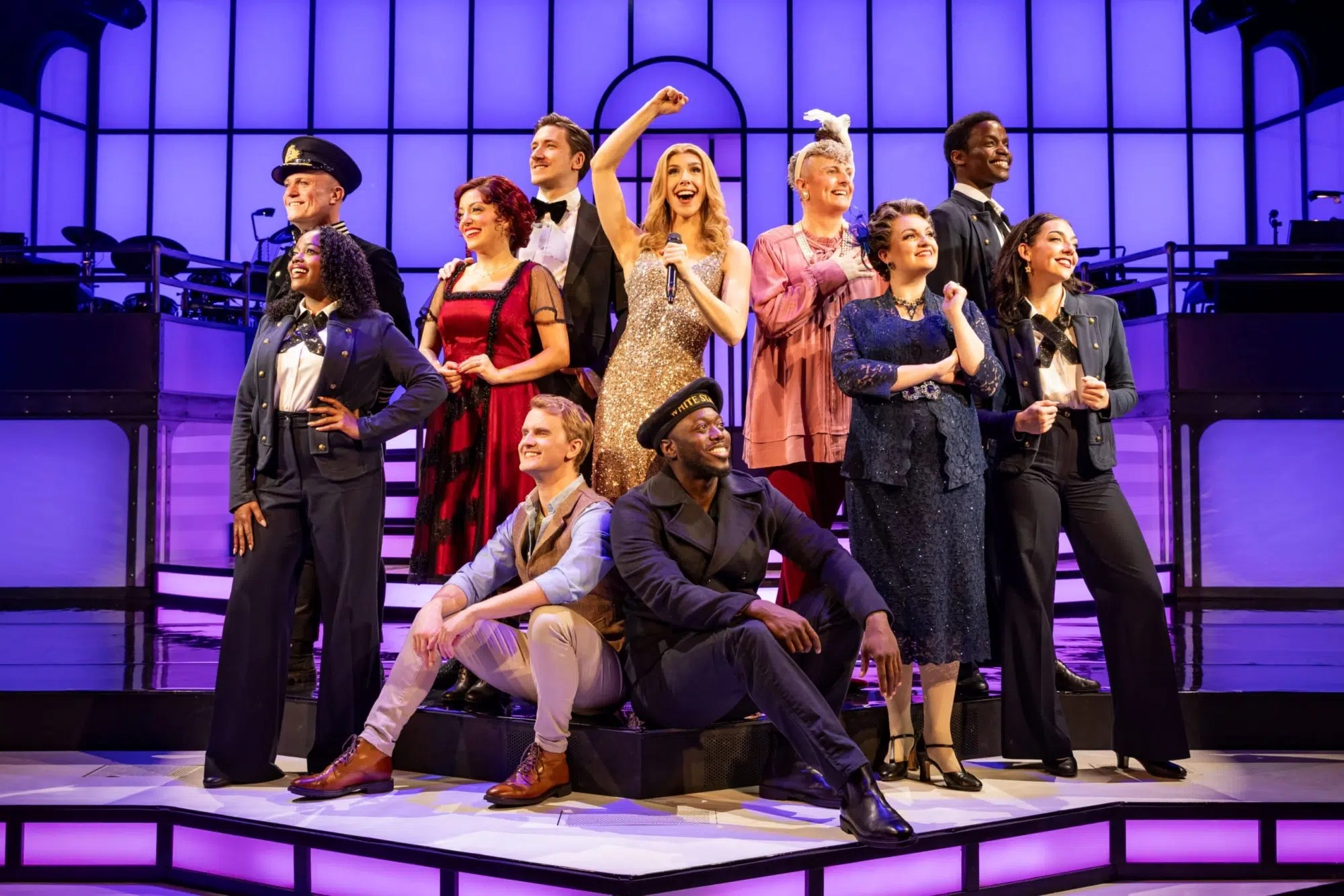
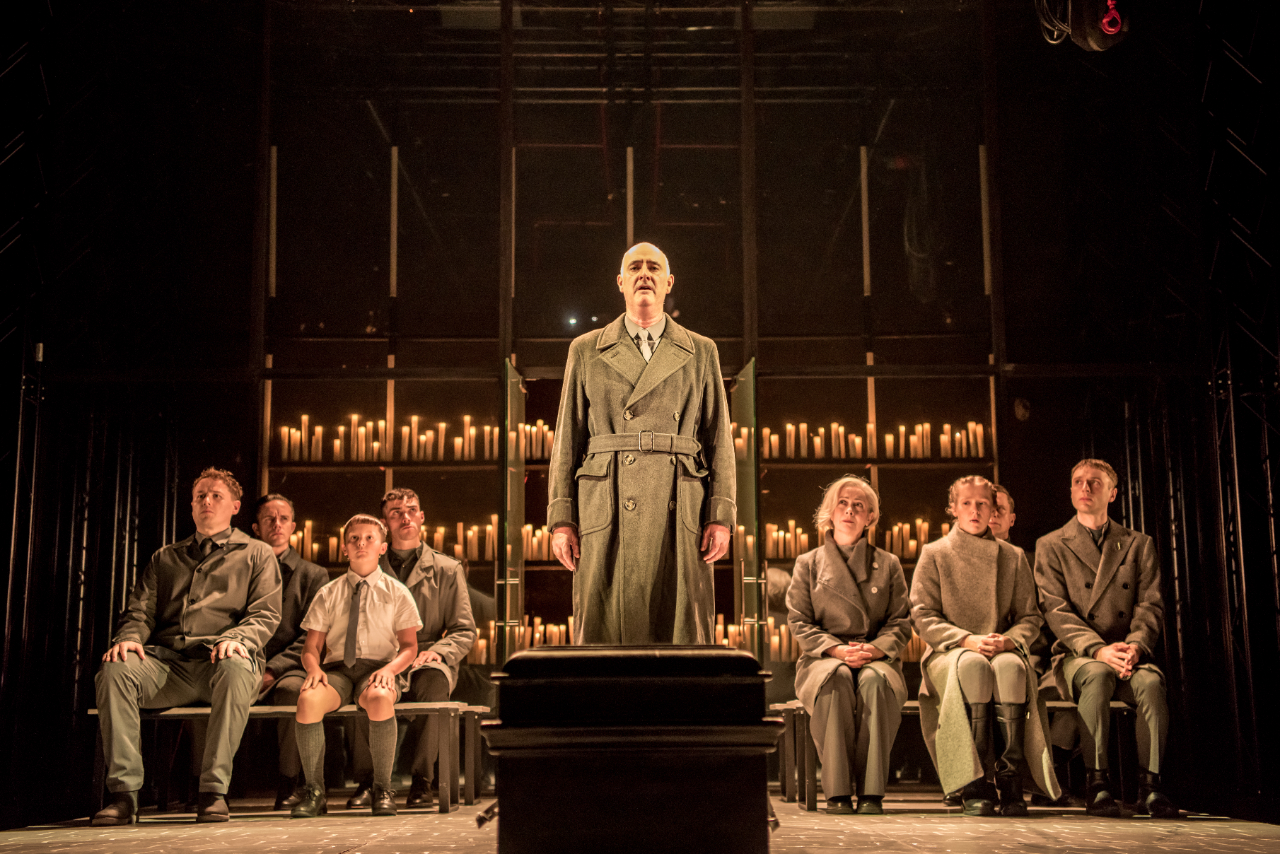
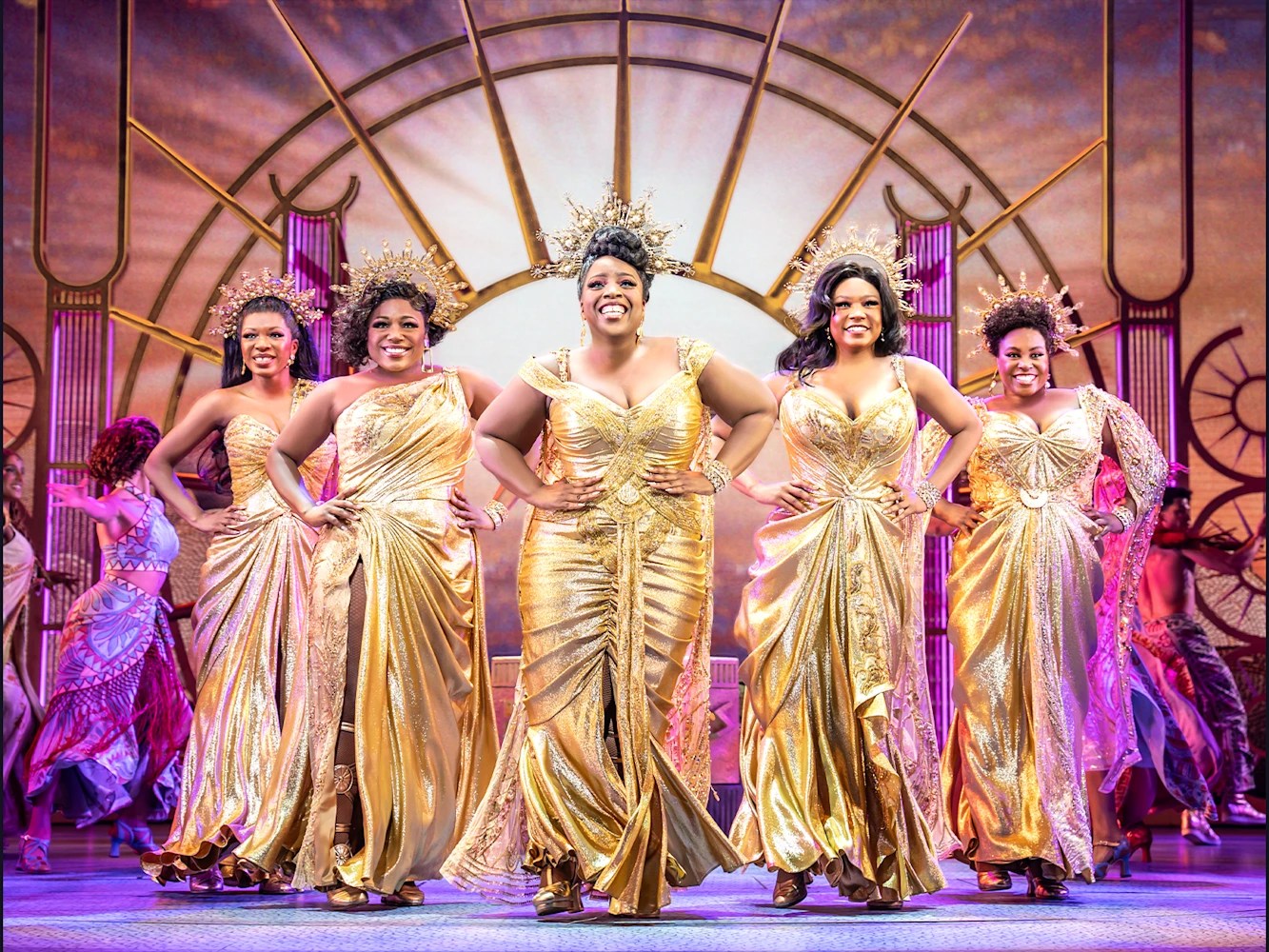
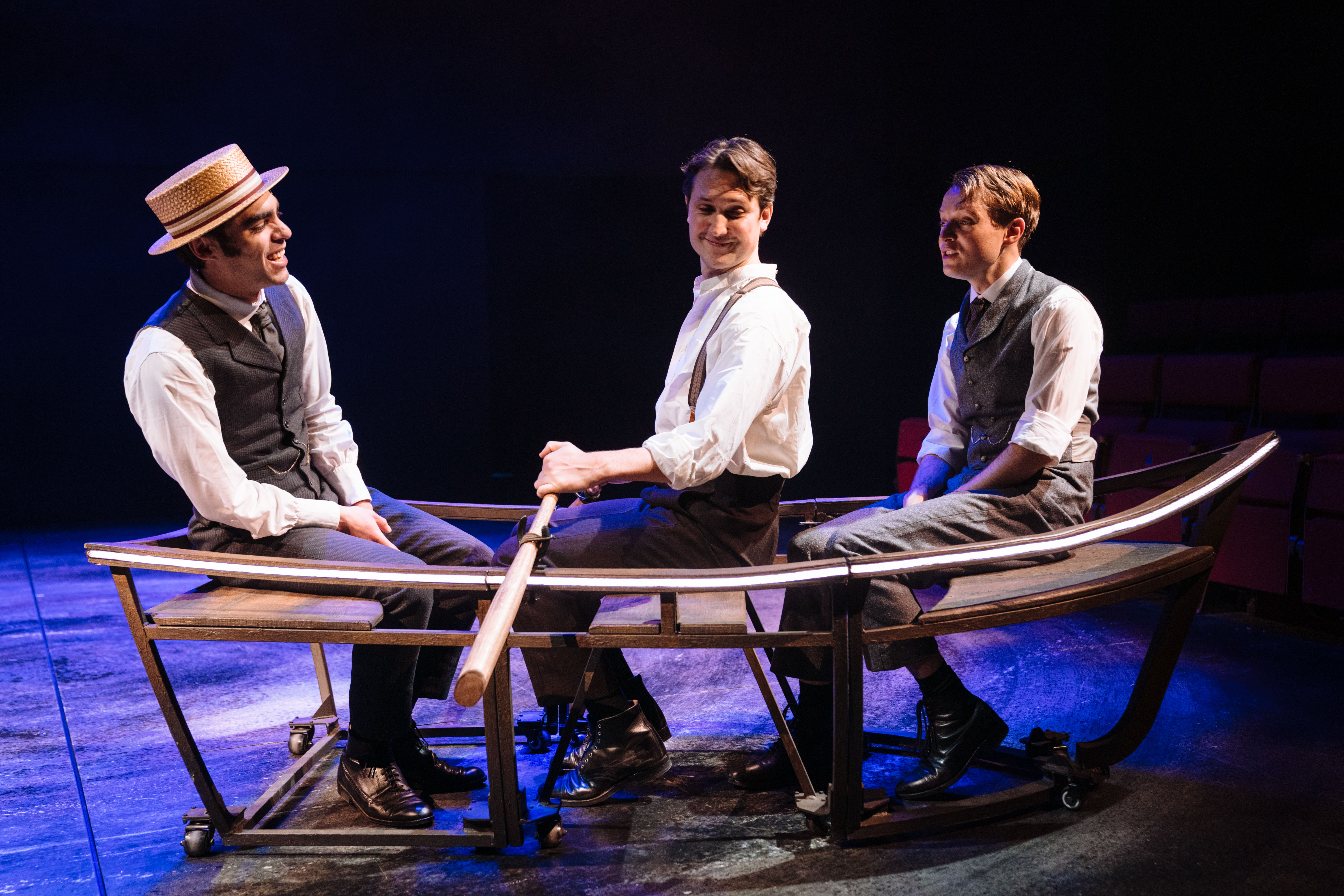
04/01/26 Mike writes –
We missed you – Shows we saw without the Group
My first wish of Theatre is that it should Challenge, Educate, and Entertain. Of course not all shows do all three and those which excel in the Entertainment category usually sell the most tickets. But happily our Group has wide tastes so we try to fulfil those three categories when we offer a spectrum of shows for you. Sometimes, of course, no tickets are available for groups, especially in smaller theatres, and those are the shows which we most regret NOT being able to take you to see – we go on our own and sometimes they are the best of the year.
Let’s begin with our ratings. I have just looked at OurReviews2025 and picked out the ones we rated highly. Either 2025 was an especially good year or we are especially good at deciding what to see! The total number includes 18 theatre visits we rated 5-stars, and of that number 7 were with our Group. Fredo has mentioned them in his report above, but they include, of course, Evita which became the most talked-about show in the West End last year. The Donmar provided three of the titles – Dealer’s Choice, the poker play which played its characters off against each other with great ensemble performances from its all-male cast, including Alfie Allen on top wide-boy form. The other 5-star Donmar play was Intimate Apparel, so subtle and heart-wrenching, with Samira Wiley giving us what I thought was the best female performance of the year. The Donmar also gave us one of the top-rated musicals of the year, Natasha…etc which Fredo also mentioned.

(Evita)
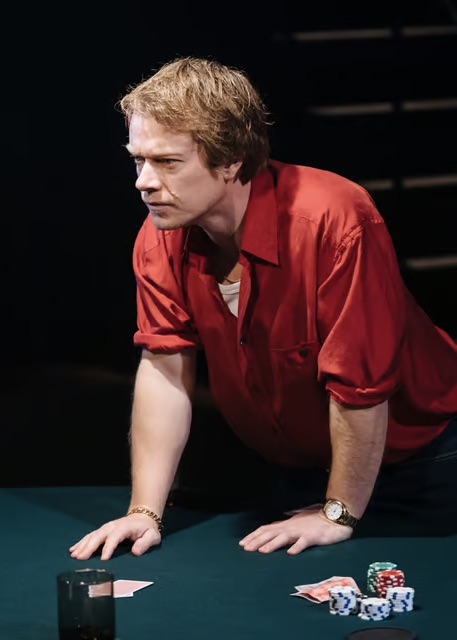
(Dealer’s Choice)
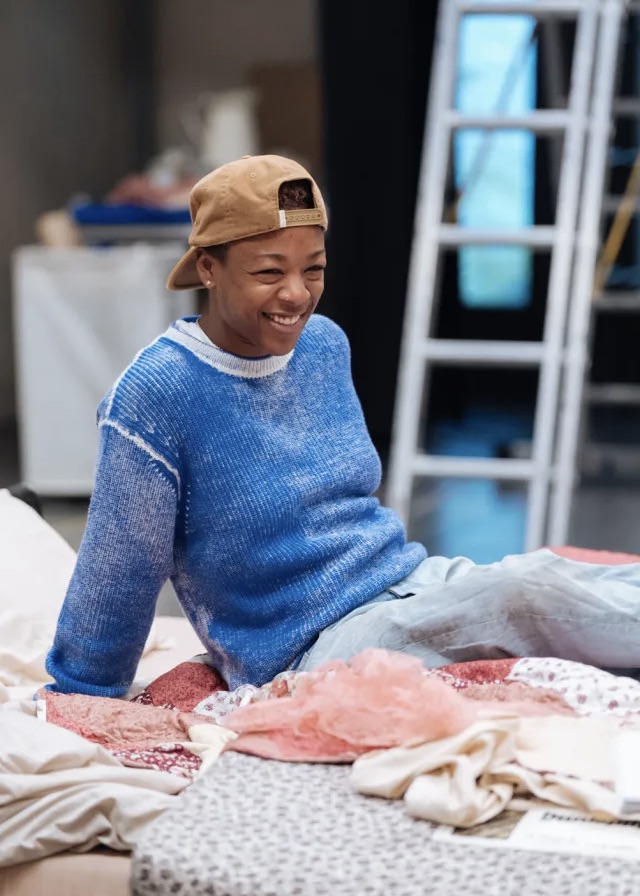
(in rehearsal for
Intimate Apparel)
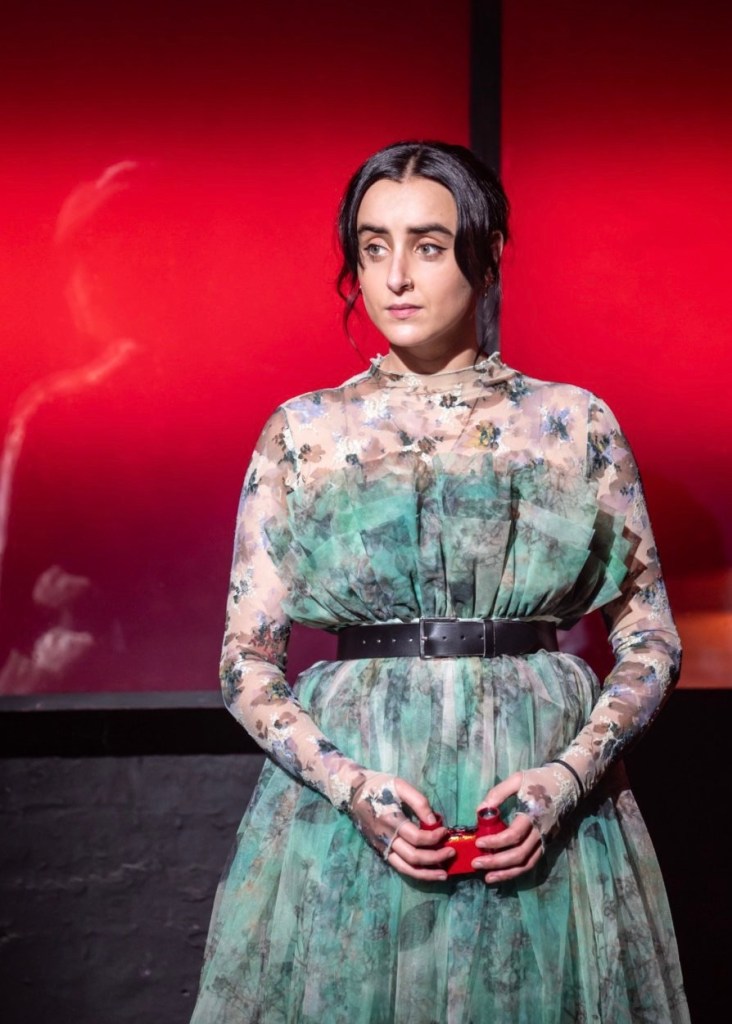
(Sonya in Natasha, Pierre and the Great Comet of 1812)
Moving on to the 5-star shows which unfortunately we could not offer you, we have two Shakespeare plays. Jamie Lloyd had disappointed many with his dreary Tempest at Drury Lane, then bounced back with a fun-filled production of Much Ado About Nothing, ankle deep in pink confetti, with Tom Hiddleston twerking for his cheering fans…and us too: 5 stars and I think Shakespeare would have approved. He might also have cheered Hiram Abeysekera’s Hamletwhich I liked so much I saw it twice. Most critics were not so enthusiastic, but young audiences were well in tune to its contemporary presentation, its clear and well-spoken text, and its diverse casting.
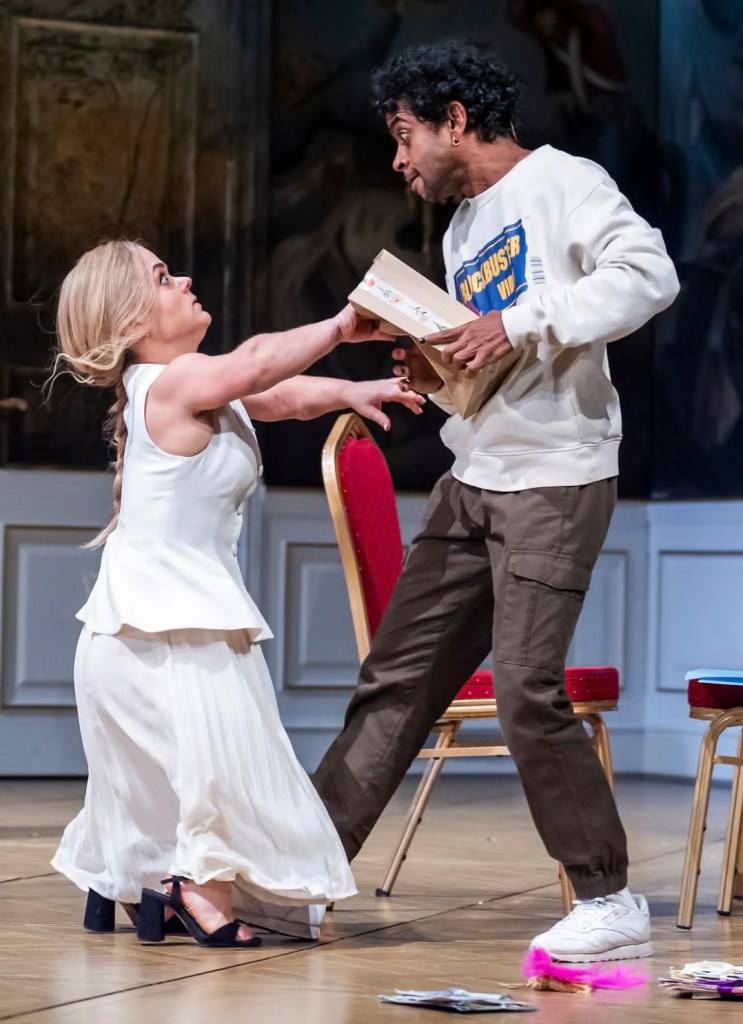
Hiram Abeysekera
(Hamlet)
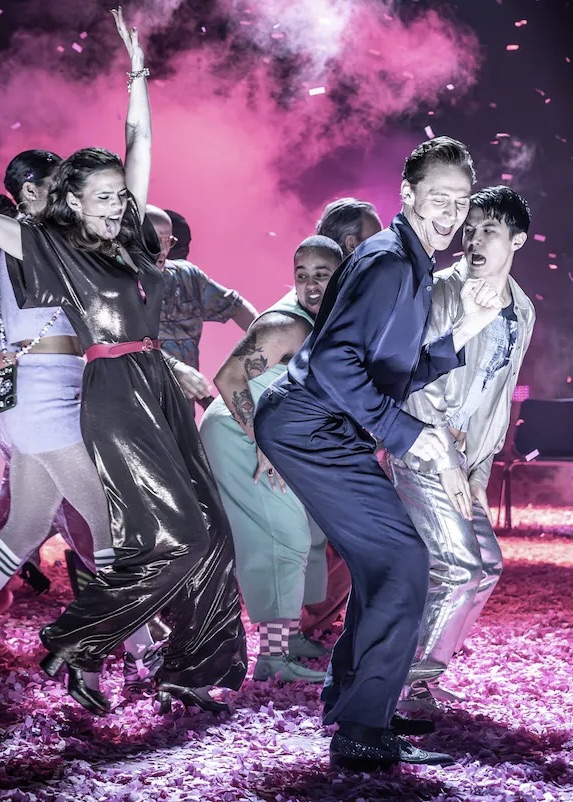
(Much Ado About Nothing)
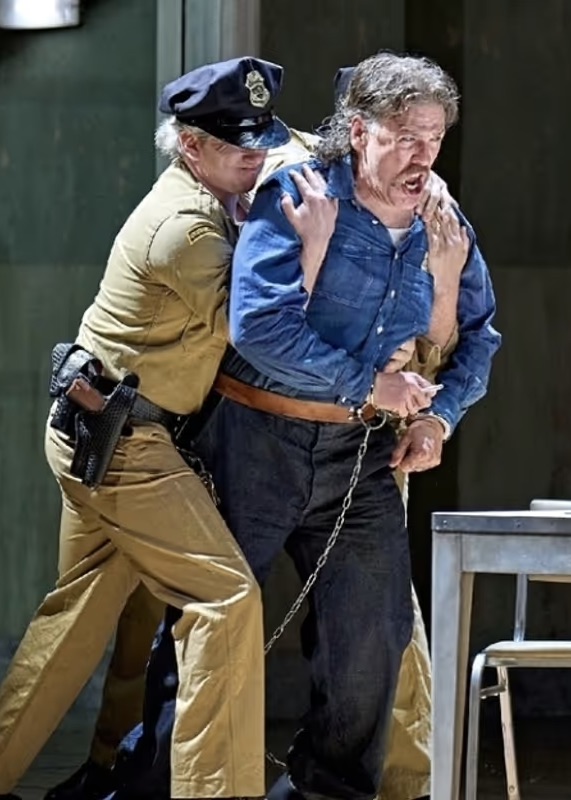
(Dead Man Walking)
One opera, Dead Man Walking at the Coliseum, was one of the most powerful productions I have ever seen there, taking us through a rape and murder, a trial and subsequent execution, all shown on stage and sung to devastating effect. It Challenged, Educated and was the most intelligent of Entertainment in its own compulsive way.
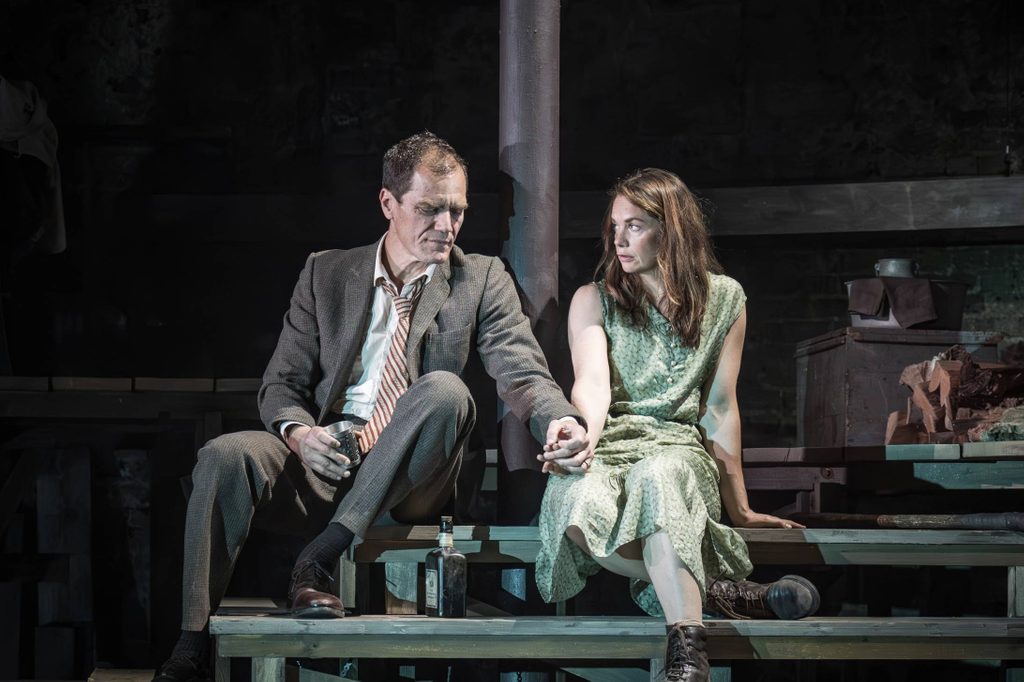
(A Moon for the Misbegotten)
The Almeida is riding high at present with one magnetic show after another, all selling to capacity and no chance of booking a group. The Hours from 2024 transferred to the West End in 2025 where at last we were able to take you (see Fredo’s report above), but another we had to see on our own. Eugene O’Neill’s A Moon for the Misbegotten is a sad and serious piece, but a classic not to be missed, and it impressed us with Michael Shannon and Ruth Wilson captivating us with every word. Its star casting ensured a Full House.
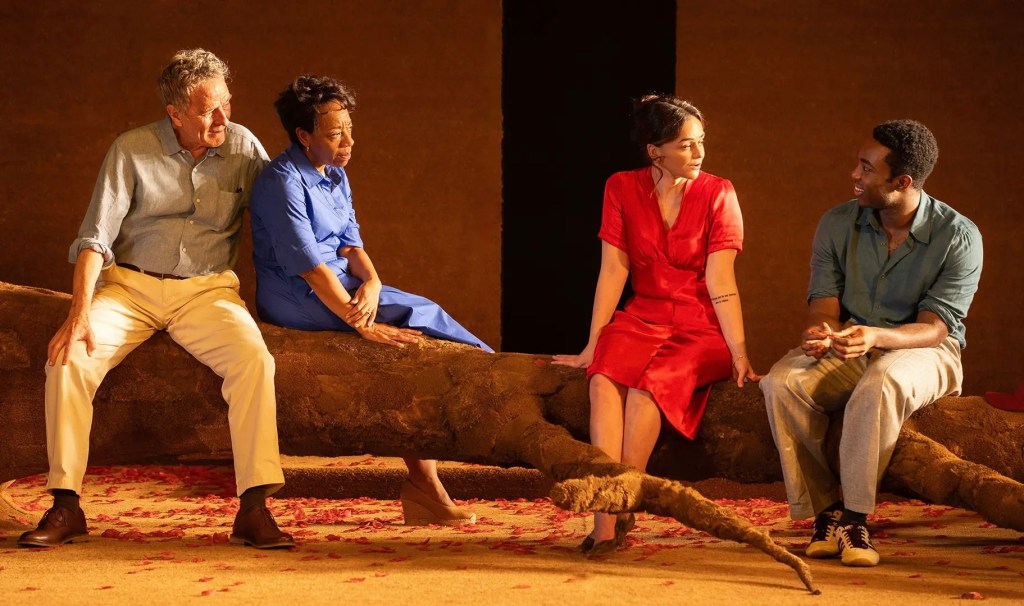
Hayley Squires & Pappa Essiedu
(All My Sons)
Fredo decided not to see Arthur Miller’s All My Sons, directed by the highly unpredictable Ivo van Hove. I found myself a cheap front-row side seat perched up in the gods, and was privileged to experience the most gut-wrenching emotional drama of the year. For Bryan Cranston, Pappa Essiedu and Marianne Jean-Baptiste, I hope the awards will come, just as surely as the seat prices rocketed when audiences clamoured for tickets.
I mentioned that we rated many other productions highly, so I will drop a few titles here. The Almeida scored well again with Eugene Ionescu’s surreal Rhinoceros, but then plummeted to one star for Romans: a novel – seen and forgotten, despite Kyle Stoller leading a large cast. At the Soho Theatre, This Bitter Earth showed originality and feeling in a gay relationship; and the Dorfman, with Juliet Stephenson, presented The Land of the Living, a saga of forced child-expatriation during WW2, which gripped us for 3 hours and earned 4 stars.
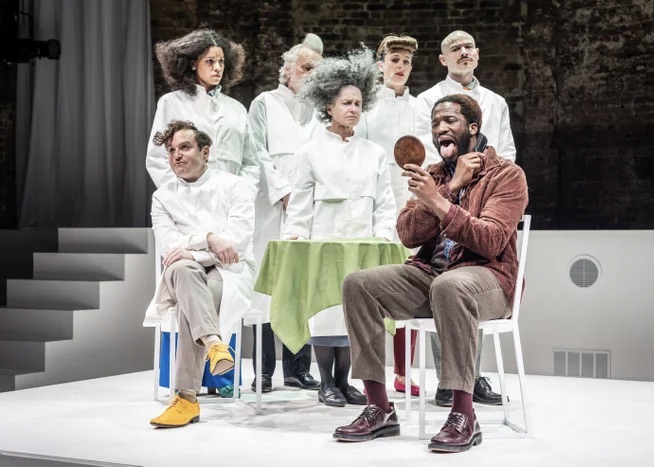
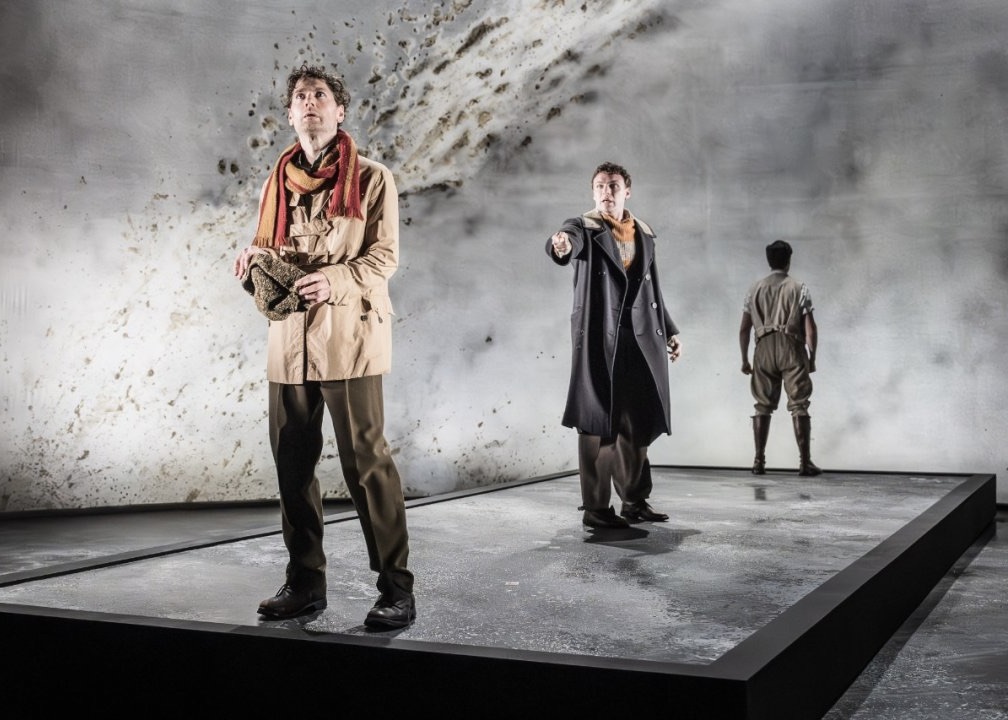

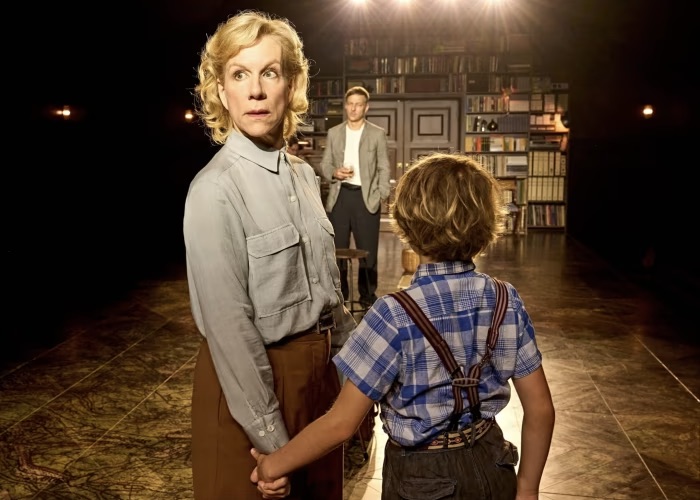
A rare West End stage appearance from Brendan Gleeson in Conor McPherson’s classic The Weir, earned four stars from us too. Hampstead entertained us with a quirky American play, a family saga, The Assembled Parties, with a gap of 20 years between its two Acts; and the Old Vic brought in Susan Sarandon and Andrea Riseborough to boost the box office for Mary Page Marlowe, a gripping feminist biography with five actresses playing just one woman (as in The Hours!). It worked. It also continued a current trend for shorter plays, around 90 minutes.
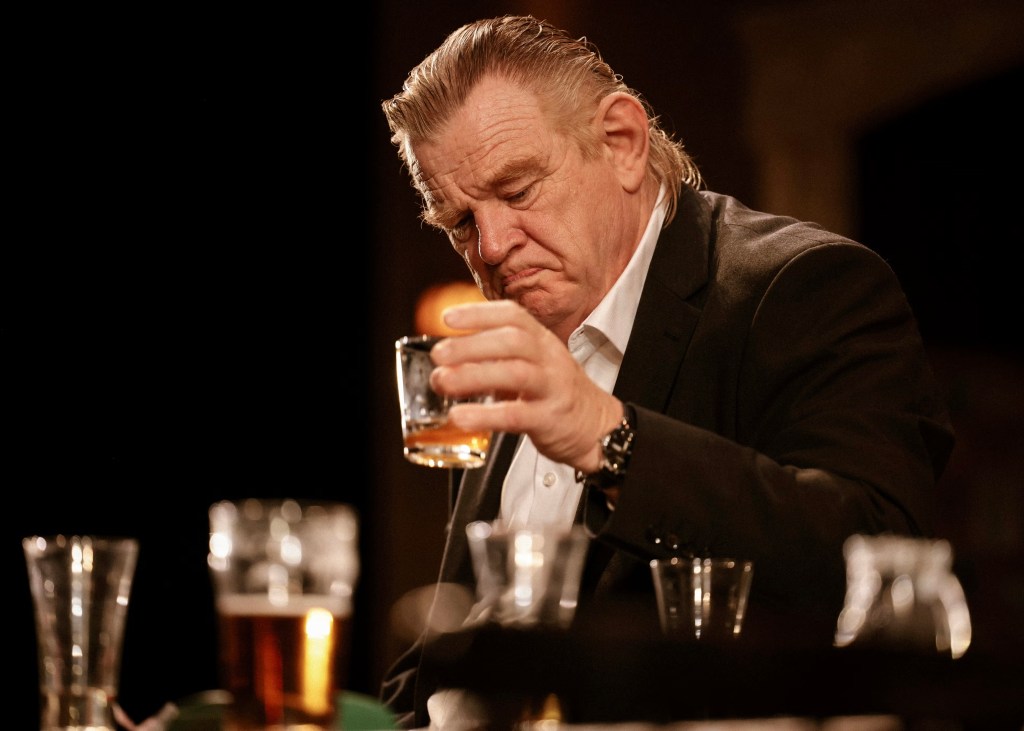
(The Weir)
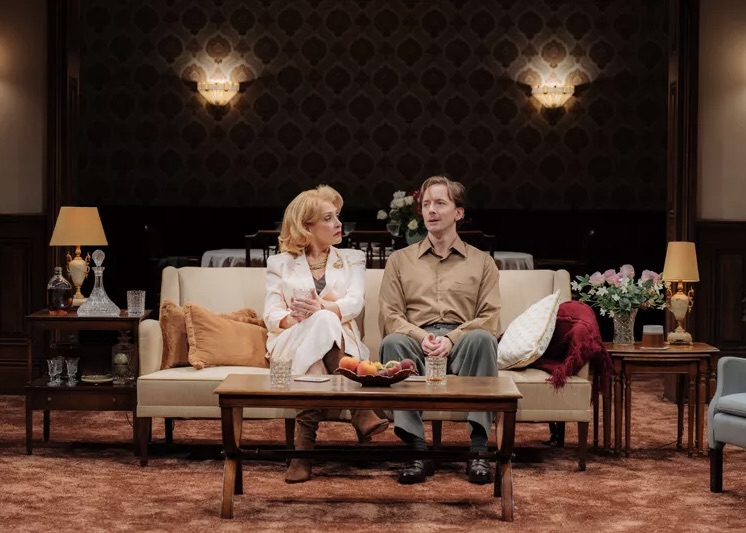
Sam Marks
(The Assembled Parties)
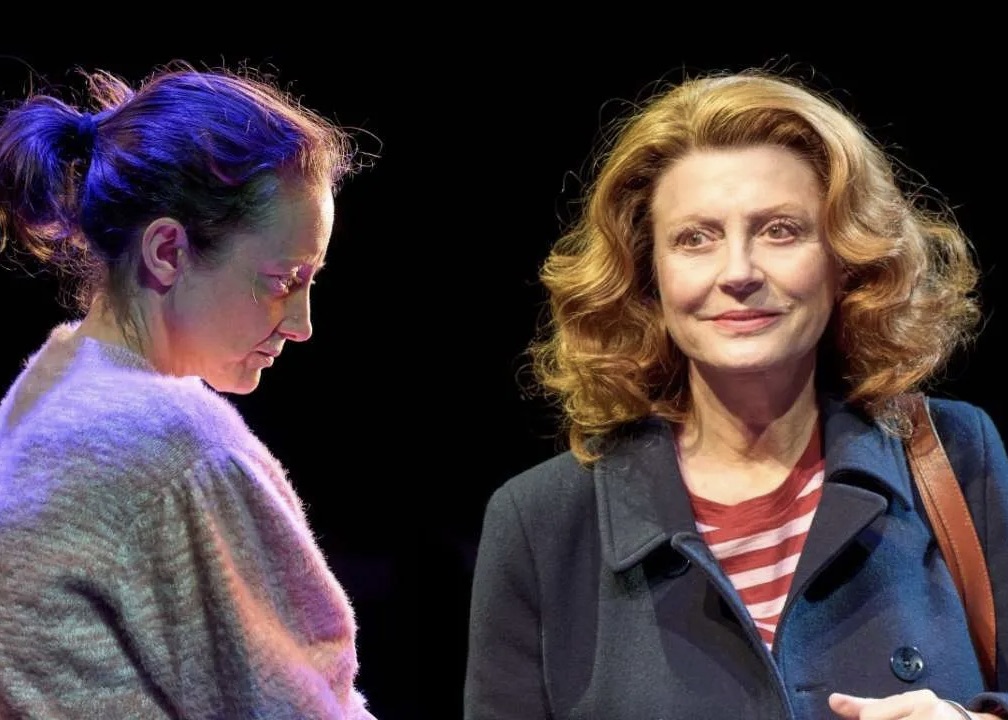
Susan Sarandon
(Mary Page Marlowe)
Sondheim’s final musical Here We Are arrived at the National from New York where we had seen it in 2024; and the footie play about Gareth Southgate, Dear England, returned to the National, recast but just as good at it had been before. All these shows rated highly in our opinion, but for various reasons we were unable to offer them to the Group.
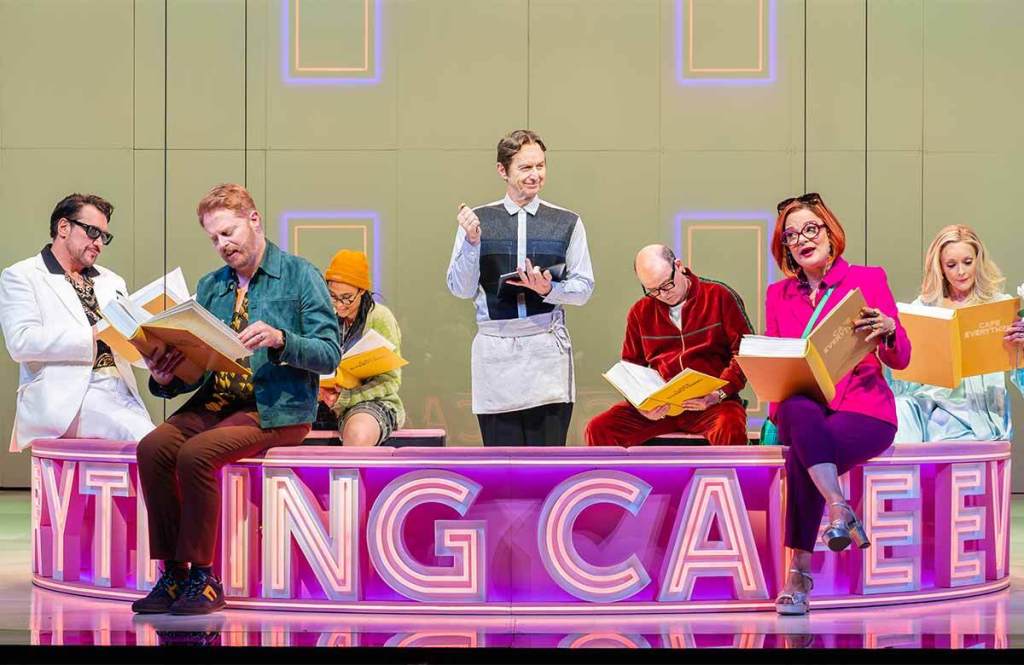

(Dear England)
Our final play of 2025 was KENREX (yes, its title deserves its caps). It’s a marvel of a one-man show (with music) that just amazed us and hooked us from start to finish. We knew by the Interval we wanted to offer it to you so booked your seats the next day….and some tickets are still available. You may have missed the shows we rated so highly, as mentioned here, but you still have a chance to see this one. We hope you will be as impressed as we were and continue theatregoing into 2026.
Mike
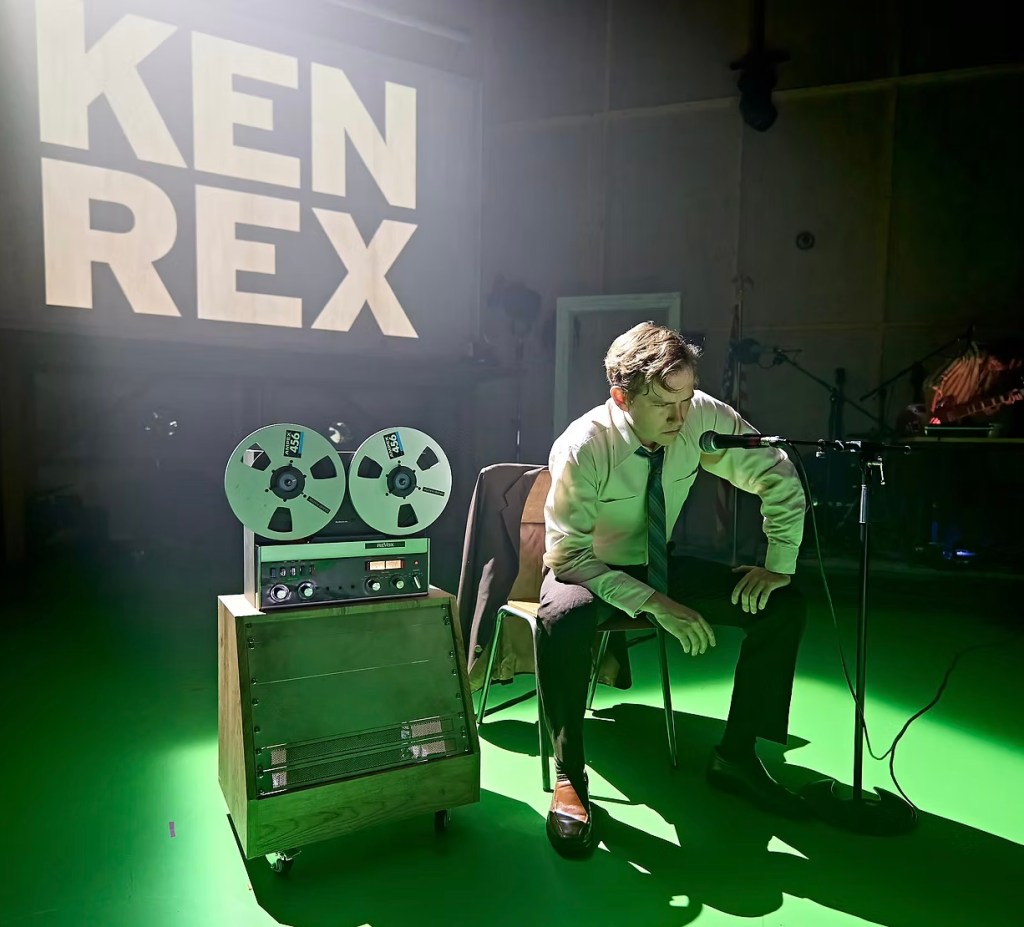
(KENREX)
9/12/26 Mike writes –
Who’s grumbling about high seat prices?
The answer to that question is me, and maybe you. West End theatre prices are rising all the time, and unexpectedly too. An article about the National Theatre’s prices going up mid afternoon when Fredo was trying to make a Group booking can be read below. Blame the NT algorithm. This now happens throughout theatreland. Even the small Hampstead Theatre, well away from the West End, is opening booking with a top price of £110 for its musical Kimberley Akimbo next year.
But not everyone is grumbling it seems. Attendances at West End Theatres have not only caught up with the figures prior to Covid but are exceeding them – 17 million attendances last year, 11% up on pre-pandemic figures. Shows with huge prices are getting huge audiences.
The Theatre was once regarded as elitist, for the upper middle class, and then producers went all out to encourage younger and poorer new audiences with allocations of cheaper tickets. However a friend recently commented that Theatre, with its Dynamic Pricing and ever higher prices, is now ’socially divisive’. I wonder if that is true. Certainly many cannot now afford to go to the theatre but, and it’s a big BUT, a great many still do. They are those who like theatre-going to be a Special Treat, to see someone or something special on stage, and they are prepared to pay the higher prices. Other more regular theatre-goers now have to cut back. And so Theatre may indeed be ’socially divisive’, perhaps not divisive by class but by age and current employment.

Of course anyone from the cast of a Marvel movie or Netflix series always helps to sell tickets, whatever the show. It wasn’t Shakespeare who sold Romeo and Juliet at the Duke of York’s last year but Tom Holland, previously Spiderman. Maybe the trend began as long ago as 2016 when no-one booked for Doctor Faustus in the West End – they booked for Kit Harrington from Game of Thrones as Doctor Faustus. We have had many shows with leading actors in that category over the last few years. And everyone now knows how Evita sold out at the Palladium this year, for star director Jamie Lloyd, even with top prices exceeding £300 for some performances. Yes, star directors (and a great production) sell tickets too. At the subsidised National Theatre, ALL remaining seats for Lesley Manville and Aidan Turner are currently on sale at £120. It looks like high prices and theatreland’s boom go hand in hand.

So optimistic are producers, developers, financiers and British Airways (surprise, surprise!) that they are willing to invest money in new entertainment venues. London’s Olympia has been going downhill for decades but now it has a regeneration programme. £1.3 billion is to be spent by BA among others on hotels, restaurants and two large entertainment venues – a 1,500 seat theatre and a 3,800 seat music arena. At the Olympia Theatre, or it’s most likely to be the BA Theatre and Arena, BA Executive Club members will be given priority booking AND earn Avios points towards flights. No public money is involved in this venture, and with that size investment, the seats will not be cheap. But confidence in future attendances is part of the foundation for such ventures.
Already we have Starlight Express playing at the relatively new Troubadour Theatre: Wembley Park. The Hunger Games On Stage has just opened at the Troubadour Theatre: Canary Wharf, and the Troubadour Theatre: Greenwich is due to open in late 2026 with two 1,500 seat auditoriums. In Earls Court Come Alive! – The Greatest Showman has recently opened at the new Empress Museum theatre.


This is the new Show Business – new sound, video and laser technology in theatres is appealing to an audience less interested in the word than the experience, sight, sound and movement. This is immersive entertainment for Generations Y and Z, and they are prepared to pay. A wider spectrum of theatre productions brings in a wider audience and boosts box office revenue. It makes money which can then be used for more conventional theatre projects. Is this the way the theatre is going and is this where the money is coming from? I think so. And all audiences must admit that theatre productions have benefitted from great improvements in theatre technology over recent years.


I remember seeing Tom Stoppard’s The Coast of Utopia way back in 2002. I believe that was the first time video projection was used and it sent its audiences riding in a gondola down Venice’s Grand Canal. Now the use of video is commonplace, sometimes overdone, but when used inventively it can enhance any stage production for the most serious audiences as well as those seeking lighter theatrical experiences.
Nick Hytner, of National Theatre and Bridge Theatre fame, has opened a new theatrical space, Off West End, at Kings Cross. It is currently called the Lightroom and is hosting two immersive video shows – Prehistoric Planet and The Moonwalkers. But the plan is for it to be another theatre space for live shows, a smaller companion venue to the Bridge Theatre.




In addition, we must not forget London’s newest West End theatre, the theatre @sohoplace where we just took you to see The Spy Who Came In From The Cold. It opened in 2022 and in just a short time has become a well liked theatre, even with high seat prices. But both the Bridge and @sohoplace theatres still give a discount to group bookers for which we are truly thankful. Let’s hope the other new and planned venues will also have discounts for we group theatregoers – it’s what keeps us regular.
29/10/26 Mike writes –
Dynamic or Deceitful?
Dynamic Pricing hits the pocket and can catch you when you least expect it. Fredo was caught out last week when he was booking your tickets for Les Liaisons Dangereuses at the National Theatre. As always, he checked for ticket availability on line, decided which seats in which rows he wanted, and picked up the phone to contact the Box Office. He chose two prices, in price bands B and C, the bands which give us a Group discount. But he was then told his chosen seat rows were not available at a discounted price.
“But I have just this minute checked and they are available and are in Band B” he protested. The assistant double checked and, as assistants do, she insisted she was right. But then, as assistants should do, she said she would check again. And yes, it was just bad timing. In the moments between Fredo checking on line and picking up the phone, Dynamic Pricing had struck. Due to high demand, those rows in Band B had been re-designated Band A, and were now priced at £110 instead of £85. They were not available to discount. Disappointment! God or an algorithm had intervened. Fredo had to accept rows further back.
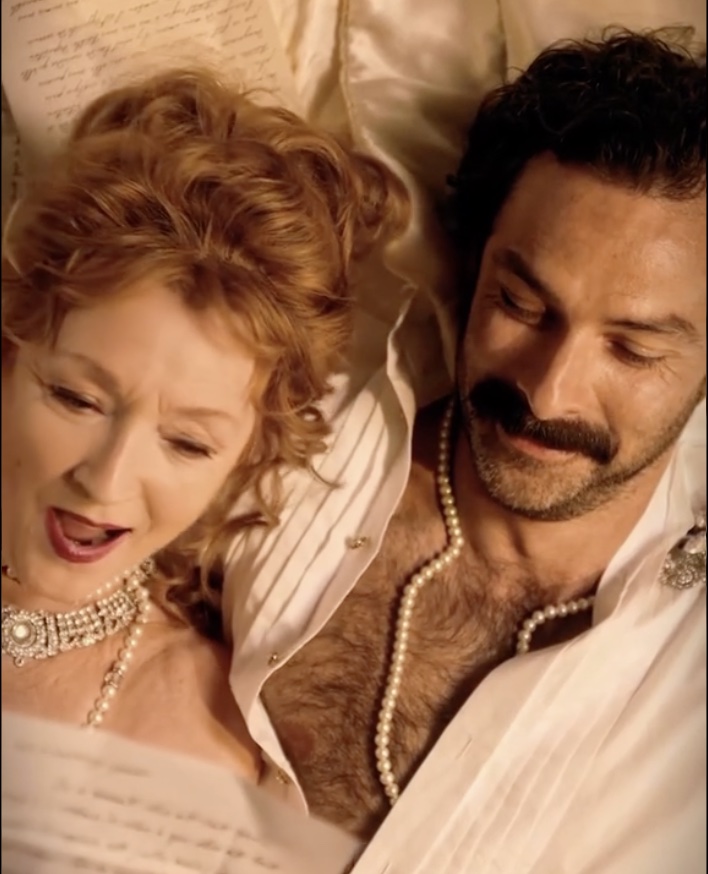
Above: Lesley Manville and Aidan Turner are shocked to hear of the price rise! See them in Les Liaisons Dangereuses at the National Theatre next year.
Below: here are the seats but beware the Dynamic pricing
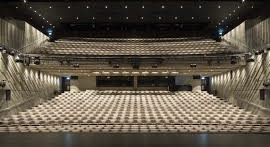
But wait, there’s a happy ending. The assistant, as assistants generally do not do, she phoned him back. She had enquired further and because, just by chance, Fredo had phoned at what was a crucial moment in the mysterious ways of Dynamic Pricing, the powers at the National Theatre Box Office would allow his original choice of seats to stand after all. And you are the ones to benefit. If you choose the higher price seating Band, you will be saving £30 on seats now priced at £110 instead of saving only £5 on £85 seats. Success! But I still want to call this Deceitful Pricing.
Addendum: And now a Dynamic postscript. Since drafting this article, those same Band B seats have been increased to £143, with no discounts. You are now saving £63 on the current price. Furthermore, with each day that passes, the Band A Top Price of £143 is rolling forward to absorb Band B and C, so that on some dates even seats which used to be £60 have now been increased to £143. This is the West End Dynamic Pricing disease which is now infecting subsidised theatres of which the National is the most prominent.
04/10/25 Fredo writes –
DANCE ON GUSTAV & CREDITORS
What’s Gustav playing at? He seems sympathetic to his new friend Adolf, a painter whose physical weakness has placed him a fragile frame of mind. As Adolf reveals that he has lost confidence in his art, and confides feelings of insecurity in his marriage to Tekkla, Gustav starts chipping away at everything he hears. Soon he plants seeds of doubt and distrust, and relentlessly undermines Adolf’s love and trust in Tekkla. Adolf prepares for a confrontation with his wife.
There are twists in Strindberg’s short play Creditors. Tekkla may be as headstrong and not strictly faithful as Gustav suggests, but he hasn’t told Adolf who he is. The betrayals of the past are lining up like creditors at their door. It won’t be Gustav who pays the price.
It could be a grim tale of jealousy and revenge, but in Tom Littler’s sprightly production, there are shafts of black humour that pierce the gloom. We’re in the expert hands of Charles Dance, Geraldine James and Nicholas Farrell, and they don’t put a foot wrong. I wondered how much direction they’d needed; did Tom Littler simply throw the script at them and let them get on with it?

Not so, Charles Dance told us in the post-show Q&A (a regular feature at Thursday matinees at the Orange Tree, it appears). He and Geraldine had memorably worked together on The Jewel in the Crown more than 40 years ago (“the Game of Thrones of its day,” he commented, sardonically) and had done 2 plays together since then. He hadn’t been on stage for 15 years, and they were looking for a play to do together. He suggested that Tom Littler looked at the Scandanavians, and Littler came back with the suggestion of Creditors.
Then Charles and Geraldine thought that Nicolas Farrell, another graduate from The Jewel in the Crown, would be perfect as Adolf. They used Howard Brenton’s adaptation, and asked what changes Brenton had made to the play, Charles replied, “If he were here, he would say that he added nothing, and had taken nothing away.” However, what Brenton had done was provide an actable version; Charles cited the standard Michael Meyer translations of Ibsen, which tend to sit on the page and are difficult to perform.
Strindberg is often cited as the ultimate misogynist, but in his plays, both men and women are shown to have serious flaws in their characters. To further their understanding, the actors had a seminar with biographer Sue Prideaux, who is an expert on the dramatist. Charles referred several times to another play by him, The Dance of Death, and said that it’s a very funny play (perhaps that’s the one he was hoping Tom Littler would select for him; in any case, it’s at the Orange Tree in January and February).
There’s no denying that the actors in Creditors are a certain age, and the play may have gained more plausibility with a younger cast. This heresy didn’t cross my mind during the performance. I was transported by the setting and magical lighting in the tiny Orange Tree to a Swedish coastal resort, and absorbed by the skill of these veteran stars. They’ve earned their stripes, and owe nothing to creditors.
28/09/25 Mike writes –
FIFTY YEARS ON
The death has been reported this week of Sara Jane Moore, aged 95. She led a full life having five children with four husbands. Born in 1930, her mother was a violinist and at school she excelled in her studies, at acting and on the violin. Her early career was as an accountant. Of her subsequent fame, she is reported as saying “When you psych yourself up to do something…it’s sort of like being in a play. You know, you rehearse and rehearse and then when the time comes, you just do it”.

What she did, back in 1975, fifty years ago this month, was try to assassinate President Gerald Ford. She fired a gun at him and missed by five inches! She was grabbed by a decorated former marine in the crowd (“I’m not a hero, I’m a live coward”) who, in the subsequent publicity, was outed as gay and disowned by his parents. In court she refused to plead insanity, going instead for a Guilty plea, was sentenced to life imprisonment, and subsequently served 32 years, much of which was spent in isolation. In prison she campaigned for prisoners rights.
Her fifth marriage, to a clinical psychologist, took place after her release. In recent years she settled in Tennessee, and last year she was watching television when a gunman shot at President Trump. She said it brought back memories of 1975. I report all this here (thanks to the Times obituary) as of course she was featured as one of the would-be assassins in Stephen Sondheim’s musical Assassins. I hope that sometime in her life she had a chance to see herself portrayed in his show.
21/09/25 Fredo writes –
TICKETS, PLEASE
Just when I’d decided – and told everybody – that the most difficult box-office to deal with is at the Theatre Royal, Haymarket, along comes a new claimant to that title. Take a bow, the Royal Opera House.
Gone are the days when there was a Groups department, and specific dates when group rates were offered. Back then I could reserve tickets and when I paid for them, the helpful staff would print the tickets for me. We enjoyed many happy evenings and wonderful performances there.
I recently paid for our group visit to the ballet Like Water For Chocolate. I was told that I would get an e-mail with the tickets attached, for me to share with the group. These tickets would only be updated with a necessary QR code 48 hours* before the performance. I explained that I needed to print the tickets in advance as not every member of the group is equipped with a smart phone, and that there were other obstacles (such as, I might be on holiday or not at home when the tickets were sent). My objections were brushed aside, and the e-mail arrived with tickets minus QR codes.
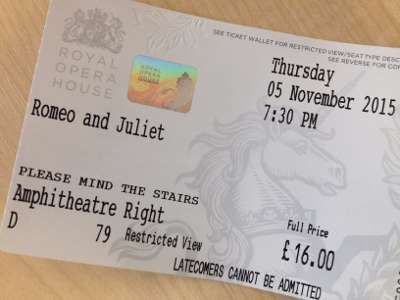

Old style ROH tickets
At this point, I contacted the box-office again, and though I got a more sympathetic hearing when I explained my difficulties, this simply produced a lengthy e-mail with audio and video attachments giving me instructions on downloading the tickets, but still without bar-codes. I did wonder if the ROH hadn’t considered that if their procedures required them to produce such elaborate instructions, perhaps the method was just too complicated?
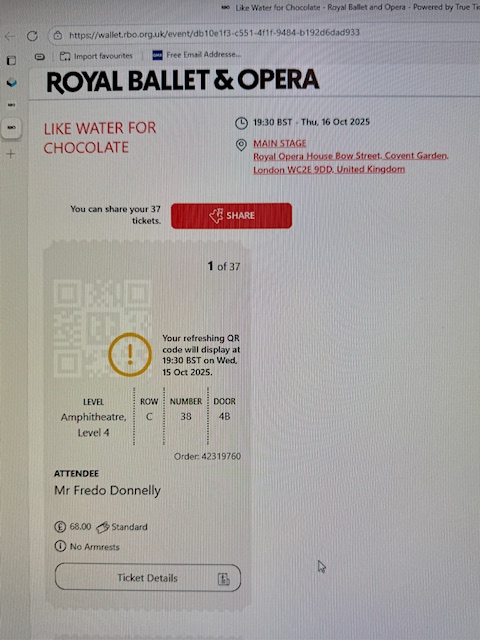
New style digital ticket
Next I tried visiting the box-office in person. The man I spoke to was immovable; there was nothing they could do to help, as they don’t have the wherewithal to print the tickets, or to send me tickets with the QR codes in advance. However, in a private aside, he confided that we can gain admission by presenting the tickets without the QR code, as this is not checked on admission to the auditorium. That’s the ’new technology’ for you!
Encouraged by this, I returned home and tried to print the tickets. I might have guessed that there would be a further complication. The tickets overlap the sheets on the printer, and whether I try to print 1, 2 or 4 per sheet, I end up with half-tickets on a page. Grr.
I’m sure there is a solution, somewhere, somehow, and I will contact everyone who has booked for Like Water For Chocolate separately. But I doubt that I’ll book a group with the Royal Opera House again. Their ticketing system is obstructive, unwelcoming, and demeaning to customers.
*Note the ticket says the QR code will appear 24 hours before the performance but the staff say 48 hours!
10/09/25 Fredo writes –
TAKING A BOW
When Mike and I decided late last year to wind up the Theatre Group, we knew that it would take us time to get used to the idea. We decided to make the announcement early in the New Year, to give our loyal supporters – and ourselves – time to adjust to the idea. It was always our intention to carry on arranging tickets at a group rate whenever possible for our London friends, and for anyone else who chose to join us, but without transport being included. When Bill Cook of Cooks Coaches proposed arranging separate transport for our local group, we were delighted that we would have a legacy.
It’s been 43 years since I started arranging theatre visits, almost by accident, then for fun and eventually because Mike and I discovered a mutual desire to share our interest and enthusiasm with others. Thanks to other group members, word spread and we’ve been busy ever since.
It was always our aim, although we never actually discussed it, to concentrate on the more serious end of theatre, as other groups were offering a steady diet of popular shows. Not that we have anything against the popular shows; we enjoy them as much as anyone. However, there was a market out there that was untapped, and soon we’d built a following for weightier drama at places like the Donmar Warehouse, the Almeida, Hampstead Theatre and the Menier Chocolate Factory. In time we added ballet and opera to our range of offerings. Theatrical horizons widened.
At the same time, we kept an eye open for favourable group discounts, and we’ve often been able to arrange substantial savings on a range of entertainment, even on the most expensive shows, such as Hamilton and Evita.
Eventually there had to be a night when I would make my last coach journey in the company of the group, and we wanted it to be a visit to the Donmar, a theatre where we have enjoyed so many contrasting performances. Appropriately, it was a new play, fairly provocative and abrasive in tone, and Juniper Blood had all the Donmar hallmarks: acting of the highest calibre, a literate script and a surprising set and lighting design. And our group told me they’d enjoyed it. (See your comments on our YourComments website page.)
I don’t like Goodbyes, and of course this wasn’t even the end of a chapter. It was merely turning a page, as the group will carry on, and we’ll all meet at the theatre in the future. It could have been emotional – well, in fact it was, and the emotion was one of happiness of another evening in the company of friends.
Many people have been very generous to us, and have said such nice things that I fear I’m on the point of becoming unbearably vain. I’m going to limit myself to quoting just two :
From Andrew: “I just felt that this was a good time to thank you both so much for the enjoyment that your selfless hard work has given us over so many years. As you mentioned on the coach, Fredo, you and Mike have given us the opportunities to see so many different and varied productions which we would never otherwise have considered.”
And Jean, who ambushed the coach one evening to tell us this:
“I have been going to the theatre with Fredo since 1987. As a young woman of 45 and having spent time raising a family, theatre had, up to then, been fairly lightweight – mainly musicals and light comedy. Then one day a friend asked me if I would like to go with her to a play in London and I said yes – didn’t even think to ask what we were going to!! When the coach drew up to the theatre and I saw Arthur Miller’s name in lights, my heart sank – “What have I let myself in for?” The play was A View from the Bridge starring Michael Gambon and it was absolutely wonderful The door on fulfilling theatre was opened and I never looked back.
Fredo, how can we begin to thank you for opening so many theatrical doors for us. You offer such a wide range of choices, from the obviously popular to the more obscure – not always good but always a new experience. I can’t begin to thank you for introducing me to the Donmar Theatre, which I just love.
On behalf of all your patrons, may I say a big thank you for all the years you have guided us towards enjoyable theatre. You have thoroughly spoilt us with door to door transport, excellent seats and always a pre-show synopsis of the evening’s performance. We will miss you and your wealth of theatrical knowledge.”
Thank you Andrew, and thank you Jean. And thank you to everyone who has supported us over the years. Long may you continue to take part in the wealth of entertainment that all forms of theatre offer us. We’ll meet you there.
And a final word of thanks to Mr Cook and all the drivers, to all the box-office assistants (many whom I count as friends) and group booking agents for their helpfulness, and to the writers, directors, actors and everyone back-stage who have dazzled us with their talent.
And thank you to Mike, for your patience, initiative, encouragement and talent for creating the website. We’ve had fun, we still intend to, but with no longer being in charge of the wheels.
30/07/25 Mike writes –
I’ve looked at <crowds> from both sides now…
…as seen from inside the Palladium, and now as part of the crowd outside the theatre adoring Evita, as she sings from the balcony. This balcony scene is fast becoming better known than Juliet’s balcony scene and is sure to win the WhatsOnStage award for The Most Memorable Theatre Event of 2025. Move over Shakespeare and welcome Jamie Lloyd for he is the auteur director who thought up The Event which night after night at 9.00pm (and matinee afternoons at 4.00pm too) is drawing the crowds to Argyll Street.
While our second group seeing the show were inside the theatre, we joined the throng outside to wait for Rachel Zegler’s appearance. The music began and the diminitive figure appeared. Just as Evita herself was tiny and still wowed the crowds, Ms Zegler brought cheers to Argyll Street. But the crowd listened as they should, recording as they would, then broke into applause as the figure on the balcony waved and smiled and reached her crescendo.

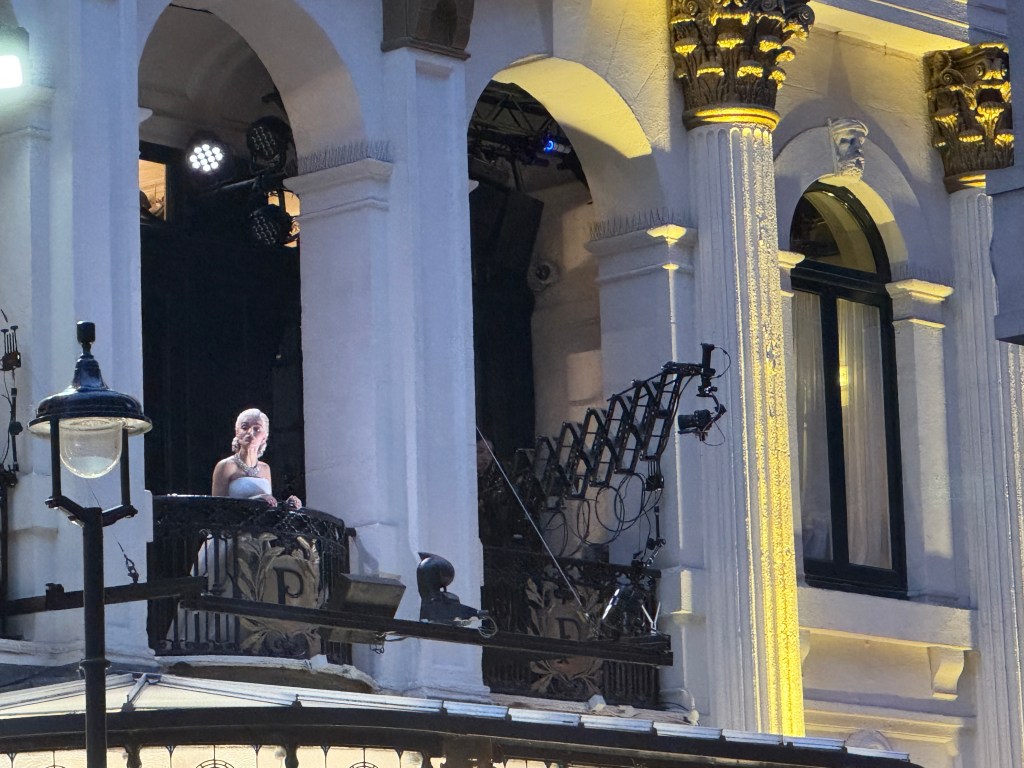

Some had been there before, but were eager to return. Few had been inside the theatre to see the show. The prices are astronomical but it’s nevertheless a Sell Out each night. The last few tickets that night, in the Stalls, were selling for £395. We booked seats at a group discount back in January, just £48 for you, and the remaining seats in that area of the side Dress Circle are now packaged as a VIP deal (Red Coat Butler service / VIP lounge access / Half-bottle of champagne / Bar snacks on arrival, interval ice cream / Souvenir brochure / VIP Lanyard) at a cost of £295. Of course there are cheaper seats too (now mostly sold out for the whole run) but I still maintain that whatever you can afford to pay, it will be worth it. A production as astounding as this is a rarity.
There’s a brief video recording of the balcony scene on the theatreguys’ Facebook page for 30/07/25 at https://www.facebook.com/groups/409982748332950
15/07/25 Mike’s Opinion –
How Woke is Theatreland?
It’s an easy assumption in the media that supporters of Woke are to the Left of politics and detractors to the Right. Generally the Guardian speaks for Woke and the Telegraph opposes. Art and Culture mostly lean to the Left, with Theatreland embracing Woke with enthusiasm. And if you’re unsure just what Woke is all about, then ask one of those Cancel Culture / Safe Space fans, those shrilling voices always telling us the right way to think. I’m more centre ground myself.
Of course we all want to be nice to each other and have others be nice to us; to care and be cared for. But do we need to be told, advised, protected, or even lectured? Politics, social problems or sensitive topics on stage – these we may seek out to applaud, or choose to avoid, but do we need full disclosure and protection before even entering the theatre? Theatreland thinks we do. For me, any instructions or advices come into the category of Trigger Warnings – an unnecessary intrusion into what should be both an entertaining and challenging environment. Theatre is Life, not a Safe Zone where we should be warned what to expect and how to avoid being affected, embarrassed or, heaven forbid, ‘upset’. A reflection of life, on stage, through different prisms, is my theatre expectation.
When choosing a theatre, do you worry about the Slave Trade? Scanning through those parts of theatre agency websites which are the small print, I was surprised to find at least one theatre agency says –
“We are continuously working to minimise the risk of modern slavery and human trafficking across our whole operation. Our Anti-Slavery Policy reflects this dedication and a copy of the policy can be found on our website.”
Really, I did not need to be told of a slavery policy. Does it help anyone’s conscience on entering a theatre?
(This longer article is continued with further examples at this LINK.)
07/07/25 Fredo writes –
INTIMATE APPAREL – the cast Q&A
The first question summed it up: “I thought this play was terrific. It has so many themes – race, class, sexuality, the role of women, history. What do you think is the most important one?”
We were at the Supporters’ Evening performance of Intimate Apparel, the third Lynn Nottage play to be directed by Lynette Linton at the Donmar, and what a treat it is! Set in Harlem in 1905, it tells the story of seamstress Esther and her relationships. The cast had just been rewarded with cheers and thunderous applause, and now came back to discuss their efforts with Craig Gilbert, the Literary Associate Director.
Craig asked them if they had been familiar with the play before this production, and Kaddif Kirwan, who plays the charismatic object of Esther’s affection, said that when he started drama school, the third-year students staged it. He thought how much he would love to play George. He and Faith Omole were at drama school together (though this is the first time they’ve worked together) and this had been her introduction to the play as well. In New York, Samira Wiley had seen it as a first-year student at the Julliard School, and at that point the role of Esther seemed very far away from her. Meanwhile, Alex Waldmann had been offered the role of Mr Marks in the first British production of the play in Bath, but hadn’t been able to do it. He was glad that he had postponed it until he was able to work with Lynette and the current cast.
How did they build the world of the play? asked Craig. Claudia Jolly replied that they had spent the first four days of rehearsal doing table readings, analysing the play, and dividing it into sections, identifying where crucial actions take place. They also had dance lessons – “lots of dance” commented Nicola Hughes, as the fluid movement moves the action of the play smoothly from scene to scene. Samira was given extra work: she had sewing lessons. And In addition, the cast were given homework, to research the period and aspects of the society of the time. They also had to construct timelines for their characters, and this was hugely supportive to them in creating their performances.

Samira Wiley / Nicola Hughes / Claudia Jolly
Although Lynette appears to be an exacting director, with a sharp eye for detail, she emphasised to her cast that it was essential that they have joy in their performances (and this quality really comes across).
The transition from the rehearsal room in Dryden St to the Donmar stage must be unnerving for actors. As Kaffir expressed it, “We can literally see the whites of your eyes. And from our point of view, you’re so close, we know that if we think it, you can see it.” Nicola Hughes found it less daunting than she expected, and found it comfortable to have the audience around her; Claudia found it interesting to have the audience on three sides, to give the audience different perspectives on the action.
They all agreed that the play had changed tremendously since the first preview. First of all, there was laughter – there’s no audience response in a rehearsal room. Then there was a piece of furniture that they had to get rid of, as it was heavy and awkward. Meanwhile, the performances had grown in confidence, and the obvious bond between the actors had strengthened. (Nevertheless, a friend who’d seen an earlier performance had told me that already it was in perfect shape, and that it was a winner).
Kaffir was asked a knotty question about how he viewed his role, and how his actions might be construed by the audience. He laughed, knowing that this could be a tricky one to answer, and replied that he saw George as a product of his time and the society he lived. Samira gave him a deadpan look, and winked.
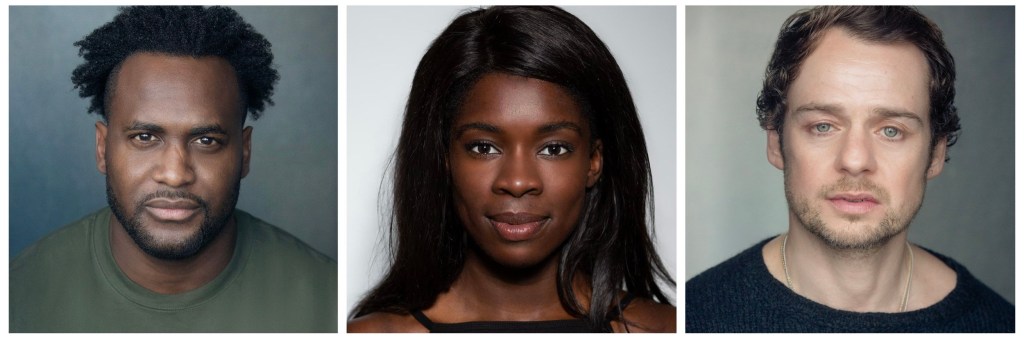
Kadiff Kurwan / Faith Omole / Alex Waldmann
As always, it was a revelation to hear the actors discuss the play, and to see them as they are in real life. Samira gives an intense and endearing performance as Esther, and somehow accomplishes the impossible task of playing a shy, retiring woman while dominating every scene. It was difficult to reconcile this same character with the small and slender young woman wearing a baseball cap, lolling in her chair. We had a brief chat with her afterwards, and she was completely charming, and excited to know that we are bringing a group to see her on 14 July.
And what was the answer to the opening question? What is the main theme of this delightful play? Claudia Jolley gave a comprehensive reply: it’s about the forgotten people in history, and their importance to the people around. It’s the importance of people to each other.
It’s about the importance of intimacy.
18/06/26 Mike writes –
The Hype is Here!
Evita is on the balcony and addressing the crowd. “Don’t cry for me, Argentina!” she implores the throng on the street below. In song.

The street is Argyle Street. She is being videoed and live-streamed inside for the Palladium’s audience. It’s director Jamie Lloyd’s latest theatrical stunt, both a coup de théâtre and a hype for his production. It’s hitting the headlines even before the show has officially opened.
Those headlines promote both the freebie thrill for those outside seeing just a glimpse of the show (The Mirror), and resentment inside that the paying audience are only seeing the big number on a screen (The Guardian). But headlines are selective and deceptive. We were invited to a preview so I can report that that big number is reprised – audiences inside certainly get their money’s worth.
If you have fond memories of Elaine Page and perhaps a nostalgia for what musicals used to be like, best leave all that at home. Jamie is a showman, and just as he turned his Much Ado at Drury Lane into a pink party smash hit, here he presents Evita as a blast of passionate sound, dazzling light and choreographic wonder. The Palladium is now a new world of musical experience. We are taking two groups to see the show with excellent Dress Circle seats, but both group visits are Sold Out – you lucky people, those who booked early. Those same seats will soon be selling for hundreds. I’m not here to sell tickets or review the show. But I am happy to join in with the hype – “This is an astounding event, the greatest musical production of the decade.“

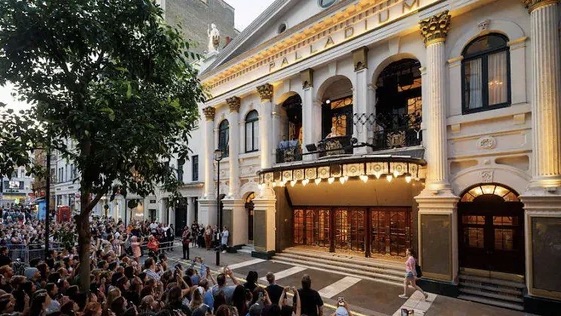
Photo credit: Jamie Lorriman / UNBOXPHD/SPLASH
I do wonder if the crowds will assemble outside at 9.00pm each summer evening if there’s a British chill in the air or a sudden downpour! And at 4.00pm for matinees too. But as I write, we are forecast an Argentina heatwave…
Addendum: We have just added a third visit to Evita (see Bookings page). Book now at a huge discount as the show has a strictly limited run.
08/06/25
Group seating allocation – what you need to know
When we reserve theatre seats for you, how do we decide which seats to pick? I will tell you. We don’t!
Seat allocation for groups is decided by a show’s production company, and this depends on which theatre they are using. There are always Premium seats followed by Price Bands A B and C etc. beginning in the Stalls and Circle then ending with Bands D and E in the Upper Circle. Group discounted allocations are usually in seat Bands A or B which take up the majority of the seating capacity. For occasional shows, only the middle rows of Stalls and Circle seats, and occasionally front row Stalls, are made available to groups.
On a seating plan, this looks like a ring doughnut, as they surround the very expensive Premium seats. Frankly, it’s a way of pricing seats high and then reducing the ones further back in the theatre to a more acceptable price. They can say they are discounting Top Price seats (ie Bands A or B) but then allocate the rear and side seats of that Band to groups at a discount.
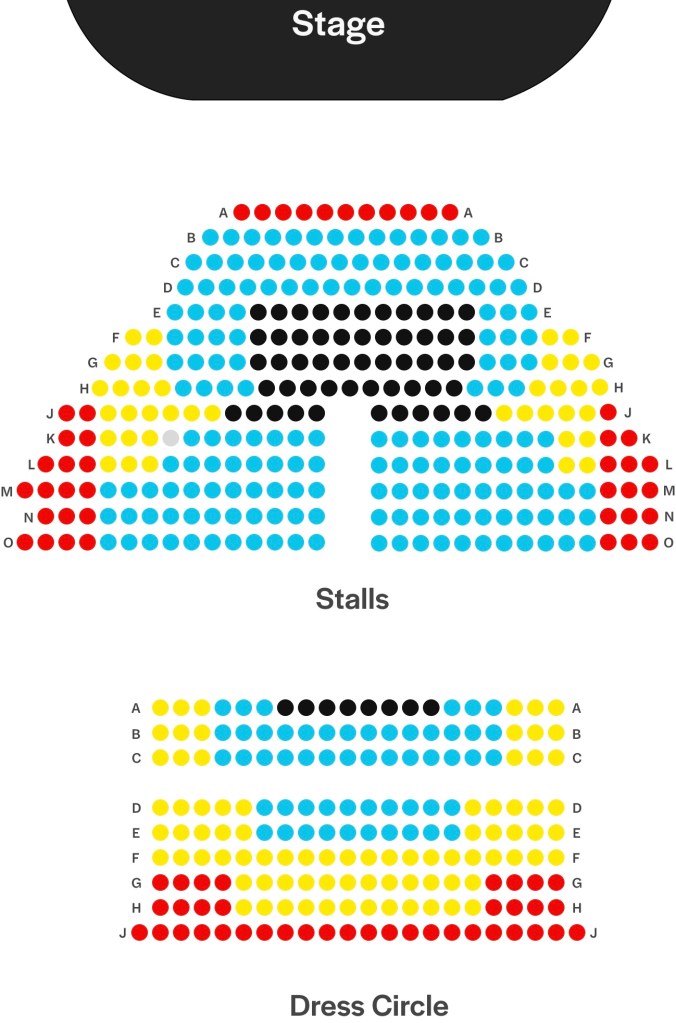
Example seating plan
BLACK – Premium seats
BLUE -Band A seating
YELLOW – Band B seating
RED – Band C seating
This may be cheeky but remember it’s show business not charity! There is usually a limit of 60 seats available to be booked at a discount, but this can be reduced for the more popular shows, so we have to order promptly to obtain the better seats. However, we are often lucky and get seats allocated at the front or side of the central Premium seat area in Bands A or B, depending on a producer’s decision. We never know in advance of booking which seats we may be allocated, and we always request seats as near the front as possible, even if that means splitting our allocation into smaller groups.
We normally book through the group booking agency affiliated to the specific theatre, and the agents are very helpful and as informative as they can be. We’ve learned over the years to ask for some aisle seats, and to be careful of booking front stalls. This is because of the height of the stage in certain theatres. Also, if the set incorporates a revolve, this adds 18 inches to the height of the stage and sometimes can make for uncomfortable viewing from the front rows.
How does Fredo allocate the tickets? (This article continues at this LINK)
07/06/25 Mike writes –
WHICH MRS WARREN do you prefer?


I only ask the question because, well into its run, the publicity ads have been changed for Shaw’s Mrs Warren’s Profession. That’s unusual. The first was plain, striking, serious, and told us we would “Discover the mother of all secrets”. Now the presented image is softer, bedecked with flowers, even pretty, and I suggest would appeal to a different audience. Are they getting the wrong audience, or those coming for the wrong reasons? Are they looking for Imelda Staunton’s musical fans, rather than Shaw enthusiasts who already know Mrs. Warren’s secret? I don’t know the answer. We are taking our Group next month (sorry, all tickets sold), but would the second ad attract you when the first ad would not? I would like to know.
31/05/25 Mike writes –
FANS FILL THEATRES no matter the price
Controversy rages (well, we have been discussing it!) about whether My Master Builder (written by Lila Raicek, writer of tv’s Gossip Girl) is worthy of being associated with Ibsen’s The Master Builder on which it is based. Or from which it has been plagiarised. I guess those disappointed Ibsenites are well outnumbered by those enjoying the show. You just have to look at the crowds of fans clambering for autographs and selfies afterwards at the Stage Door. They have paid their money for the stars on stage, for the glossy and accessible update of the play. All the main actors oblige in good spirits, and evidently a ‘good time’ is had by all, on and off stage.
By comparison, the Noel Coward Theatre backing onto Wyndham’s (which is playing The Comedy About Spies) ends its performance at the same time. It has no big-name stars and when I was there had not a single fan waiting at the Stage Door. That’s Showbusine££.
Ewan McGregor and Elizabeth Debicki show their appreciation to their fans –

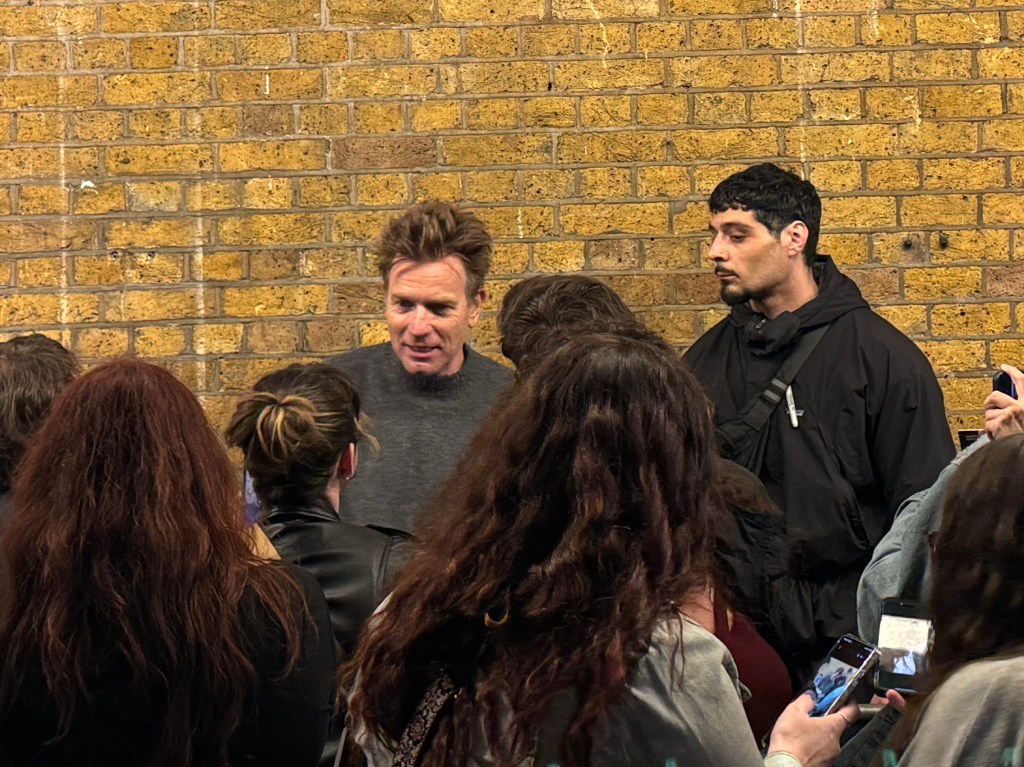

31/05/25 Mike writes –
Accuse me if you will of being a bit slow on the uptake, missing the obvious, but honestly until Fredo mentioned it yesterday I did not realise that the ads for ‘Operation Mincemeat’ were meant to represent Hitler. That hair, that moustache, geddit? OK, but Hitler ads have now been replaced by those for new casts, run extensions, merchandise, a Broadway transfer, an impending world tour, etc. Yes Operation Mincemeat is a true phenomenon.

I wonder how much the very unusual pricing structure has been responsible for this. From the time it opened, all seats each day have been the same price. Mondays are priced at £39.50 then increase by £10 each day on Tuesday and Wednesdays. On Thursdays to Saturdays all seats are priced at £89.50, whether you sit in the Stalls, Circle or Upper Circle.
But times they are a-changing. It has just been announced that from 17 November the happy Monday price will increase to £49.50 and Saturdays to £99.50. Just in time for the Christmas season. Thinking of taking the kids? Sorry, no reductions for them. The nearer you book to Christmas, ALL seats on ALL dates increase to £99.50, including on those not-so-happy-now Mondays. But as I said, it’s a phenomenon. People will pay the prices, and some will pay to see it again and again. Please Mincefluencers (that’s what the regulars call themselves), I don’t understand, I miss the attraction, so please explain.
We did take the Group way back in the show’s infancy. It supposedly had received the most 5★ reviews in West End history, and Yes, we loved it, but not so much it would become an addiction. In selling the new prices, the new ads ask if we have seen the new cast. I presume they are suggesting we should see every new cast, cuz that’s what true believers do. Come and laugh again, cry again, in the true spirit of Your Country Needs You! And be a…sorry, no…buy a mug.


Temporarily putting my cynicism aside, there are generous Group rates if you want to party with friends. Groups of 10+ are £39.50, and 30+ only £29.50. You could almost say it’s wartime pricing!
1/04/25 Mike writes –
CURTAIN UP = PRICES UP – Postscript
Last week I wrote about Broadway ticket prices, as reported in Ruth Leon’s newsletter (see below). This week she has given us an update:
“Back in New York, I saw Glengarry Glen Ross on Friday at the Palace Theater on Broadway. This is an important play by David Mamet which I have seen several times on both sides of the Atlantic. This revival has an excellent cast – Kieran Culkin, Bob Odenkirk, Bill Burr – and a director in Patrick Marber who can be trusted, to turn out an engaging and professional evening in the theatre. I’m glad I didn’t miss it.

The reason I mention it here… is to report that, although I was happy to have been in the audience, I was there because a friend, a New York theatre critic, had a second ticket which he kindly offered me.
Out of curiosity, I had checked early on Friday what it would cost me to buy a ticket to that evening’s performance. There was a single ticket available for $1032.
I wonder who bought it?“
No, this is NOT fake news for April Fool’s Day!
25/03/25 Mike writes –
CURTAIN UP = PRICES UP
You think West End prices are too expensive? Have a thought for New Yorkers. Ruth Leon (writer and critic) is heading for Broadway and reports the following in her newsletter –
“I’m looking forward to wallowing in all the new shows that are opening this month. But, perhaps not all. Some are simply out of my reach. I couldn’t possibly afford to see Othello with Denzil Washington and Jake Gyllenhaal. Tickets for the centre orchestra stalls and the best seats in the mezzanine are $921 apiece.
The same applies to Glengarry Glen Ross directed by Patrick Marber ($799) and Goodnight and Good Luck with George Clooney ($799). I want to see all these very much, and several others with stratospheric prices, and, no, I don’t need to sit in a premium seat but there’s no point to paying nearly $200 (for the cheapest seats) to sit so far from the stage that the play may as well be going on in the theatre next door.”


Photo: Julieta Cervantes
Note 1: Last week this Othello “broke the record for the highest weekly gross for a play on Broadway”, so some are paying the price. Maybe companies are trying to impress their clients by offering them tickets? The production has had mixed reviews – there has been criticism of its prices and also its uncertain tone, with Desdemona’s death causing laughter from some members of the audience unused to Shakespeare.
Note 2: No, the Tony award-winning director (2014 for A Raison in the Sun) is not a relation of Ms Leon.
05/03/25 Mike writes –
You missed something special
Well, maybe you didn’t, if you came with us to see James Graham’s PUNCH at the Young Vic this week. This is the true story of a young man who died after receiving one punch from a young assailant. The aggressor served his term in prison and what happened next was quite remarkable. The deceased’s parents and the guilty lad were brought together by the little-known Restorative Justice procedure – a positive resolution evolved from a very tragic event. A book was then written and that has been turned into a remarkable play.
As we told you when we advertised it, the play had been very well received in Nottingham before transferring to London. All our Group who saw it were impressed- “theatre at its best and faultless”, “thought provoking”, “powerful and emotional”, “fast moving, reflective”, “a superb evening”, “it will leave you uplifted” – you can read what they thought in this website’s YourComments section. Already we have a contender for Play of the Year!
The production is dedicated to the memory of James Hodgkinson, the young man who died, and the book was written by Jacob Dunne whose punch killed him. James Graham, the playwright, says – “Theatre can and should be a restorative place of empathy, and increased understanding. We hope to honour and do justice to the man James was.” They do.
But the huge disappointment for us was…only 30 of our Group booked to see it. We expected it to be a special evening but it seems only a tiny minority of our Group were prepared to join us…do change your minds and try to see it on your own. You will be enlightened. And it’s now scheduled to transfer to Manhattan, NYC.


18/02/25 Fredo writes –
FAREWELL PERFORMANCE
It won’t be easy.
You’ll think it strange
When I try to explain how I feel….
After nearly 43 years, the time has come to wind up our theatre group. Mike and I have discussed this for some time, and we decided that we would bring down the curtain in 2025.
Why now? There are several reasons:
- I want to stop while it’s still fun, and while we’re still both enjoying it.
- I also want to stop before I start making mistakes – oh yes, mistakes do happen, and I don’t want to make a habit of it.
- There’s a theatrical adage: Always leave them wanting more.
At the moment, we shall still offer bookings up to the end of July, and currently the last show we have booked is Evita (hence the lyric quotation at the top of this message). Unless something totally irresistible comes along, that will be our final booking with coach.
However, our plan is still to offer occasional performances, perhaps matinees, at a discount, BUT without the coach. I realise that this may not suit many in our group, but I will be leaving Westcliff and moving in with Mike at New Malden to organise our activities from there. We hope that some of you will still want to join us at theatres but make your own transport plans.
The Theatre Group developed by accident, and we have been very lucky to have gained a loyal following. There have been bumps in the road, but I think we’ve fulfilled our brief: to take people to the best of London theatre at affordable prices, and to share our own enthusiasm for this art form. We’ve taken you to see new plays, writers and performers, in familiar and unfamiliar settings. We’ve revisited favourite shows, and sometimes obtained tickets for shows that are difficult to get into, and very often with generous group reductions. It’s been a hobby, an occupation and a preoccupation, and it’s been fun. We’ve met many people and made friends, and enjoyed ourselves into the bargain. We’re enormously grateful to everyone who has supported us over the years.
We shall organise a new Group mailing list for theatre visits Without Coach at a later date. In the meantime, theatre visits With Coach will continue until sometime in the summer.
We hope to see you again before we take our final bow with coach trips, and also at future theatre visits if you are able to join us.
Fredo & Mike
07/02/25 Fredo writes –
Looking forward to Backstroke
It takes courage to write a play about the death of one’s mother, and even more courage to direct it. That’s what Anna Mackmin is doing at the Donmar, and Mike and I attended a Q&A with her and her two leading actors. The Literary Manager Craig Gilbert asked her how the play came about.
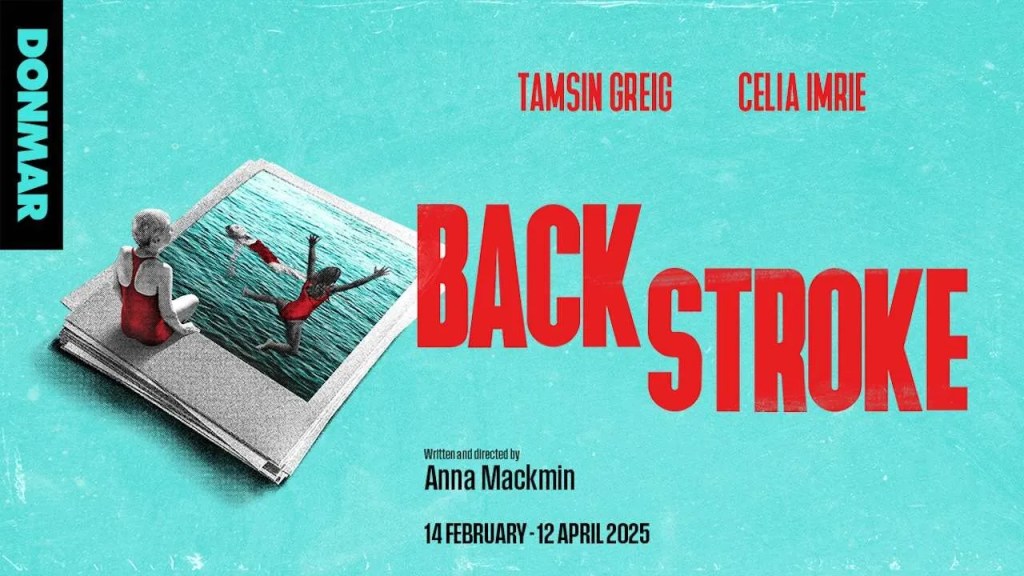
Anna explained that her mother died 8 years ago, three weeks after her final stroke. They had had a complex relationship and Anna reflected on this while driving to and from her visits to the hospital. She was struck by the ways in which the memories emerged; for instance, by how many crows she remembered seeing on the motorway.
She wrote a speech for the funeral, and – being a critical writer as well as a dutiful daughter – thought that it was bloody good! She then sat down and wrote her play, and it just poured out of her. However, when she showed it to a friend, she was told it was “too much.” Anna stowed the play away for 7 years.

It almost stayed in the drawer forever, but Tim Sheader, the Artistic Director of the Donmar, asked for a play about middle-aged women, and hey presto! Anna opened her drawer, and there it was.
It’s clearly an emotional topic, and it seemed a risk to cast two actresses well-known for their comedy performances as mother and daughter. No, Anna, said, Tamsin Greig and Celia Imrie were her first choices: as well as being a personal drama, it’s a funny play. Celia interjected that Anna sold it to her as a love letter to her mother. Tamsin agreed and said that death is an important subject, and added that if she goes to a party and doesn’t talk about death, it’s a wasted evening! It was clear that both actresses were in comedy vein; Tamsin unable not to be funny, and veering from earnestness to irony within a sentence, and Celia reacting to any prompt with a humorous aside. Tamsin continued that when she goes out, she still thinks she’s 17; in our minds, we’re always at the age where we felt most alive.
Anna had asked the cast to bring photographs of their own mothers to the rehearsal room, and to consider the different ways in which memories arrive – they can come as flashbacks, or in long-formed memories. The latter is shown on film with Tamsin and Celia in a swimming-pool. Anna had loved shooting it, but Celia had loathed every second of it.

Tamsin and Celia also complained that Anna had given them a lot of words to learn, but in her defence, Tamsin told us that Anna wasn’t at all precious about making cuts. Celia protested: “I think she is precious about it!” She added that she felt a huge responsibility about taking on the role of the mother. Tamsin concurred; it’s a play about memories, and our memories change in time, through our life experience giving us understanding of past events.
Anna gave an immediate reply to a final question: did the play feel different as the actors took ownership of it? “it feels better,” she said. It was remarkable to hear the actors saying her words, and there is that magic moment in rehearsals where you know that the actors own their characters. Anna concluded by saying that the Donmar is a cathedral of great acting. Backstroke should be in that tradition.
Note: Our visit to Backstroke at the Donmar is on Monday 10 March. It is now sold out. If you haven’t booked, Fredo can add you to the waiting-list.
14/01/25 Fredo writes –
A MAINLY GREAT YEAR – a reminder of what we saw in 2024.
I was amused by one message on a Christmas card: “Thank you for another year of mainly great theatre outings”. It was Christmas after all, and it takes just as much effort to organise a visit to a show that doesn’t live up to expectations! However, on reflection, I had to agree that “mainly great” was a fair assessment.
Every year brings its share of spectacular highs, and inevitably, there are a few that misfire. Boys from the Black Stuff didn’t translate well from television, and Nye at the National Theatre was just a plod through an interesting career; even the best efforts of Michael Sheen and Sharon Small failed to bring it to life. The Menier started the year well with a spectacular production of Pacific Overtures, but faltered badly with the ill-conceived revue Jerry’s Girls.

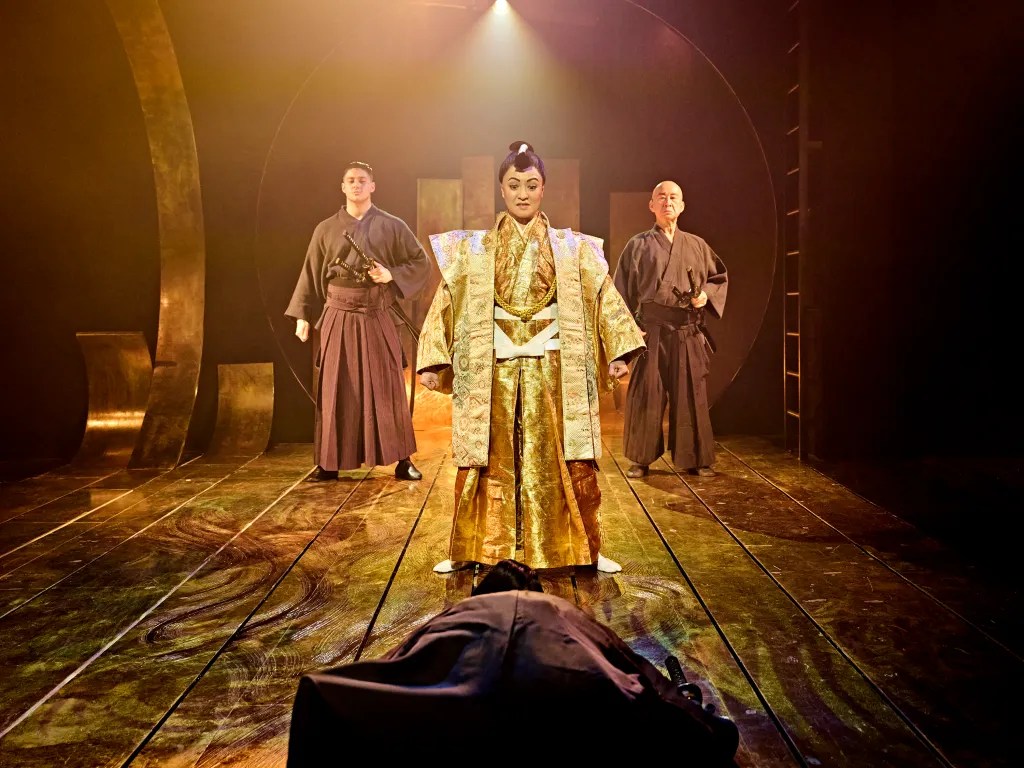
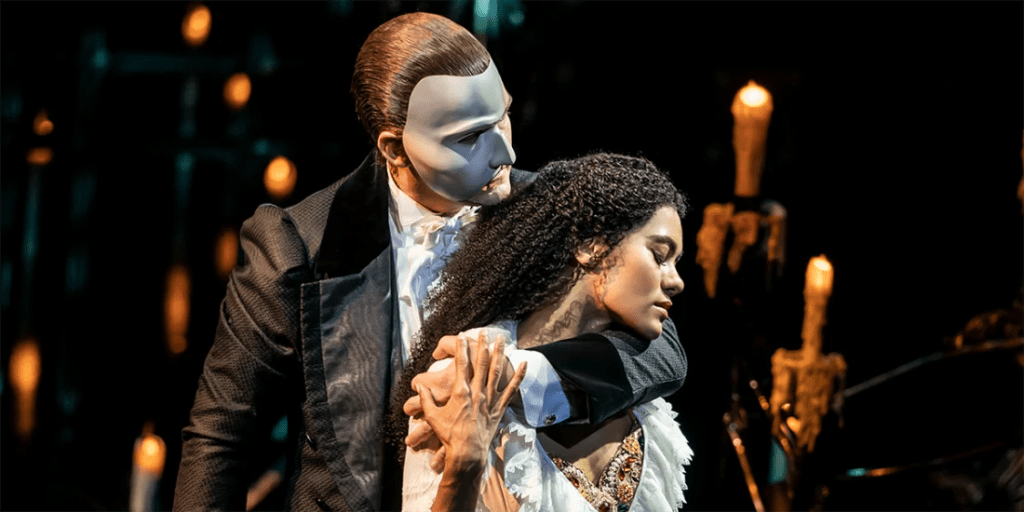
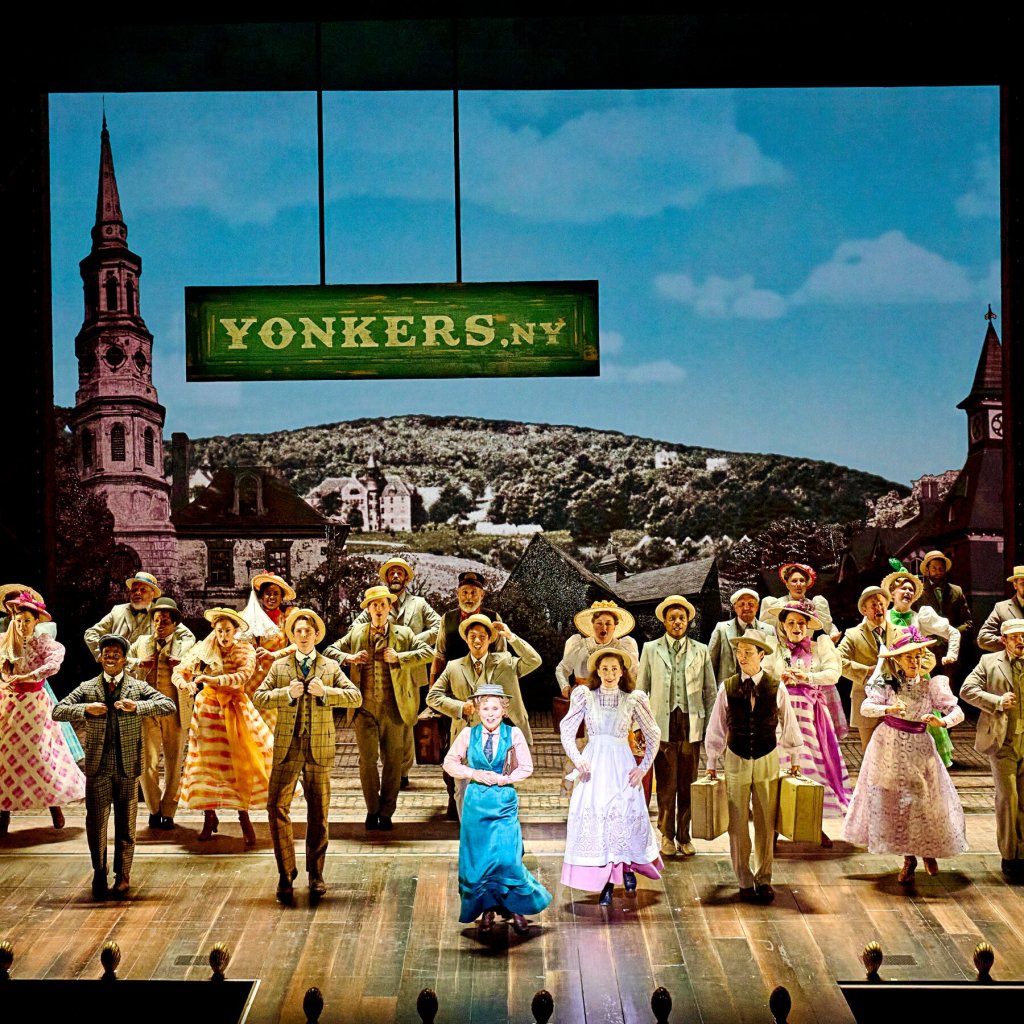
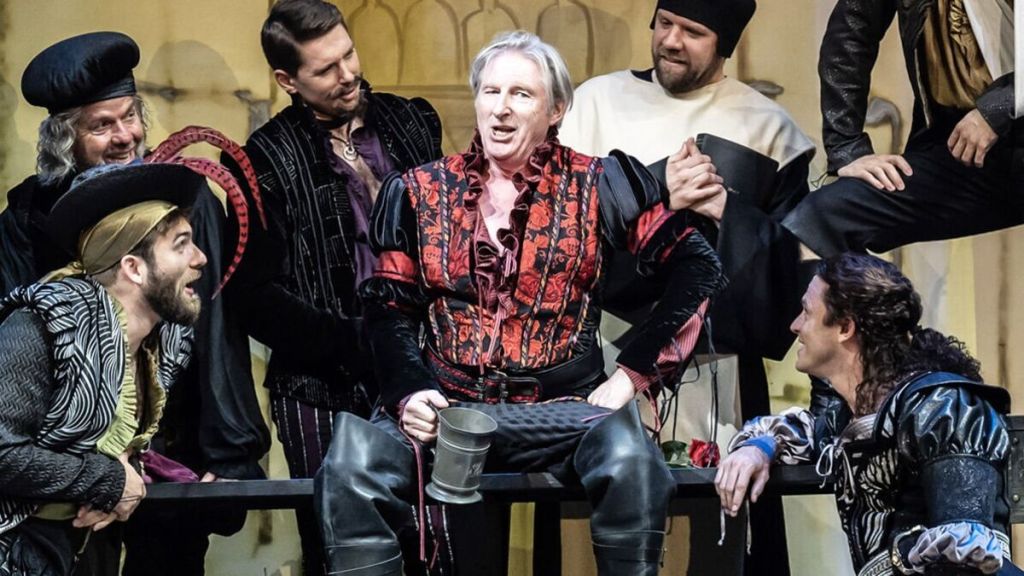

Nye / Pacific Overtures / Phantom of the Opera / Hello Dolly / Kiss Me Kate / Hamilton
Jerry Herman was better – much better – represented with the limited season of Hello, Dolly! at the Palladium. Imelda Staunton predictably shone as Dolly, and the set-pieces – Put On Your Sunday Clothes and of course Hello, Dolly! were staged to perfection. Even so, this was one of the shows that showed its age: the Harmonium Gardens scene, before Dolly’s arrival, dragged, and should have been trimmed. Then The Phantom of the Opera which had a carefully streamlined staging now shows up as containing too much cod-opera between the Lloyd Webber belters.
Kiss Me,Kate appears to have too much cod-Shakespeare; had this been reduced in earlier productions I’d seen, as I didn’t remember that aspect of it? Nevertheless, Adrian Dunbar gave a surprisingly relaxed and charming performance in a production that needed more fire.
The outstanding musicals were Hamilton (finally), which was truly innovative and slick and “Every song’s a banger” commented a man near me; Standing at the Sky’s Edge, even though it lost a bit of magic on its journey from the Olivier to the less hospitable Gillian Lynne Theatre; and Just For One Day. This recreation of the events leading up to Band Aid was staged and performed with exuberance and I sat in the theatre with tears streaming from my eyes at the excitement and the music and, yes, nostalgia. Fortunately this show is getting a transfer, and we’ve got a booking in June.
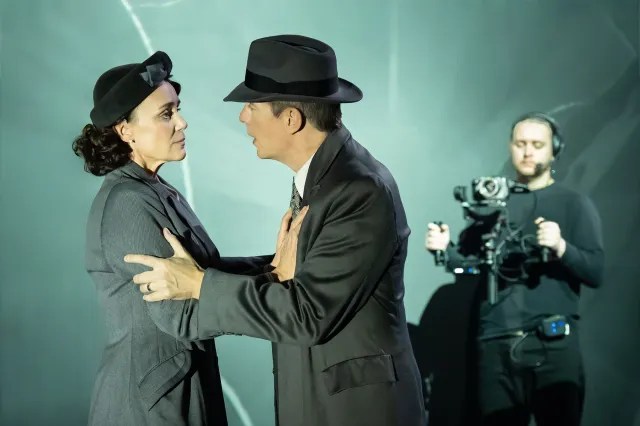

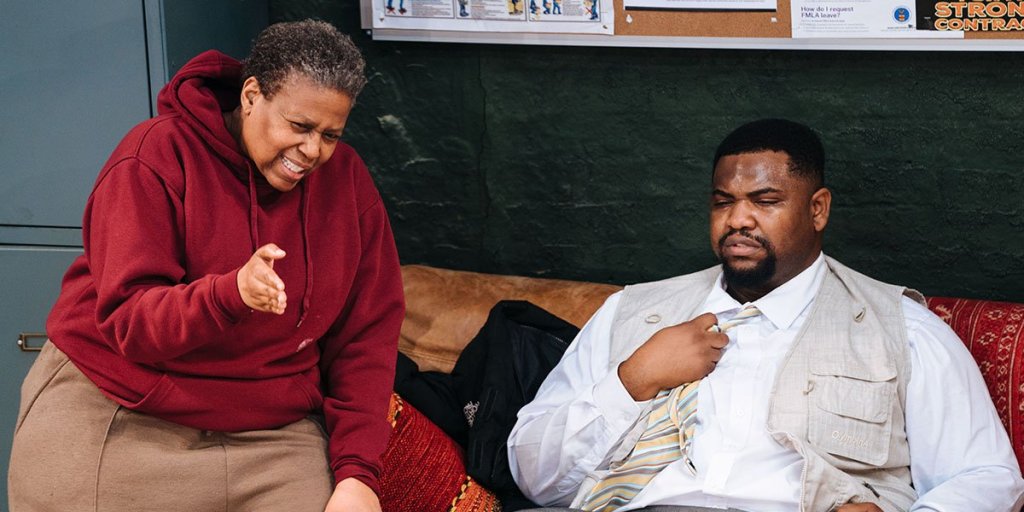


The Human Body / The Cherry Orchard / Skeleton Crew / The Fear of 13 / Giant
The Donmar had a good year. In a year marked with high-tech productions, the Donmar demonstrated that they too could punch with the best, and used video projections to emphasise the 40’s cinematic romance of The Human Body. This enhanced the charismatic performances of Keeley Hawes and Jack Davenport. The Donmar stage was transformed again forThe Cherry Orchard, a more abrasive examination of Chekhov’s play than we are usually given, with German star Nina Hoss bringing allure, and June Watson once again stealing the show. I was disappointed not to sell more tickets for Skeleton Crew, which was a real discovery, and a strong contender for Best New Play of the Year. The four actors gave pitch-perfect performances, but it was Pamela Novetne who dominated the action.
The Donmar played another ace withThe Fear of 13, with Adrien Brody showing his mettle on stage. This stirring Death Row drama moved audiences. If Brody wins a second Oscar, he may also win an Olivier to display alongside it.
He will have competition – strong competition – from John Lithgow in Giant, at the Royal Court. His performance as much-loved children’s writer Roald Dahl was carefully calibrated to hold our interest while gradually horrifying us with strong antisemitic prejudices. And then there was James Corden in The Constituent at the Old Vic reminding us that he is a talented stage actor. Did Anna Maxwell Martin get her cameo appearance in Gavin and Staceyas a reward for matching his performance in this play?
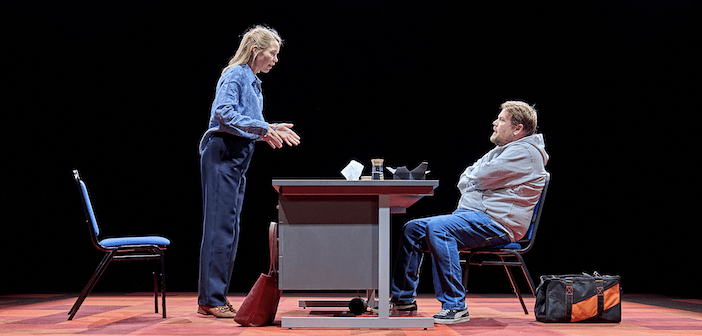

The Constituent / The Real Thing
Also at the Old Vic, James McArdle gave a star-turn in The Real Thing by Tom Stoppard. It’s time that this gifted actor was introduced to a wider audience, and this play showed him off to perfection. We had the opportunity to review another Tom Stoppard play, Rock ’n’ Roll, at Hampstead. There is no doubt that this playwright can be challenging for audiences; we need to pay attention, and have our wits about us. And when we do, it’s rewarding.
It was a good year for dance (though we are sadly still exiled from the Royal Opera house by the high prices). Sadler’s Wells welcomed us for a conventional Sleeping Beauty, an unusualCarmen and a startling Giselle. We started and ended the year with Matthew Bourne – his Edward Scissorhands and Swan Lake are always popular, and seem to gain in appeal on every appearance.
Every year there are a number of shows that get away. Trusted friends tell me we should have seenSunset Boulevard, but there were no group reductions and the prices were very high. I regret not arranging a group visit to Oedipus with Mark Strong and Lesley Manville (surely another two Olivier nominees) and once again the redoubtable June Watson.
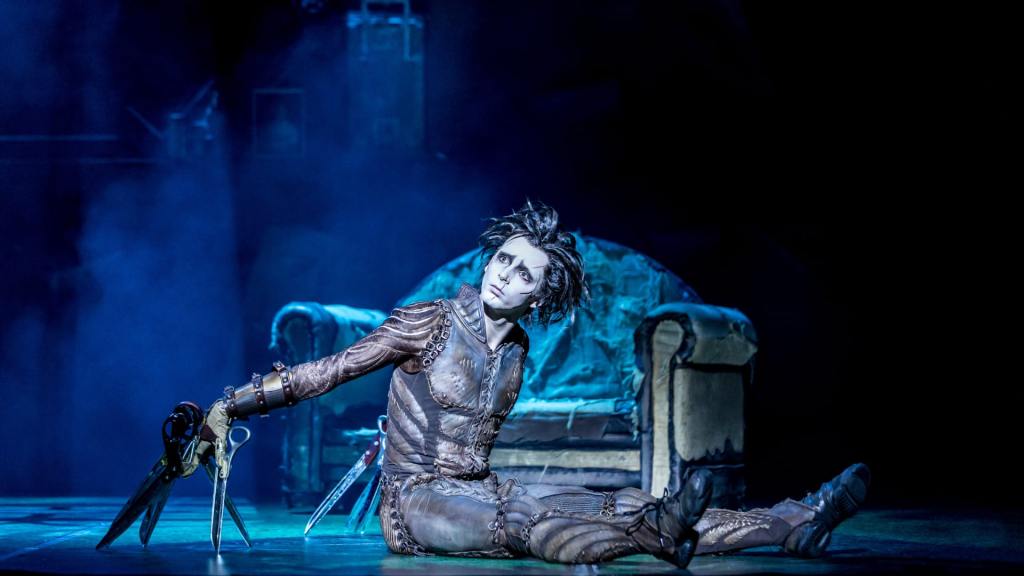
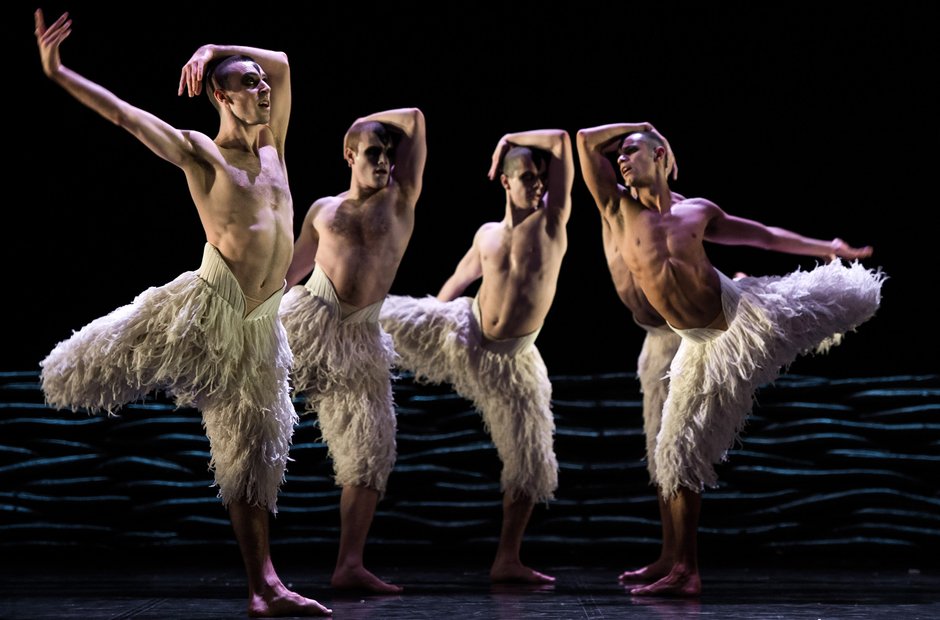
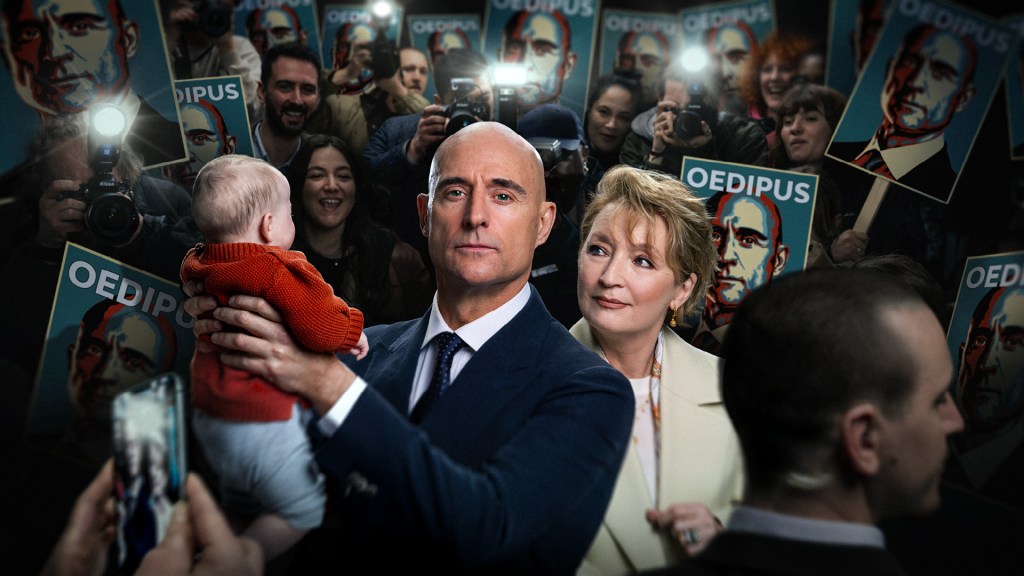
Edward Scissorhands / Swan Lake / Oedipus
Some of these sins of omission were deliberate. This was a year that saw prices in the West End soar to incredible heights for stars such as Matt Smith, Sarah Snook and Tom Holland. It was also the year of hi-tech productions, which I considered might not appeal to our group, and therefore I wasn’t inclined to make the effort. And I’ve become wary of directors being described as “visionary.”
While prices rose, the average ticket price for our group (not including coach fare) was £50.98 – only £2 more than last year. In total, we offered 36 shows over 34 visits to London’s theatres. For 2025, we have already booked 20 shows and once again Mike and I are aiming for ‘’mainly great’, or even better.
Thanks as always to Bill Cook and his office staff and especially the coach drivers who delver us safely to the theatre and home again; to our friends at the Donmar who accommodate us in this heavily-booked theatre; to the helpful box-office staff at Sadler’s Wells (especially Sheila) and the Old Vic .
Our main thanks has to go to everyone who supported us during a year when many theatres struggled to find an audience. Sincere thanks – remember that it’s not just us that you are supporting, but all the hundreds of theatre people employed in bringing us stimulation, entertainment and pleasure. Keep on coming to the theatre!
Mike adds –
Fredo has already picked out some Highs and Lows from our last year’s theatregoing, to jog your memories. He has concentrated on all our Group outings, but OOO (and you know what that means now) we have had another “mainly great” year by ourselves. Starting at the bottom of the ratings ladder, I must mention the one play Fredo insisted on giving no stars to at all! Jodie Whitaker did her best as The Duchess, but really it was a misconceived venture through and through. At curtain call we rushed for the exit as the rest of the audience stood to cheer (of course). Well, horses for courses…and The Duchess was staged appropriately at the Duke of York’s.
Everyone chooses to see shows they expect to enjoy. They have to pay a lot and sometimes I think enjoyment goes hand in had with money spent, and perhaps with a glass-in-hand as a bonus. We are lucky because sometimes we get invited to a show, but mostly in West End theatres we chose seats up in the Gods or in the cheap front rows, or of course we visit the cheaper Off-West-End theatres. Our average ticket price OOO was about £30, which seems a cheap price to pay for the pleasure the theatre gives us. Last year there were so many pleasures.
Here We Are / Duke Bluebeard’s Castle
I have counted up our 4 and 5 ★ ratings and they account for over half the shows we saw! Does that mean we are easily pleased or was it a great year for theatregoing? I think both. We try to be critical and fair in our responses, and we do enjoy a wide spectrum of theatregoing, choosing what we think will impress us (without being influenced by critics and the wine bar!). Now let’s consider all those shows.
It’s the musicals which sell most easily to our Group but we do enjoy a good musical ourselves. We also choose some opera and cabaret but these would rarely sell sufficient tickets to make a coach visit break even. Fredo has mentioned some big musicals but we also much enjoyed the two-hander Two Strangers (carry a cake across New York) – charming, tuneful and beautifully played by Sam Tutty and Dujonna Gift, also The Little Big Things, a joyful and uplifting musical with its lead, Ed Larkin, confined to a wheelchair. The National Youth Music Theatre previewed its upcoming West End talent in Our House, a musical we first took the group to see 20 years ago, and the show itself is still great fun. The ENO opera Duke Bluebeard’s Castle was a startling minimalist production and Sondheim’s final show Here We Are lured us to NYC and is now coming to our NT.
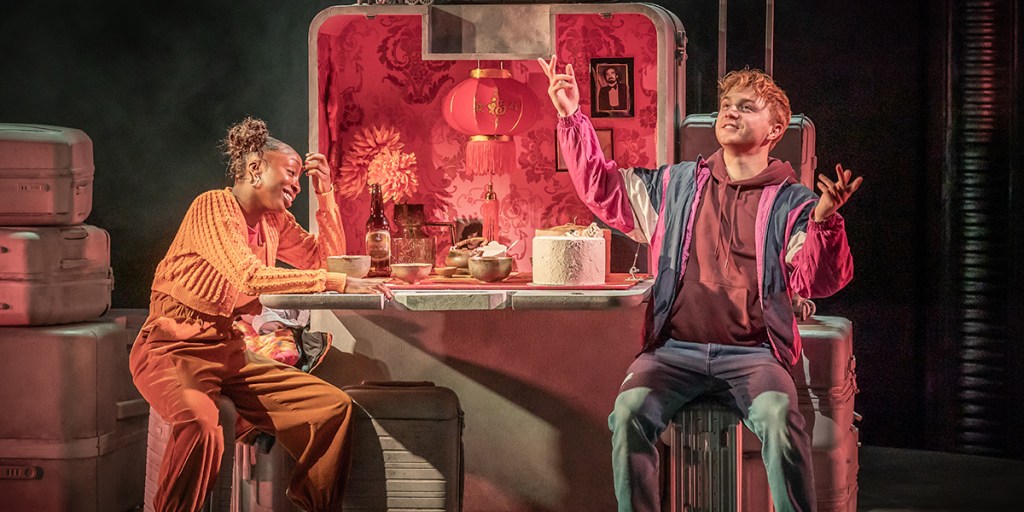
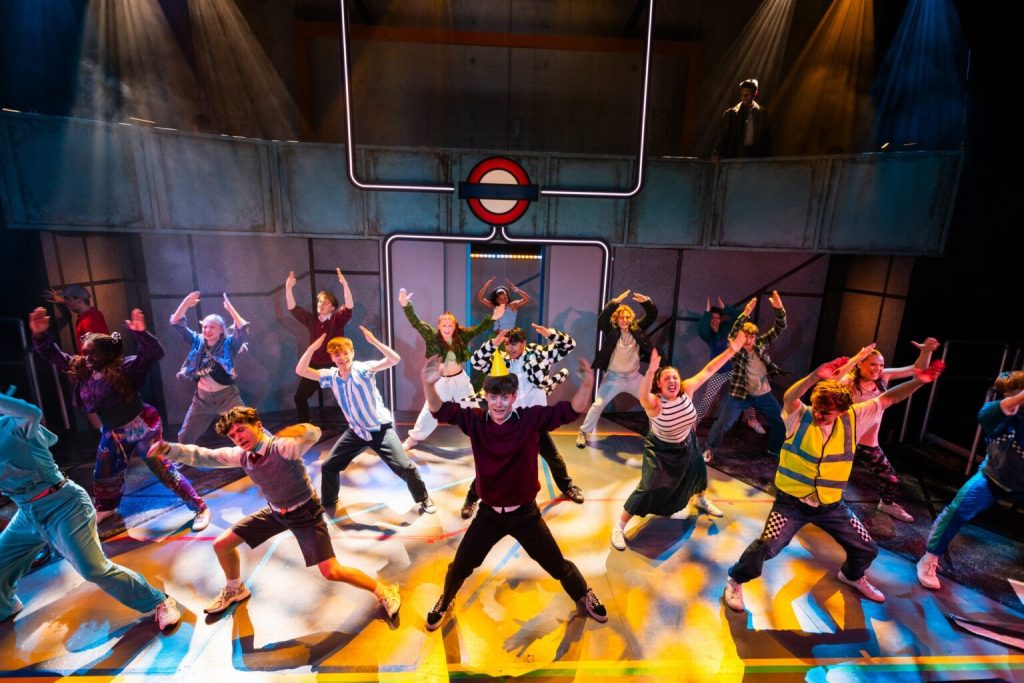
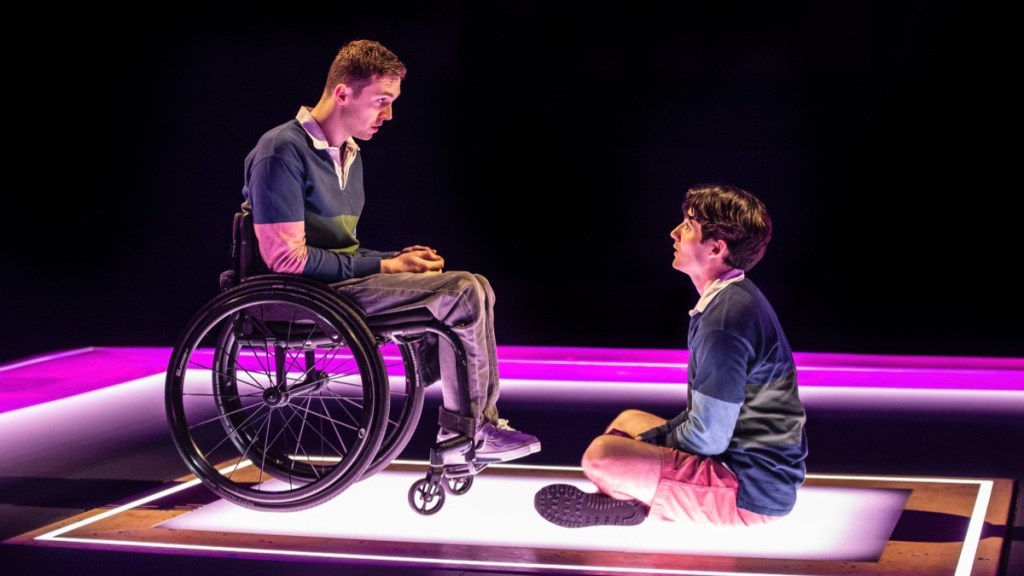
Two Strangers (carry a cake across NewYork) / Our House / The Little Big Things
I previously mentioned plays we rated highly, and many of them we took you to see. But top of the list of those we saw on our own are Nachtland which upset some with it’s farcical fuss over a Hitler painting; The Merchant of Venice 1939 with Shylock, played by Tracy-Ann Oberman, relocated to Cable Street; and What We Talk About When We Talk About Anne Frank, which talked hilariously about current Jewish concerns. The one-man show Harry Clarke starring Billy Crudup hooked us throughout with its vivid storytelling; Machinal in a gripping production at the NT was as shocking now as when written in 1928; and the tiny Orange Tree Theatre in Richmond provided us with two memorable matinees with Red Speedo (yes, Finn Cole did wear a pair throughout!) and Here in America which featured Arthur Miller Marilyn Monroe and Elia Kazan. David Oyelowo gave a powerful performance in the NT’s Coriolanus, as did both Mark Strong and Lesley Manville in Oedipus.

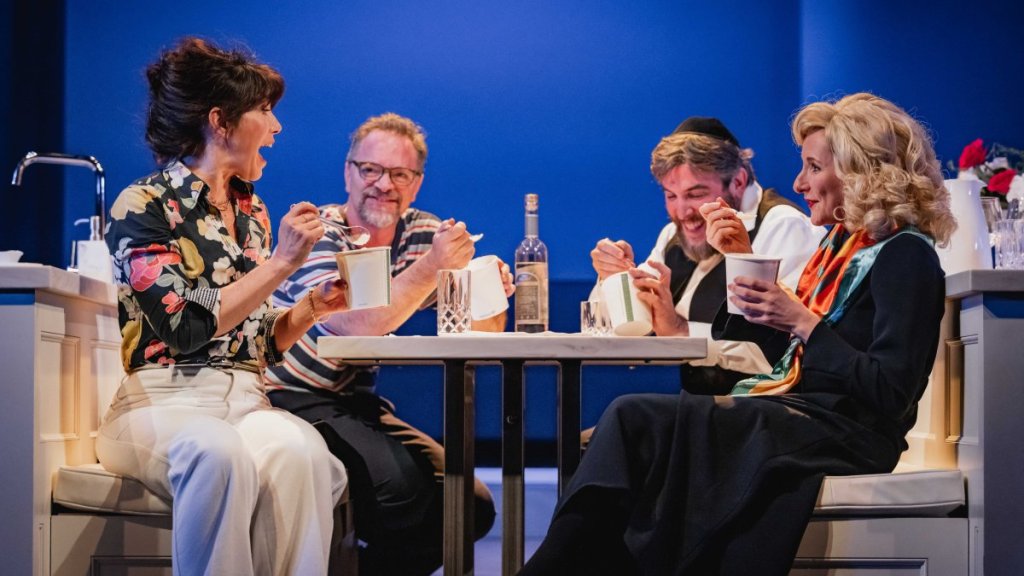
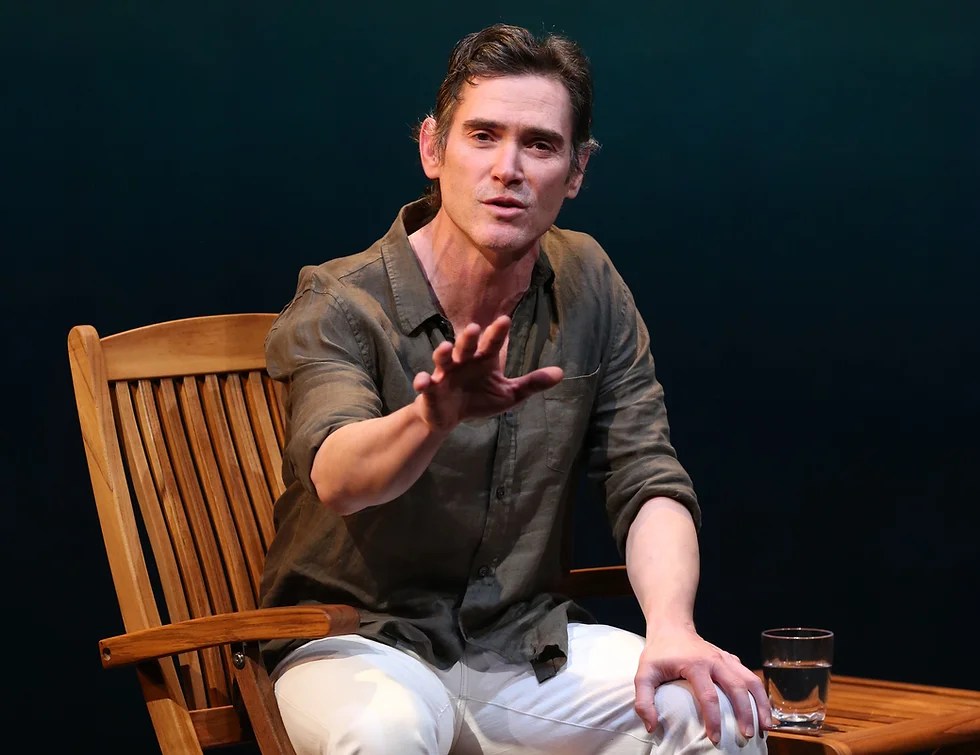
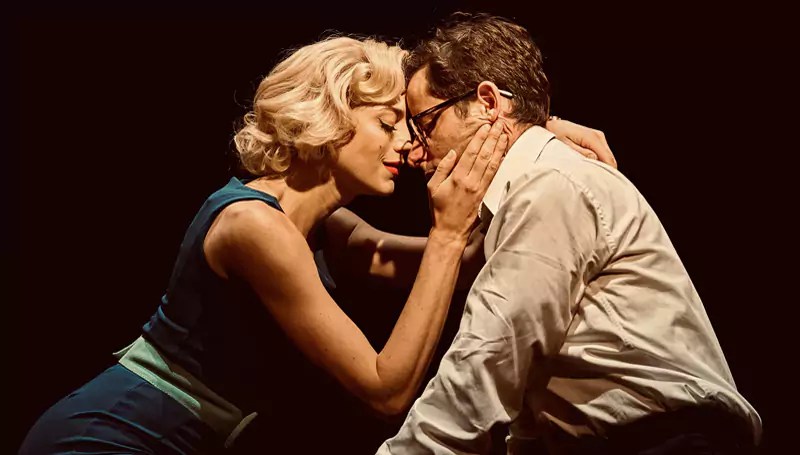
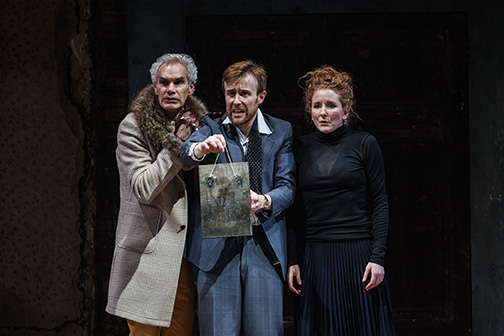
Machinal / What we talk about when we talk about Anne Frank
Harry Clarke / Here in America / Nachtland
That last one probably gets my vote for Play of the Year for turning Greek tragedy into great theatre, for and of today. At the time I said there were other contenders for that award – there were two plays we took the Group to see, The Real Thing (an accessible Stoppard!) and the Donmar’s Skeleton Crew which was pure blue-collar humanity, truly the real thing. Also, but never an also-ran, was Faith Healer we saw at the Lyric Hammersmith, story telling par excellence with a genius cast. I won’t choose between them.
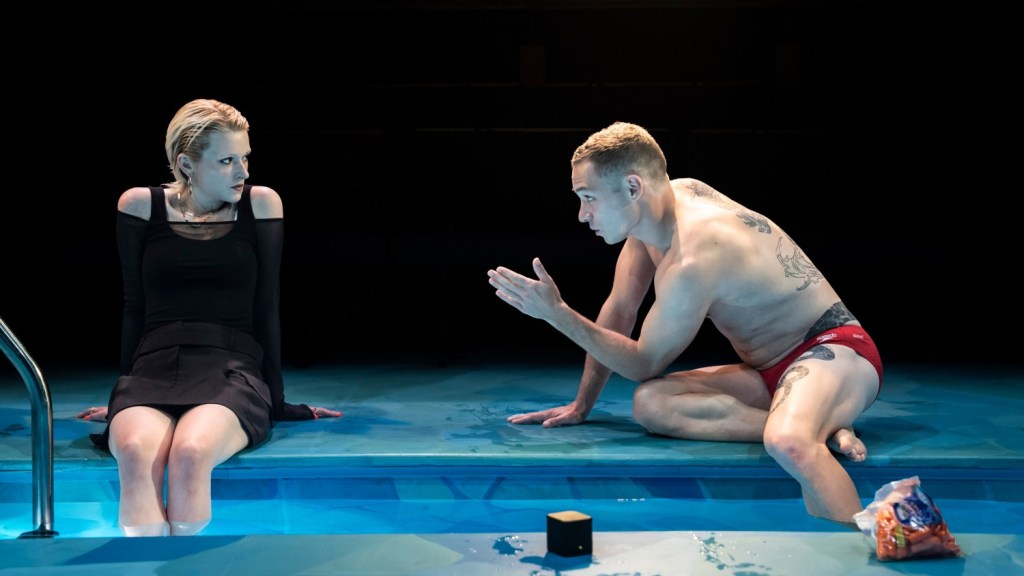
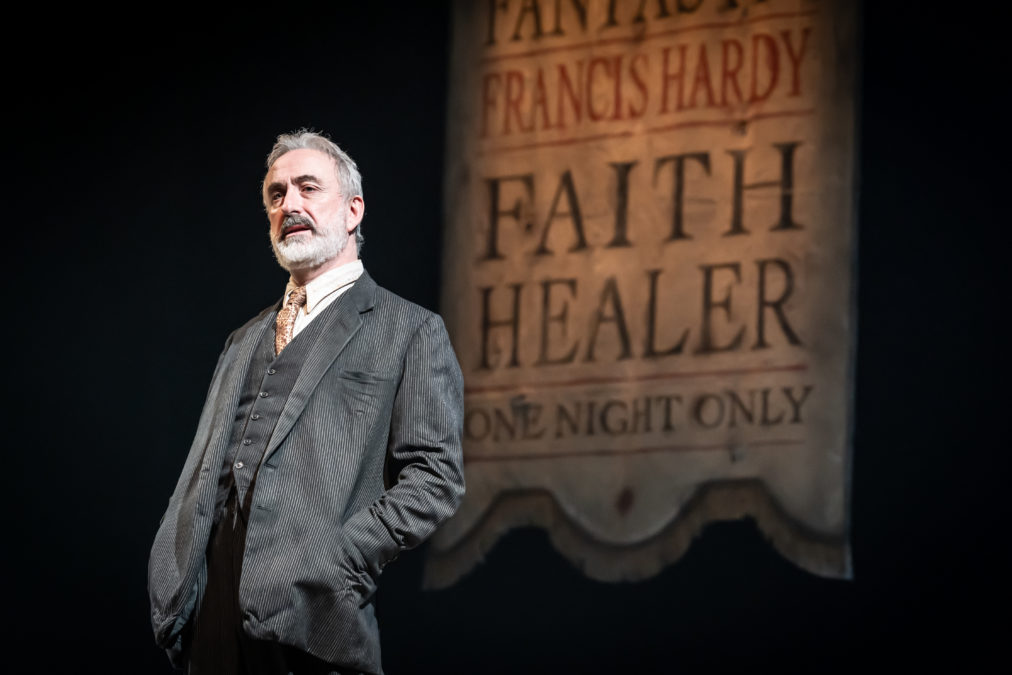

Red Speedo / Faith Healer / The Merchant of Venice 1939
The National Theatre had a varied year but ended on a high with two audience pleasers – Ballet Shoes and The Importance of Being Earnest. The first introduced kids to a lesbian and the latter put gender fluidity centre stage for all to enjoy in the camp spirit of Christmas. Neither flaunted video projection so let’s hope that is one fad now gone beyond its peak, reached I think in the Donmar’s upfront-techie Brief Encounter homage The Human Body.
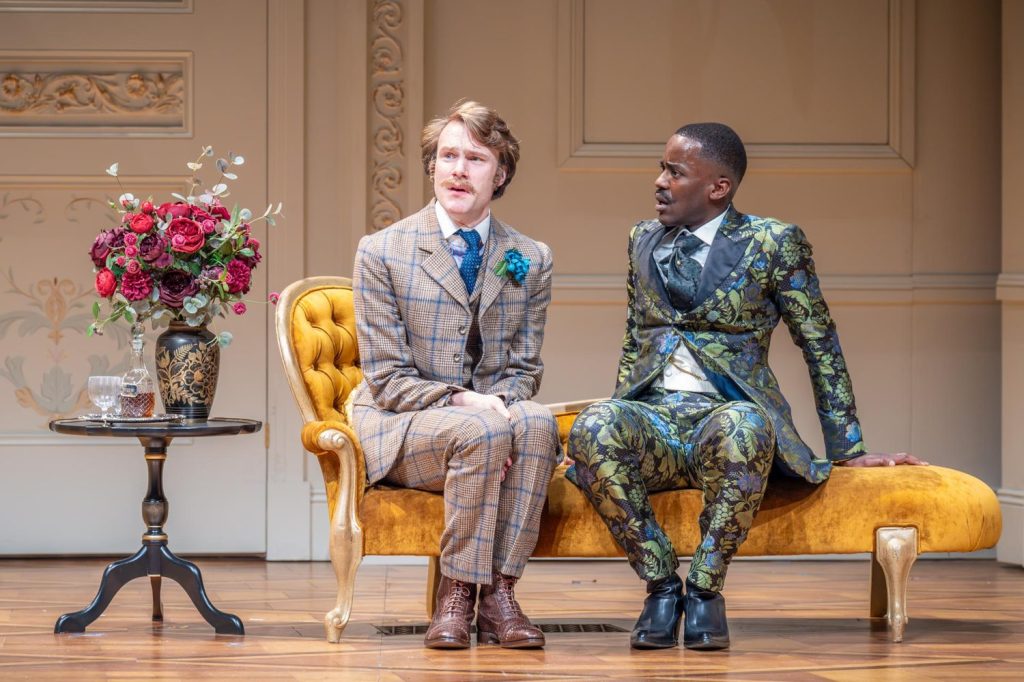

The Importance of Being Earnest / Ballet Shoes
We have a lot of theatre booked for 2025, some with you and some without. Evita is returning in the hands of director Jamie Lloyd. Let us hope he gives groups a discount for that, overcomes his Tempest misjudgement, and reaches the high achievement of his award-winning Sunset Boulevard . Anything is possible, and that is what makes theatre such a vibrant and rewarding experience for us all.
15/01/25 Fredo Writes –
DAZZLING COMET – A cast Q&A
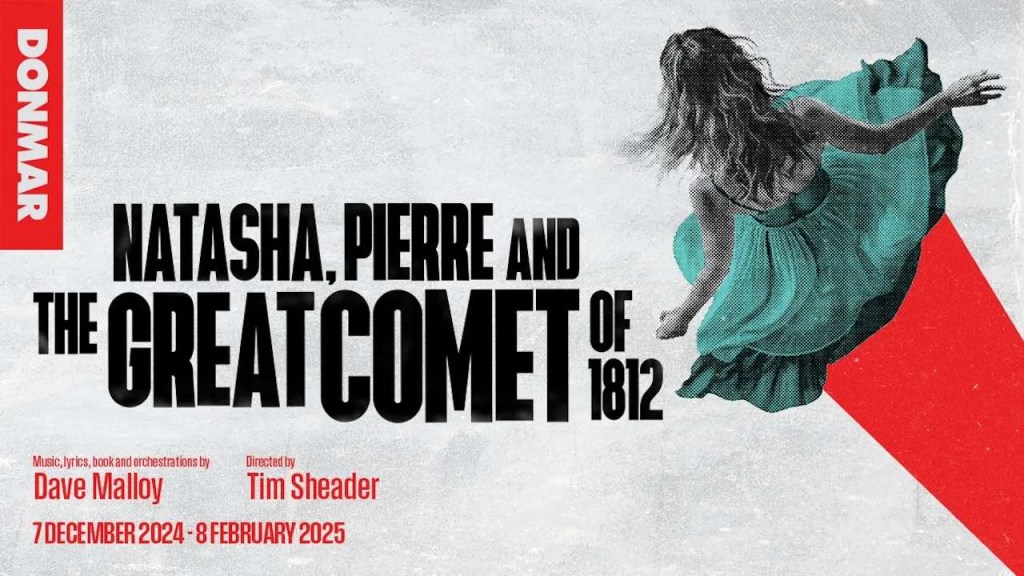
“It’s a complicated Russian novel,” the company warn us right at the start of Natasha, Pierre and the Great Comet of 1812. Well, yes it is, and though this show is based on only 70 pages of War and Peace by Leo Tolstoy, there’s a lot of story to get through in a very fast two and a half hours. The music, singing and action hardly gives the audience and the performers time to catch their breath.
Nevertheless, Andrew Berlin, Daniel Krikler, Eugene McCoy, Jamie Muscato and Chloe Saracco joined Craig Gilbert , the Donmar’s Literary Associate Director, to discuss their experience of the show. Andrew was the only one who had seen it in New York, and agreed with the others that it is very idiosyncratic. Daniel and Eugene admitted that they had no idea how the show would work, and what to do in it.
However, Jamie added, director Tim Sheader had a very clear vision of how to stage it. It was also helpful to have composer and lyricist Dave Malloy on hand to guide them through some of the more difficult passages in the text; he insisted that certain lines were sung, when it might have been easier to speak them.
Chloe commented on how varied the score was, ranging from heavy rock numbers to romantic waltzes and ballads. Whatever uncertainty they had about performing it disappeared when they got in front of an audience – Jamie said that it suddenly came into focus for him. (And some lucky audience member gets the chance to kiss him!)
This was my second viewing of the show, as our friend Jan had taken me to see it in December. It was Mike’s first time, and he agreed that it is a great production, and it’s possibly the best-sung show in the West End – take a bow Declan Bennett, Chumisa Dornford-May, Cat Simmons and Maimuna Memon.
Our group visit is on Monday 20 January, and you still have time to do your homework: it’s War and Peace, Volume 2, Book 5. But you don’t have to; just enjoy it!
Meet the cast and their characters here when you play this video –
Previous articles continued on next page
 theatreguys